Get Full Government Meeting Transcripts, Videos, & Alerts Forever!
Get email alerts on the Goma Conflict Monusco topic
No spam. Unsubscribe anytime.
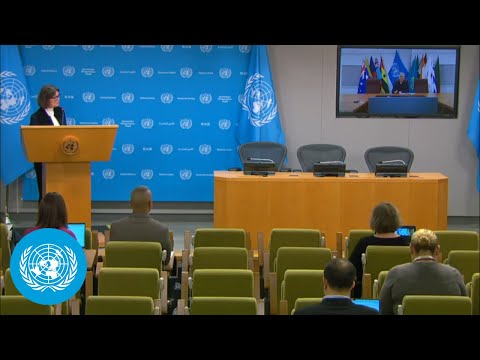
UN warns of humanitarian catastrophe as fighting engulfs Goma; three peacekeepers killed
Summary
UN officials said heavy fighting around Goma, Democratic Republic of Congo, has displaced civilians, damaged hospitals, prompted temporary relocations of UN personnel and left three peacekeepers dead. The UN called for an immediate cessation of hostilities and for regional and international actors to engage.
United Nations officials said heavy fighting around Goma in eastern Democratic Republic of Congo has displaced civilians, damaged health facilities and left three UN peacekeepers dead, as the mission temporarily moved nonessential staff and urged a rapid cessation of hostilities.
The UN's Under-Secretary-General for Peace Operations, Jean-Pierre Lacroix, said the situation in and around Goma is "very, very fluid" and confirmed that "three peacekeepers have been killed — one from Uruguay and two from the Republic of South Africa" and that 12 others were injured. He said the mission had begun temporarily relocating personnel and dependents from Goma by air and road and that relocations were continuing.
The humanitarian coordinator and deputy special representative to the UN mission in the DRC, Bruno Lemarquis, described the situation as "extremely, extremely worrying," saying active combat had spread across neighborhoods and that "several shells struck the maternity hospital in central Goma, killing and injuring civilians including newborn and pregnant women." He said hospitals were overwhelmed despite support from Médecins Sans Frontières and the International Committee of the Red Cross.
Why it matters: the fighting follows a rapid advance by the M23 rebel movement and fighting involving FARDC elements and other armed groups, raising the risk of a broader humanitarian disaster and possible spillover into neighboring areas. UN briefers said the protection of civilians and the safety of UN personnel were the immediate priorities.
Key details from the briefing - Displacement and scale: Bruno Lemarquis said the DRC is already hosting what he described as nearly one of the most protracted humanitarian crises, with close to 6,500,000 displaced nationally and about 3,000,000 displaced in North Kivu. Goma itself is a city of roughly 1,000,000 people; Lemarquis said there were already 700,000 internally displaced people around Goma and that, "as of the last brief, 300,000 of those internally displaced had moved toward Goma." (Numbers given by UN briefers during the press briefing.) - Civilian impact and services: briefers reported heavy artillery fire, looting of humanitarian facilities, damage to Save the Children facilities and a UNHCR vehicle being shot at (no casualties reported in that incident). Lemarquis said that water, electricity and internet services had been disrupted and that internet was cut around 1 p.m., complicating coordination. - UN personnel and bases: Lacroix and Lemarquis said many UN staff sheltered for hours and that nonessential international and national personnel were being moved to Kinshasa and to a large UN operational base in Entebbe, Uganda, while critical humanitarian and protection staff remained in Goma. - Allegations of external involvement: Jean-Pierre Lacroix said the UN had observed Rwandan Defence Forces supporting M23 operations in Goma and that "it is difficult to tell exactly what the numbers are." He declined to provide firm troop counts and said questions about motivations were best addressed to the parties themselves; he repeated calls for any external actors to respect the safety of peacekeepers. - Peacekeeping posture and withdrawal plans: Lacroix noted the existence of a disengagement plan agreed with DRC authorities in November 2023 that guided previous phased withdrawals (South Kivu was cited as a prior phase). He said the current events in and around Goma would have a significant impact on planning for further phases but that definitive decisions depend on how the situation evolves. - Humanitarian funding: Lemarquis welcomed a $17,000,000 allocation from the UN Central Emergency Response Fund (CERF) announced by the emergency relief coordinator to support the immediate response. - Calls for diplomacy: both briefers called for intensified diplomatic engagement. Lacroix welcomed an Eastern African Community summit scheduled for Jan. 28 and an African Union Peace and Security Council session, and he urged the UN Security Council to remain engaged.
Questions from journalists during the briefing sought confirmation of whether M23 controlled Goma, how UN personnel were being evacuated with the airport closed, and whether Rwandan troops were present. Bruno Lemarquis and Jean-Pierre Lacroix emphasized that fighting remained ongoing and fluid, that some Munusco personnel and dependents had been moved to safety, and that the mission was focused on protecting civilians and UN personnel under its mandate.
What the UN did not say or could not confirm - Exact troop counts for alleged Rwandan forces on the ground: Lacroix said it was clear Rwandan troops were supporting M23 but that exact numbers were difficult to verify. He warned against speculation about motives and noted some media estimates but declined to confirm them. - Full hospital capacity figures: briefers said hospitals were overwhelmed and cited specific patient counts at one facility, but some figures mentioned in the exchange were unclear in the transcript; where precise operational-capacity numbers were not given, the briefing noted them as not specified.
The briefing closed with both officials urging immediate steps to establish humanitarian pauses and corridors, to reopen Goma Airport and keep key border crossings operational to allow civilians to flee combat zones and to permit scaled humanitarian assistance. Lacroix and Lemarquis said the UN would continue engagements with regional and international partners as the situation evolves and that updates were expected daily.