Lifetime Citizen Portal Access — AI Briefings, Alerts & Unlimited Follows
UN coordinator says ceasefire opened humanitarian window in Gaza but major needs remain
Loading...
Summary
Mohammed Hadi, the UNs deputy special coordinator and resident/humanitarian coordinator for the occupied Palestinian territories, said a ceasefire allowed more aid and movement in Gaza but hospitals, shelters, education and early recovery work still face logistical and resource constraints.
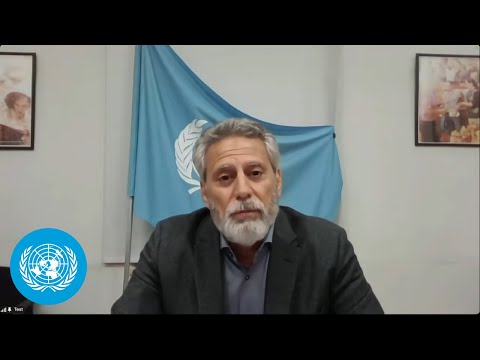
Mohammed Hadi, the United Nations deputy special coordinator for the Middle East peace process and resident and humanitarian coordinator for the occupied Palestinian territories, told reporters after a visit to Gaza that a ceasefire had opened "a golden opportunity" for humanitarian access but that major needs and operational challenges remain.
"I just came out of Gaza, this afternoon," Hadi said. "When I entered Gaza this morning, it felt like this is probably 1 of the happiest days of my professional life over a period of, humanitarian journey of 35 years." He described scenes of people returning to their homes, local cleanup, and greater "law and order" than during earlier phases of the conflict.
The immediate humanitarian picture, Hadi said, includes a rapid increase in aid convoys: "the first day we, we reached over 600, the second day, you know, I'm glad to say we exceeded the 9 the the 900 mark." He stressed, however, that truck counts are not the only measure of success. "It's about the people," he said, and added that protection, psychosocial support and restarting education and services are urgent priorities.
Hadi described damage at hospitals and clinics he visited. He said dialysis units were operating at roughly a quarter of required capacity: "they told me that they're only giving 25% of, of people's needs." He said medical supplies and fuel to run hospitals must increase to prevent further loss of life.
On shelter and early recovery, Hadi said many people are returning to heavily damaged homes and that tents and caravans are a short-term priority. He said aid teams were "pushing as as much as we can on tents" and that shipments were expected shortly but cautioned he did not have firm numbers: "I really don't have the numbers now." Hadi said rubble removal, cash-for-work schemes and agricultural projects are among the early-recovery activities the UN and partners are preparing to start.
Hadi also emphasized the role of UN agencies already active in the territory. He stressed the importance of the United Nations Relief and Works Agency for Palestine Refugees in the Near East (UNRWA), saying "UNRWA must stay and must continue doing, do doing the work," and noting that UNRWA employs about 13,000 people in Gaza and is a major provider of services including education for some 650,000 children.
On aid stocks and logistics, Hadi said some of the shipments entering Gaza during the ceasefire drew on pre-positioned stocks in neighboring countries such as Egypt and Jordan. He warned that constrained and damaged road networks, large numbers of people on the move and other logistical obstacles would complicate distribution even as more supplies arrive.
Hadi acknowledged reports of "minor incidents" of looting since the ceasefire but said they were not on the scale of earlier periods of lawlessness. "It was not like before," he said, adding that child scavenging and isolated attempts to take food or water had been observed but that such incidents should decline as aid flows increase.
Asked about the prospect of restrictions on UNRWA operations after Jan. 30, Hadi said he did not know the exact outcome of ongoing discussions with authorities but repeated that the UN will aim to continue supporting people in Gaza, the West Bank and East Jerusalem. "When you're in the business of saving lives, failure is not an option," he said.
No formal decisions or actions were recorded during the briefing; Hadi and journalists discussed operational needs, numbers of trucks and the role of UN agencies going forward. He closed by reiterating a commitment to remain engaged with Palestinians in Gaza during recovery and reconstruction efforts.
The briefing included questions from Associated Press, AFP, Alhurra, China Central Television, TRT World and other international outlets.