Lifetime Citizen Portal Access — AI Briefings, Alerts & Unlimited Follows
WHO says Gaza warehouse destroyed, one staffer detained; agency warns of medicine shortages
Loading...
Summary
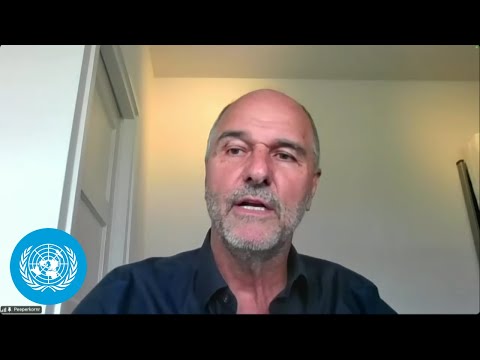
Dr. Rick Piepercorn, World Health Organization representative for the occupied Palestinian territory, told a U.N. briefing that WHO’s main warehouse in Darabala was hit and largely destroyed after intensified hostilities on July 21, leaving medical supplies depleted, one national staff member detained and many staff displaced.
Dr. Rick Piepercorn, the World Health Organization representative for the occupied Palestinian territory, said at a United Nations briefing that WHO’s main medical warehouse in Darabala was damaged and largely destroyed after an attack on July 21, curtailing the agency’s ability to supply hospitals in Gaza and leaving one WHO staff member in detention.
Piepercorn said WHO has three warehouses in Gaza and the main facility ‘‘was damaged, destroyed yesterday after an attack which caused explosions and fire inside,’’ and that some of the stocks were subsequently looted. He said the loss has left ‘‘the majority of medical supplies in Gaza depleted,’’ constraining WHO’s ability to support hospitals, emergency medical teams and other health partners.
The WHO representative described heavy impacts on personnel: staff residences and WHO premises were affected during intensified hostilities, and four people were detained during an operation on July 21. ‘‘Four were detained during that operation, three were released, one is still detained,’’ Piepercorn said, adding that the detained person is a caretaker (cleaner) and that WHO has asked Israeli authorities for the ‘‘urgent release.’’
Piepercorn said 43 staff and their families were relocated to the WHO office after recent hostilities and that dozens of other staff housing sites have become inaccessible. He said WHO carried out a high-risk mission to evacuate staff, women and children to the WHO office once access became possible.
Describing immediate material losses, Piepercorn listed types of supplies that were in the destroyed warehouse: trauma and surgical supplies, assistive devices, key antibiotics, cancer medicines, diabetes and dialysis supplies, some therapeutic milk, blood units and anesthetic drugs. He said WHO had brought some supplies into another warehouse two days earlier, but that ‘‘a lot of the medical supplies’’ in the main warehouse were destroyed.
Piepercorn said WHO will try to ‘‘reorganize, reflect, and plan how we can expand’’ operations with support from teams in Gaza, Jerusalem, the regional office and headquarters. He called on member states to increase support and ensure a sustained flow of medical supplies into Gaza and to protect humanitarian staff and premises. ‘‘We call for the immediate release of the WHO staff member detained yesterday and the protection of all our staff and its premises,’’ he said.
On the wider health picture, Piepercorn said more than 10,000 patients in Gaza still need medical evacuation, with roughly half related to conflict injuries and many others suffering chronic conditions such as cancer. He estimated there are ‘‘roughly 17, 18 hospitals’’ that are partly to minimally functional. Piepercorn described hospitals he visited as functioning largely as trauma wards, with severe overcrowding and improvised intensive care spaces.
He also warned of rising malnutrition, particularly among children under five, after months of restricted aid flows. Piepercorn said malnutrition among under-fives in Gaza had been ‘‘less than 0.6 percent’’ before the current crisis but that ‘‘hundreds, hundreds of children’’ are now malnourished and nutrition rehabilitation centers are not fully functional.
In response to questions, Piepercorn said he was speaking from the Netherlands, that WHO staff housing and warehouses are locations regularly known to authorities, and that WHO is looking for alternative storage and logistics options. He reiterated WHO’s call for humanitarian corridors, regular fuel supplies and increased access even amid ongoing hostilities. ‘‘We are there to stay and deliver,’’ he said.
The briefing closed with WHO urging member states to provide resources to restock supplies, assist emergency medical teams, and support evacuations and hospital operations.