Lifetime Citizen Portal Access — AI Briefings, Alerts & Unlimited Follows
Island leaders urge legislature to let seasonal towns levy real-estate transfer fee to fund year‑round housing
Loading...
Summary
Officials, health and public‑safety leaders from Martha's Vineyard, Nantucket and Cape Cod told the Joint Committee on Housing that a local option real‑estate transfer fee (bills S.966/H.4410 and S.967/H.4411) is needed to finance affordable, year‑round housing for workers and public‑service employees.
The Joint Committee on Housing heard hours of testimony on bills S.966/H.4410 and S.967/H.4411 on the use of a local-option real‑estate transfer fee to raise money for year‑round affordable housing in seasonal communities such as Martha's Vineyard and Nantucket.
Supporters told the committee on Beacon Hill that the fee — modeled after the long‑standing Nantucket and Martha's Vineyard land‑bank transfer mechanisms — would create a predictable, local revenue stream to preserve existing year‑round housing, convert short‑term rentals to year‑round use and finance new modest housing targeted to public‑safety workers, health‑care staff and school employees.
The measure matters because housing shortages on the islands, witnesses said, are affecting essential services. "We cannot afford to stand idly by while Martha's Vineyard... grapples with the detrimental and erosive effects of the housing crisis. We cannot wait any longer to ensure the men and women who protect our communities can afford to live where they work," Sheriff Robert Ogden of the Dukes County Sheriff's Office said while urging the committee to report the bills favorably.
The bills would authorize municipalities designated as "seasonal communities" to adopt, by local vote or local option, a transfer fee on high‑value property sales and place the proceeds into locally governed housing trust funds or housing banks. Proponents described the fee as flexible: towns could tailor the rate and exemptions to local needs and exempt first‑time homebuyers, modest sales, or senior homeowners as they choose.
"This bill would give us a sustained revenue stream to preserve existing homes, convert short‑term rentals to year‑round use and build affordable housing where appropriate," said Philippe Jordy of the Island Housing Trust, which develops and preserves year‑round housing on Martha's Vineyard. He described the local vote in 2022 in which island voters asked the Legislature to permit a housing bank funded by a transfer fee.
Health system leaders said unstable housing threatens care delivery. "Affordable housing is a critical social determinant...and a major workforce issue," said Dr. Elsie Tavares, chief community health and health equity officer for Mass General Brigham, adding that hospital staff often earn too much to qualify for affordable housing yet too little to compete for Island market prices. She cited early community‑health findings of severe housing shortages and high turnover among health workers.
Nantucket and Vineyard witnesses gave local numbers to illustrate the scale. "The median sale price for a single‑family home on The Vineyard has risen to $1,550,000," Dr. Tavares said; testimony from Nantucket officials placed median prices there above $3.7 million to $4 million and said two‑thirds of homes are seasonally occupied. Island hospital and school leaders reported unfilled positions and recruitment problems tied to housing costs.
Panelists also emphasized past legislative models: "The Nantucket Land Bank was created by the legislature in 1983...it worked," said Rachel Freeman, executive director of the Nantucket Land Bank, offering the land‑bank structure as a template for housing finance.
Not all details were established at the hearing. Witnesses described a range of possible fee levels and exemptions and urged the committee to allow local design choices rather than a single statewide formula. Multiple speakers requested that the committee report the bills favorably out of committee to allow towns to use the tool while preserving local control.
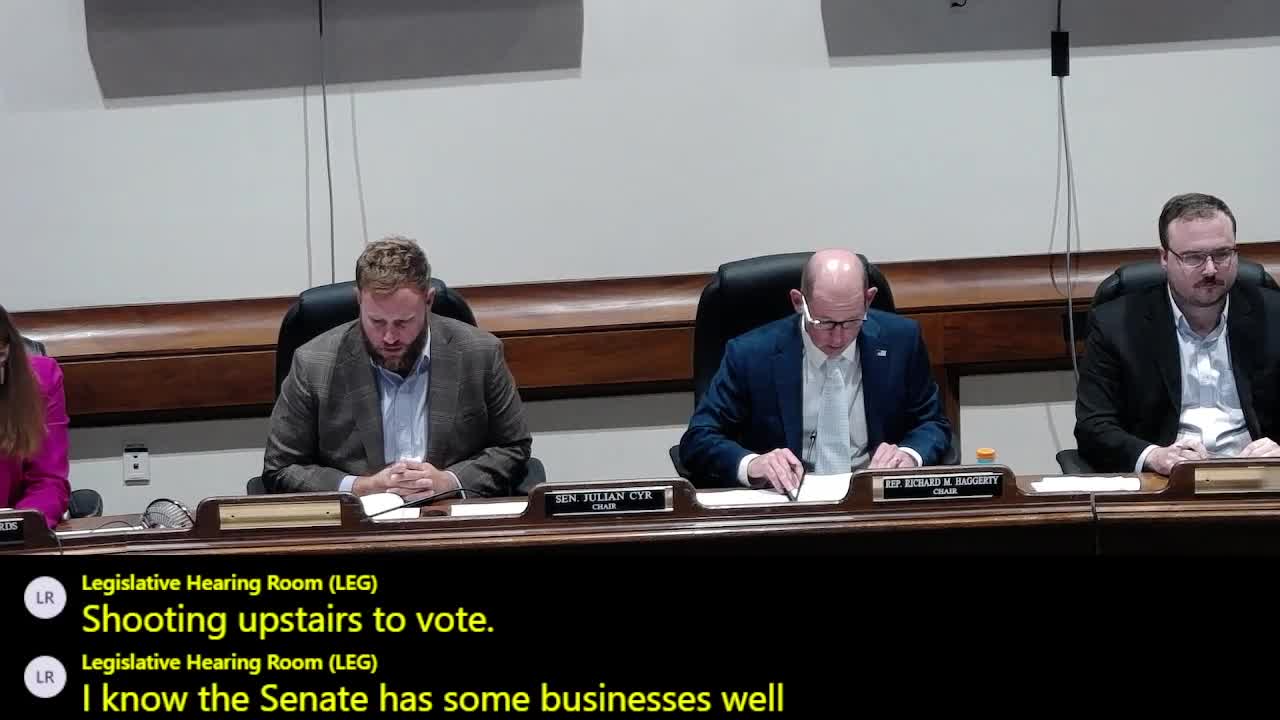
Discussion (not a final decision): committee chairs called the hearing a listening session with the expectation of further drafting. No formal vote was taken during the hearing.
Supporters asked the committee to move the bills forward so towns can begin planning local rules and trust arrangements; they said the funds would be used for targeted preservation, conversion of short‑term rentals, development of modest rental units, down‑payment assistance and workforce housing tied to year‑round occupancy.
The committee did not set a date for further action at the hearing.
Ending: Members of the committee heard dozens of in‑person and virtual witnesses representing island governments, hospitals, law enforcement, nonprofits and business owners. Several asked the committee to report S.966/H.4410 and S.967/H.4411 favorably to enable seasonal towns to create locally governed housing trusts funded by a transfer fee.