Lifetime Citizen Portal Access — AI Briefings, Alerts & Unlimited Follows
Panel advances change to civil legal aid fund formula, would shift to grant process
Loading...
Summary
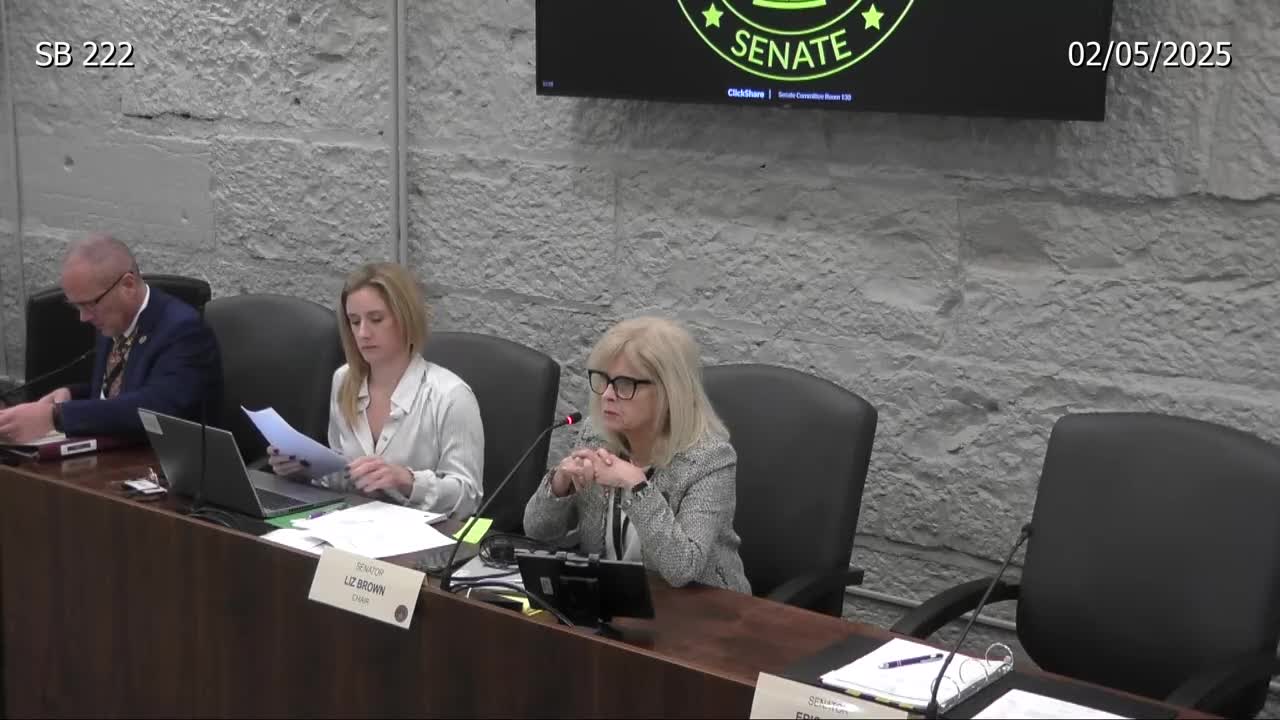
A Judiciary committee meeting on an amended Senate Bill 222 moved forward on a 10-0 recommit vote after proponents from legal aid organizations and the Indiana Bar Foundation said the bill would modernize how the state allocates civil legal aid dollars.
A Judiciary committee meeting on an amended Senate Bill 222 moved forward on a 10-0 recommit vote after proponents from legal aid organizations and the Indiana Bar Foundation told the committee the bill would modernize how the state allocates civil legal aid dollars.
The bill, as amended, would remove a county-presence formula enacted in 1997 from the civil legal aid statute and allow funds to be distributed through a competitive grant process administered collaboratively with the Indiana Supreme Court, supporters said. Senator Crossbow, sponsor of the amendment, told the committee the intent is to preserve limited civil legal aid dollars for services "like staying in their homes, obtaining for our veterans their benefits, guardianships," and to prevent the funds being used "to initiate or participate in the invalidation of the state statute."
The change would not increase the total amount of funding; instead it would alter the allocation method. Chuck Dunlop, president and CEO of the Indiana Bar Foundation, said the current county-based formula does not reflect changes in service delivery since 1997 and limits the state's ability to target funds by outcomes and statewide priorities. "The formula distribution doesn't maximize the impact to Hoosiers that it could otherwise," Dunlop said, arguing a grant process would increase accountability, quality control and encourage collaboration and technological solutions for underserved areas.
John Florencic, general counsel and CEO of the Indianapolis Legal Aid Society, described the organization as the state's oldest legal aid provider and said the current statutory formula prevents providers from being fully compensated when they serve clients in counties where the provider does not meet the statutory physical-presence requirement. Florencic said the Society uses civil legal aid funds for guardianships, eviction defense, restoration of driving privileges and other civil legal services that are not typically covered by restricted grants.
David Sneeden, chief of staff and COO of the Indianapolis Legal Aid Society, said the flexibility of unrestricted civil legal aid funding lets providers respond quickly to time-sensitive problems, listing examples such as legal name-change work needed for seniors seeking Real ID compliance. "This funding has allowed us on the fly to be able to address and serve those Hoosiers," Sneeden said, and he cited return-on-investment estimates for civil legal aid ranging from $7 to $20 per dollar invested.
Committee members asked about transparency of the proposed grant process. Dunlop said the Indiana Bar Foundation and the Indiana Supreme Court would collaborate on application scoring and debrief grantees pre- and post-award, and that the process could incorporate scoring rubrics and metrics. Senator Carrasco pressed for a clearer transparency mechanism so applicants and the public can see why particular organizations are funded or declined; Dunlop said the foundation and court could add more specific public-facing processes.
The committee voted to recommit the amended bill to the appropriations committee for further consideration. The recorded outcome was a 10-0 recommit to appropriations.
Ending: The amendment and bill change the statutory distribution method for Indiana's civil legal aid fund from a county-presence formula to a grant-based allocation, with supporters arguing the change would increase accountability and allow funds to adapt to statewide needs. The committee's recommitment sends the amended bill to appropriations for review of fiscal implications and any additional statutory language dealing with transparency and grant criteria.