Lifetime Citizen Portal Access — AI Briefings, Alerts & Unlimited Follows
Senate committee backs bill to ban ranked‑choice voting after heated divided testimony
Loading...
Summary
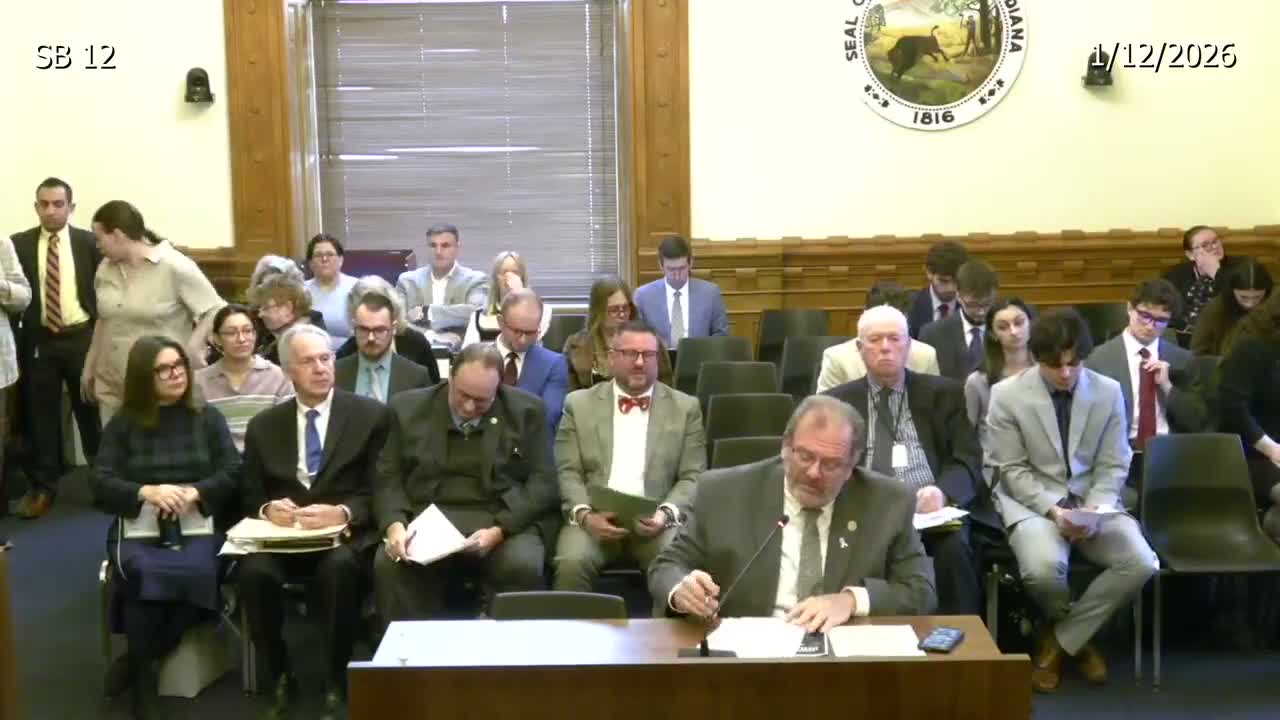
Senate Bill 12, to explicitly ban ranked‑choice voting in all state, federal and local elections, drew sharply split testimony from advocates, elections officials and reform groups; the committee voted 7–2 to advance the bill and members signaled ongoing debate ahead of floor consideration.
Senate Bill 12, carried by Senator Dorio, would bar ranked‑choice voting (RCV) across state, federal and local elections in Indiana. The bill’s sponsors said the measure prevents voter confusion, avoids ballot exhaustion and protects the statutory principle of "one person, one vote." "This prohibition will stop that from happening," an author told the committee, citing recent state bans elsewhere.
Supporters such as Matt Bell of the Foundation for Government Accountability Action and Jason Snead of the Honest Elections Project said RCV has produced administrative errors and ballot exhaustion in some jurisdictions and argued a statewide prohibition is a prudent preemptive step. "Ranked‑choice voting makes every aspect of the election system more complicated," Snead said.
Opponents including Barbara Tolley of the League of Women Voters of Indiana and Julia Vaughn of Common Cause urged the committee to reject the ban. Tolley testified that RCV can expand voter choice and that research grounded in real election results shows neutral or positive effects on representation and turnout; Vaughn added that since RCV is not currently used in Indiana, a ban would have no immediate practical effect and could foreclose future reforms.
Officials from the Secretary of State’s office and the Election Division urged caution and highlighted practical concerns. Brad King, Republican co‑director of the Election Division, and a secretary of state representative raised ballot‑drop‑off and administrative issues if RCV were layered onto long ballots.
Committee members traded explanations: some said the state’s current laws and home‑rule language already make local adoption unlikely and that an explicit prohibition would guard against judicial change; others questioned whether a preemptive ban was necessary. After three minutes of explanation and brief debate, the committee voted to move SB 12 to the next stage by a 7–2 margin.
The result means SB 12 will continue through the legislative process; senators on both sides indicated they expect ongoing debate and possible amendments should the bill advance to the floor.