Lifetime Citizen Portal Access — AI Briefings, Alerts & Unlimited Follows
PGCPS internal audit outlines FY25 accomplishments and FY26 plan, flags $5.9 million in school activity funds reviewed
Loading...
Summary
Dana Thorpe, director of PGCPS Office of Internal Audit, told the Board Audit Committee on Oct. 6 that the office issued 59 reports in fiscal 2025, received 559 hotline reports and reviewed about $5.9 million in assets—mostly school activity funds—and outlined a risk-based FY26 audit plan including follow-ups on procurement, transportation and HR.
Prince George's County Public Schools’ internal audit director presented the audit office’s fiscal 2025 accomplishments and a risk-based audit plan for fiscal 2026 at the Board of Education Audit Committee’s Oct. 6 meeting.
Dana Thorpe, director of the Office of Internal Audit, said the office issued 59 reports in fiscal 2025, received 559 hotline reports and examined roughly $5.9 million in assets that were subject to audit, the large majority of which Thorpe said related to school activity funds. "This gives us the authority and responsibility, as established by the Board of Education, to pretty much effectively do audits of the PGCPS," Thorpe said, citing the board policy that established the internal audit office.
Thorpe said the 59 reports included 28 school activity fund (SAF) audits, 19 investigative audits and 12 operational audits. The office said it applies a risk-based approach to selecting school activity fund audits and uses analytics to identify outliers.
Why it matters: The audit office provides oversight of the district’s financial reporting, internal controls and compliance with laws and regulations. Committee members and the public heard both a summary of completed work and the audit office’s priorities for the coming year, including planned follow-ups on prior audits and a district-wide risk assessment.
What the audit office reported and plans to do
Thorpe described the office’s reporting and professional standards, noting it reports directly to the Board of Education to meet government auditing standards’ independence requirements. She said internal audit provides an annual summary of significant findings and quarterly activity reports to the board and that the office maintains memberships in professional bodies including the Institute of Internal Auditors, the Association of Local Government Auditors and the National Association of State Auditors, Comptrollers and Treasurers.
For fiscal 2026 the office plans to prioritize: iExpense process reviews; SAF audit action-plan follow-ups at schools with prior findings; facility use request timelines; and a scheduled risk assessment (the previous risk assessment was completed in fiscal 2024 and the office intends to conduct one every two years). Thorpe said the risk assessment will gather input from internal and external stakeholders through questionnaires and interviews to identify the highest-priority audit areas.
Operational and technology audits singled out for FY26 include a mandated annual grade-validity audit required by the Maryland State Department of Education; follow-ups on the capital improvement program (a carryover), treasury operations, budget management, transportation and fleet management; reviews of purchasing and procurement processes; and audits of several information-technology systems—named by Thorpe as Zonar Systems, the eDocrina evaluation platform, Discoverer (a staffing/budget reporting application), a transportation clearinghouse and background-check systems including WebCRD and HROS.
Committee discussion and timing
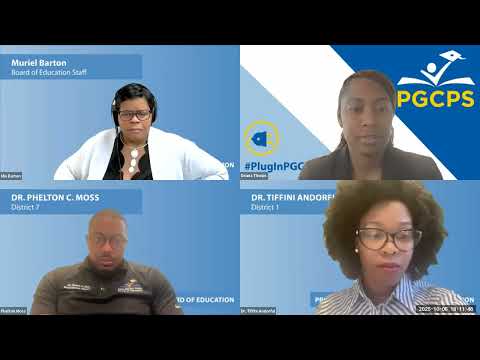
Board member Felton Moss asked Thorpe to explain the $5.9 million in audited assets for the public. Thorpe said that figure is primarily the value of school activity funds reviewed and that some audits include monetary values outside SAFs but that "the large majority of that is all related to the amount that we looked at from a school activity fund standpoint." Chair Tiffany Anderful and other committee members welcomed the return of a district risk assessment and asked about the timeline; Thorpe estimated two to three months to carry out stakeholder questionnaires and interviews, due largely to scheduling.
Thorpe said the audit office dedicates about 30% of its hours to school activity fund audits, 30% to operational audits and 30% to technology audits, with the remaining time split among hotline investigations, special requests and audit assistance.
Next steps and schedule
Committee leadership outlined the Audit Committee’s meeting topics for the remainder of the school year: December will bring the capital improvement program operational audit findings and recommendations; February will include a transportation audit update and the semiannual internal audit work plan; April will bring the procurement audit; May will include work on on-site student records and privacy; and June will include an update from human resources on previously issued audits.
No formal committee votes were taken on audit recommendations at the Oct. 6 meeting; Thorpe will return to the committee with follow-up reports as audits are completed.