Get Full Government Meeting Transcripts, Videos, & Alerts Forever!
Get email alerts on the Two State Solution topic
No spam. Unsubscribe anytime.
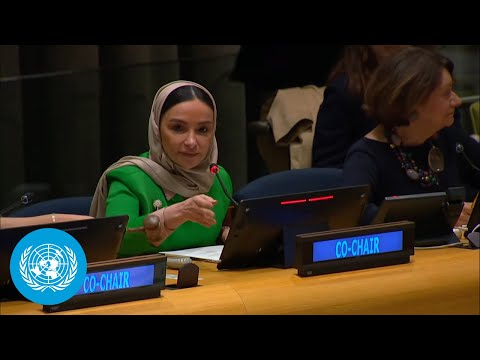
UN preparatory meeting outlines working-group road map ahead of June conference on two-state solution
Summary
Representatives convened at a United Nations preparatory meeting in New York to set deadlines, processes and guiding questions for eight working groups ahead of a June high-level conference aimed at implementing a two-state solution for Israel and Palestine.
The United Nations convened a preparatory meeting in New York to finalize the process and timelines for an upcoming high-level international conference on the peaceful settlement of the question of Palestine and the implementation of a two-state solution, to be held June 17–20 in New York.
France and the Kingdom of Saudi Arabia, serving as co-chairs of the conference, opened the session and invited member states, observers and UN entities to feed written inputs to eight thematic working groups. "This preparatory meeting is taking place in the run up to the high level international conference for the settlement of the question of Palestine and the implementation of the two-state solution," a representative of France said, urging operational, time-bound contributions.
The President of the General Assembly said the conference must "translate commitment into action," adding: "This conflict cannot be resolved through permanent war nor through endless occupation or annexation." The president called for an outcome that is "concrete and action oriented, identifying steps needed to realize the two-state solution."
Why it matters: delegations framed the June meeting as a chance to move from statements to deliverables. Co-chairs and working-group leaders repeatedly urged proposals that are "time bound," "irreversible" and implementable on the ground, rather than theoretical discussions.
What was decided and requested
- Eight working groups were established with thematic mandates including statehood and governance, security, narratives for peace, economic viability, humanitarian action and reconstruction, preserving the two-state solution, and regional peace/peace-dividend planning. Co-chairs described distinct guiding questions and a process for compiling inputs.
- Several working groups set submission and consultation dates. Multiple co-chairs invited written inputs by May 30 for most groups; Italy and Indonesia (security working group) said they would extend an earlier May 23 deadline and circulate a later date. Co-chairs said they would compile submissions and circulate draft compilations around June 2, with informal consultations and roundtable discussions scheduled in early June (including a June 4 consultation announced for some groups).
- The high-level conference itself was confirmed for June 17–20 in New York, beginning with working-group sessions June 17–18 followed by a high-level segment.
Substantive themes and recurring positions
Delegations stressed several priorities across interventions: an immediate ceasefire and scaled humanitarian access to Gaza; protection for civilians and humanitarian workers (including UNRWA); reversing settlement activity and preventing forced displacement; concrete plans for Gaza reconstruction that respect Palestinian ownership; financial and institutional support to Palestinian governance and state-building; and security arrangements that protect both Israelis and Palestinians.
Representative statements echoed those themes: the France co-chair said "we must move from words to deeds," and the Saudi co-chair called for an "irreversible time bound action plan rooted in international law". The permanent observer of the State of Palestine emphasized that "this conference is about implementation, about deeds, not words."
Process and follow-up
Co-chairs described the working groups as "open-ended" and open to participation from all member states, General Assembly observers and UN system representatives. Several delegations urged that the conference outcome include an explicit follow-up mechanism; the European Union and the League of Arab States proposed that the Global Alliance for the Implementation of the Two-State Solution (referred to in discussions as a vehicle for follow-up) be tasked with tracking deliverables.
Many delegations said they would submit written contributions to one or more working groups and participate in the early-June consultations. The meeting record reflects a strong emphasis on near-term, operational steps (deadlines, compilations, consultations) to ensure the June conference produces a concrete, implementable outcome rather than only declaratory language.
Quotations
"This conflict cannot be resolved through permanent war nor through endless occupation or annexation," the President of the General Assembly said.
"We must move from words to deeds," the representative of France said, calling for concrete, time-bound measures.
"This conference is about implementation, about deeds, not words," the Permanent Observer of the State of Palestine said.
Ending note
The preparatory meeting closed after an open-floor segment during which dozens of member states reiterated support for the two-state solution and urged both urgent humanitarian steps and the submission of practical proposals to working groups. Co-chairs reminded delegations that written inputs should be sent to contact points at the missions of France and Saudi Arabia. The co-chairs said the working groups would resume consultations in the afternoon and in early June, ahead of the June 17–20 high-level conference in New York.