Lifetime Citizen Portal Access — AI Briefings, Alerts & Unlimited Follows
Appeals court hears dispute over 1975 judgment, chain of title and adverse possession in Cutting Edge Real Estate v. Russell
Loading...
Summary
Oral argument in Cutting Edge Real Estate v. Russell focused on whether a 1975 judgment that identified certain parcels as partnership assets remains a controlling factual finding for title disputes, and on whether later deeds and conduct gave the Hunt parties fee title through adverse possession and related doctrines.
Oral argument Tuesday in Cutting Edge Real Estate v. Russell centered on whether a 1975 trial court order that identified certain parcels as partnership property remains a valid factual predicate for title, and on closely related questions about deeds, adverse possession, ouster of a cotenant and estoppel.
Why the appeal matters: The case involves multiple decades of litigation and affects who holds fee title to rural parcels that were litigated in earlier proceedings. The outcome could change the legal and practical ownership of many parcels and determine whether later purchasers who received personal‑representative deeds acquired full fee interests.
Appellant Steven Rogers (arguing for Cutting Edge Real Estate) told the panel the critical questions are the validity of the 1975 facts and the trial court’s adverse‑possession findings. "First, the court the trial court errored when it invalidated the factual findings of the 1975 judgment," Rogers told the court, and he urged that the 1975 determination that certain listed parcels were partnership assets should remain a controlling factual finding even if the 1975 remedy was no longer enforceable.
Opposing counsel Jeremy Reitzel, arguing for the Hunt parties, said the appeals court need not reach complex ownership theories if Hunt adversely possessed the land. "If the partnership owned the property and we adversely possessed from the partnership, we don't even need to address Ouster because there's not a co tenancy here," Reitzel told the panel.
Major legal and factual disputes raised at argument: - Effect of the 1975 judgment: Rogers argued the 1975 order’s factual determinations (that the listed parcels were partnership assets) survive later interlocutory orders that, in the district court’s view, rendered the 1975 remedies unenforceable. Appellees and the district court relied on later orders (1994 and 2000) and found laches, collateral estoppel or issue preclusion barred relitigation of some matters. - Chain of title and personal‑representative deeds: The record includes deeds from an estate (Georgia’s personal‑representative deeds) to the Hunt purchasers. The court below found that, with one exception, those deeds conveyed a full interest. Appellants contest the legal effect of those instruments and whether earlier pleadings and litigation positions (and pending litigation at several points) changed notice and the effectiveness of those transactions. - Adverse possession and ouster: The parties disputed whether Hunt met the elements of adverse possession, and whether an ouster of a cotenant was proved for parcels 14 and 26. The district court relied on a mix of documentary evidence, recorded deeds, recorded litigation history and testimony that a preliminary injunction and other events caused Russell to leave the property. - Estoppel and preservation: The appellees argued equitable doctrines (issue preclusion, laches) bar some of the appellant’s claims; appellants argued the district court improperly limited evidence and precluded theories (marital property, estoppel variants). The briefing and argument also discussed whether the appellant preserved arguments about judicial/quasi/judicial estoppel and whether preservation rules were satisfied.
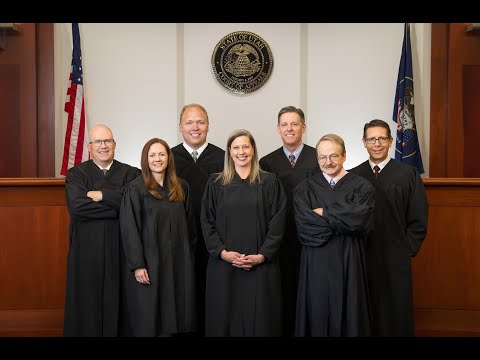
What the court did: after extensive questioning and rebuttal, the three‑judge panel submitted the case for decision. The panel asked detailed questions about the content of the 1975 order, the timing and recording of later deeds (counsel referenced exhibit numbers and recording dates), and the effect of a preliminary injunction that the parties said led one cotenant to vacate the property.
Practical detail from the record: Counsel referenced specific exhibits (deeds identified in the record as exhibits 2047 and 2055, and numerous earlier orders). The record includes findings that the estate’s deeds were drafted in 2007 and recorded in 2008 and that, except for one conveyance, personal‑representative deeds purported to transfer the parcels in question. Judges pressed counsel on whether those instruments were legally sufficient to transfer a full fee interest under Utah law (including Utah Code §57‑1‑3, which the parties cited about presumed fee interest in a deed) and on whether a co‑tenant was put on notice.
Next steps: The panel submitted the case and will issue a written opinion. The decision will resolve whether the court accepts the 1975 factual statements as surviving later interlocutory orders, whether the estate deeds and the chain of title transferred full fee interests to the Hunts, and whether the trial‑court findings that Hunt adversely possessed the property (including the ouster findings for parcels 14 and 26) are supported by the record.
This article is based on the oral‑argument transcript for Cutting Edge Real Estate v. Russell before the Utah Court of Appeals; quotes and factual summaries are limited to statements made at argument.