Lifetime Citizen Portal Access — AI Briefings, Alerts & Unlimited Follows
Disability advocates: large share of D.C. vote centers and drop boxes inaccessible; Board of Elections acknowledges problems
Loading...
Summary
At a Feb. 19 oversight hearing, Disability Rights DC told the D.C. Council committee that its 2024 surveys found dozens of vote centers and ballot drop boxes were either structurally or operationally inaccessible — and urged the Board of Elections to relocate structurally inaccessible sites and fix operational barriers before the 2026 election cycle.
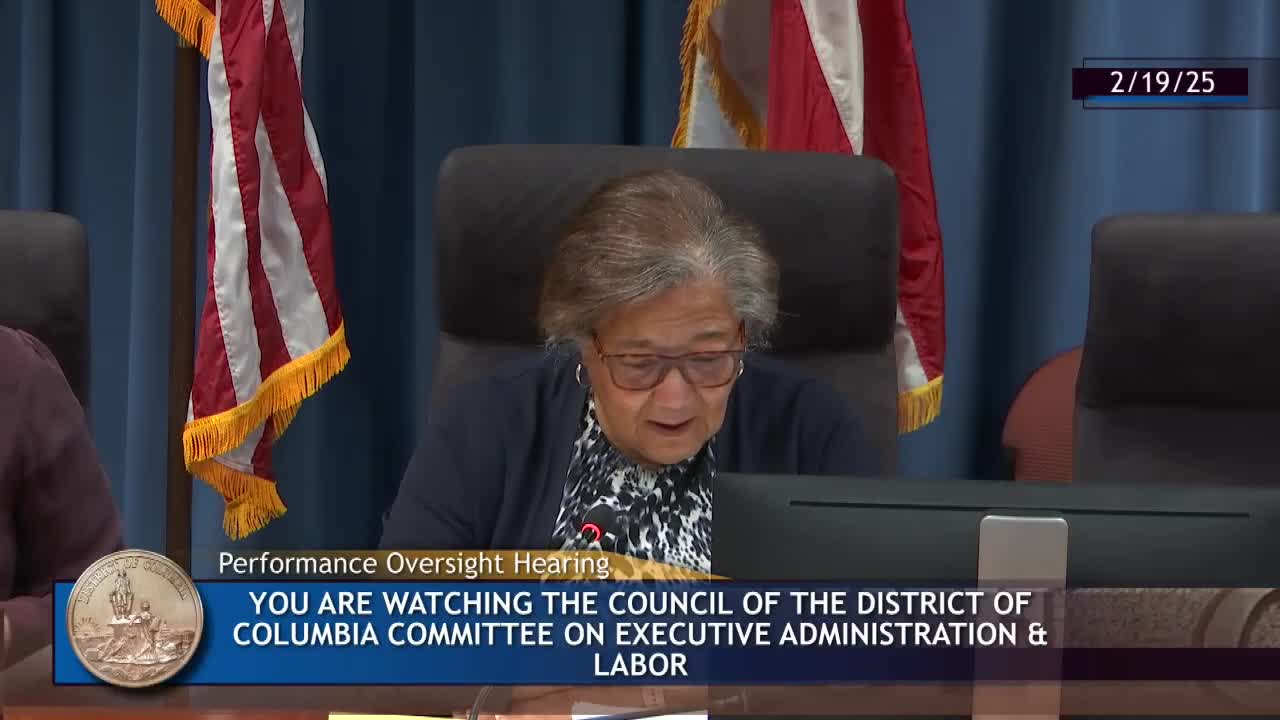
At a Feb. 19 performance oversight hearing of the Committee on Executive Administration and Labor, Disability Rights DC (DRDC) told the committee that its 2024 surveys of the District’s voting sites documented dozens of structural and operational barriers that can prevent voters with disabilities from using vote centers or ballot drop boxes.
DRDC’s managing attorney Lindsay Niles told the committee she and her colleagues surveyed “100% of the district's vote centers during the June 2024 primary election and 97.33% of vote centers during the November 2024 general election.” She said the group’s findings included: “during the June 2024 primary election, 10.67 percent of all vote centers were structurally inaccessible,” and DRDC’s preliminary findings for November showed 61.64% (45 of 73) of vote centers surveyed were inaccessible in some way. Niles also raised concerns about ballot drop boxes, saying DRDC found seven drop boxes “structurally inaccessible” in the 2024 general election and several more that were operationally inaccessible because of obstructions or unstable paths.
“Powell Elementary School, which has a very large, steep, and non ADA compliant ramp,” was cited specifically by Niles as an example of a recurring structural barrier DRDC has repeatedly reported. Niles said many problems are operational — failing to place accessible signage, not staffing curbside voting, or not providing accessible parking — and she urged the Board of Elections (BOE) to “ameliorate all operational barriers to accessibility at vote centers and relocate the vote centers that pose structural barriers.” She also asked the committee to monitor BOE’s work before the 2026 elections and the scheduled special election this summer.
BOE Executive Director Monica Evans acknowledged the problems described and said the agency is addressing them. Evans told the committee that accessibility reviews and last‑minute changes occasionally produce discrepancies between a site’s conditions at the time BOE selected it and the site’s condition on setup day. Evans said BOE “work[s] with our partners to install temporary ramps” and to remove barriers when they appear at setup, and she defended BOE’s outreach and training efforts while acknowledging that further work is needed to make access consistent.
Evans also stressed that some of the returned‑mail and drop‑box problems are tied to mailing and addressing issues. On returned mail ballots, she told the committee that “some of the ballots we have received returned as undeliverable were absolutely deliverable and we have confirmed that they were valid addresses,” and said BOE is working with the U.S. Postal Service and pursuing list maintenance to reduce undeliverable returns. DRDC’s testimony and BOE’s response highlighted both structural barriers (ramps, elevators) and operational ones (signage, staffing) as separate problems with different remedies.
Why this matters: structural inaccessibility can make voting physically impossible for some residents, while operational errors (missing signage, unstaffed curbside areas, missing assistive equipment) can create significant barriers on Election Day. The committee heard repeated calls for BOE to relocate or remove vote centers that are structurally inaccessible and to ensure that drop‑box placement follows ADA standards.
What happens next: DRDC asked the committee to monitor BOE’s remediation work before the 2026 elections and the upcoming special election. BOE said it will continue to adjust site selection, work with partner agencies, and improve training and reviews, and the committee indicated it would follow up with BOE staff.
Quotes
"During the entire 2024 election cycle, DRDC surveys found 12 unique vote centers to be structurally inaccessible," — Lindsay Niles, managing attorney, Disability Rights DC at University Legal Services.
"We are trending in the right direction...our messaging campaign is working," — Monica Evans, Executive Director, D.C. Board of Elections (on the decline in undeliverable mail ballots since 2022).
Ending
The committee did not adopt policy at the Feb. 19 hearing; it collected witness testimony and asked BOE for follow‑up materials. The record includes DRDC’s written survey data and BOE’s list‑maintenance plans; the committee said it would monitor BOE’s progress and expects more detailed follow‑up on undeliverable mail and site remediation in the coming weeks.