Lifetime Citizen Portal Access — AI Briefings, Alerts & Unlimited Follows
BZA approves six homeowner projects, imposes privacy and screening conditions
Loading...
Summary
The Board of Zoning Adjustment approved six residential projects—ranging from rear additions to accessory apartments—by unanimous roll‑call votes of the three members present. Several approvals included conditions such as lattice privacy screening. The board noted Office of Planning and ANC reports and recorded votes for each case.
The District of Columbia Board of Zoning Adjustment on Oct. 29 approved six residential applications, voting 3–0 in each case with two members absent for parts of the meeting.
The approvals covered small rear additions, accessory apartments above new garages, and the limited removal of rooftop elements. The board said it relied on the Office of Planning recommendations, found no undue adverse impacts in the supporting submissions, and in several cases added conditions such as privacy screening to mitigate potential impacts on neighboring properties.
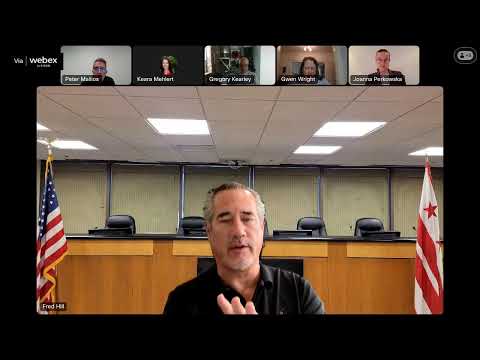
The most notable conditions came in application 21326 (3546 Whitehaven Parkway NW), where the board approved a three‑story rear addition and a second‑floor apartment in a new accessory structure while requiring lattice screens on both east and west deck sides to reduce privacy and visual impacts. Vice Chair Carl Blake and Chairman Fred Hill led review of the evidence and cited a shadow analysis and the Office of Planning report in recommending approval.
Other approvals included an expedited review for a one‑story covered rear deck (21374, 4401 Garrison Street NW), removal of a rooftop turret cap while retaining cornice detail (21352, 828 12th Street NE), a two‑story rear addition and accessory‑building expansion (21356, 3112 Woodley Road NW), an accessory apartment above a new garage (21357, 3805 T Street NW), and permission for residential use in a new accessory building (21359, 524 Taylor Street NW). Each motion was made by Chairman Fred Hill and seconded by Vice Chair Carl Blake; each decision was recorded as a 3–0–2 vote (three yes, zero no, two absent). Several applicants had ANC or adjacent‑neighbor letters of support, which the board considered in weighing impacts.
The board recorded its votes publicly for the record and noted that applications requiring full order language would receive appropriate follow‑up. Where the Office of Planning recommended specific design conditions, the board generally adopted them (or similar measures) to address privacy, screening and alley/turning issues.
The approved items are procedural in nature and largely consistent with local zoning policy that allows modest additions and accessory dwelling units where the applicant demonstrates no undue adverse impacts on light, air and privacy. The board said that more substantial or controversial items on the agenda would receive fuller review or be continued for further submissions.