
Austin ISD proposes closing Palm Elementary and reassigning students amid low enrollment and budget pressures
Get AI-powered insights, summaries, and transcripts
Subscribe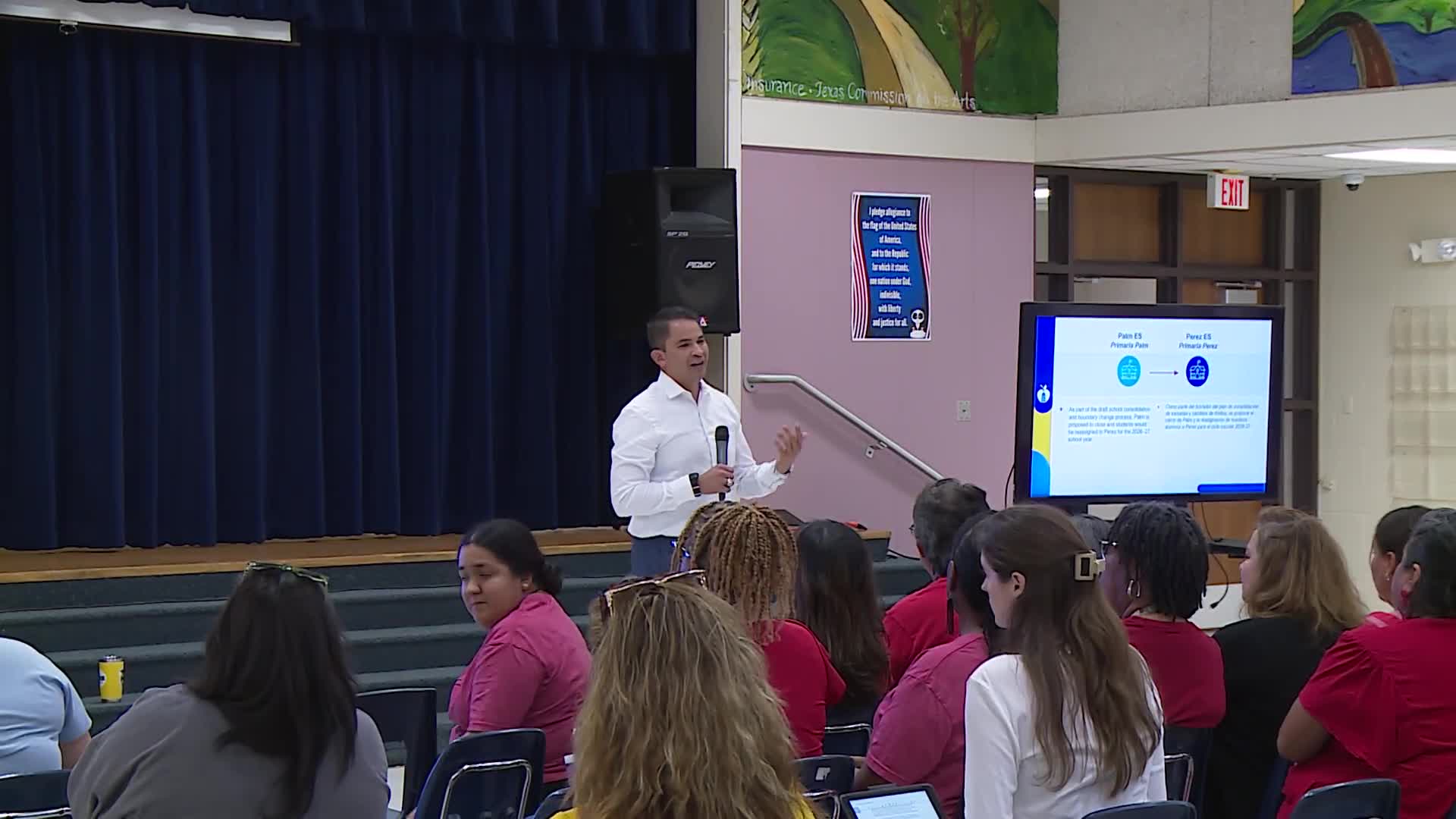
Summary
Superintendent Matias Segura said Austin ISD is recommending that Palm Elementary students be reassigned to Perez Elementary as part of a districtwide consolidation plan meant to stabilize school populations and preserve resources.
Superintendent Matias Segura said Austin ISD is recommending that Palm Elementary students be reassigned to Perez Elementary as part of a districtwide consolidation plan meant to stabilize school populations and preserve resources.
The proposal, presented at a community meeting at Palm Elementary, would take effect beginning next school year if the school board adopts a final plan. Segura said the district will release a revised draft this Friday, discuss it with trustees at a Nov. 6 board workshop and is scheduled to ask the board to vote on a final plan on Nov. 20.
Segura framed the plan as an effort to create “strong, vibrant, loving neighborhood schools” by aligning feeder patterns, concentrating programming and reducing inefficiencies. “We just don’t have the students that live here,” he said, adding that the district faces a budget deficit and accountability risks that would grow if changes are delayed. “If we do not own it, if we do not move the system, then at some point in the future, this district could look very, very different, and we’re not gonna let that happen. I won’t let that happen.”
Why Palm: low enrollment and system risks
District staff told parents and educators that Palm’s attendance area is well under capacity — officials repeatedly described the school as “less than 50% full” — and that the surrounding cluster contains far more seats than students. The administration said declining enrollment, rising operating costs and changes in federal funding for Title programs have left AISD with a structural budget gap; Segura said the district “lost $27,000,000 overnight” in federal changes and has cut about $100 million over the last two years.
To address those pressures, the draft plan focuses on three principal strategies: realigning feeder patterns so elementary students funnel into one or two middle and high schools; consolidating underutilized campuses; and better aligning programs such as dual-language to the neighborhoods where emergent bilingual students live.
What the district says it will and will not do
District leaders said they will publish a clearer transfer-policy document in the revised draft so families who have transferred into a school can understand options to “go with the school” or transfer elsewhere. Officials also pledged transition planning for staffing and programs, and said they will prioritize placements for staff from schools that are consolidated into receiving campuses.
On transportation, the district restated its policy that students who live more than two miles from their assigned campus, or who face hazardous walking routes, qualify for bus service. Officials said routes on arterial roads such as William Cannon would be reviewed as hazardous where appropriate.
On special education, Interim Executive Director Krista Etheridge told the meeting that the receiving school, Bettis (the planned receiving campus for some students in the cluster), “offers a very robust special education program” and that the district will publish a separate special-education transition document spelling out how services will continue during and after any move.
Community concerns raised at the meeting
Parents, teachers and residents pressed district leaders on several issues: why portions of nearby Blazer Elementary’s attendance area were not rezoned into Palm to raise Palm’s enrollment; whether Langford students could be moved into Palm or whether Palm students could be combined with Langford; how bus schedules would serve early-working parents; and long-standing flood risks on Onion Creek that in 2013 and 2015 impeded evacuation and access.
Parents repeatedly asked why a smaller rezoning of adjacent streets could not supply the number of students Palm needs. District operations staff and the superintendent said their occupancy and 10-year projection analyses indicate that a small pull of streets would not provide the hundreds of students needed to reach a healthy utilization rate and cautioned that shifting boundaries can create downstream capacity or feeder conflicts at middle and high schools.
Officials also described the bond and facilities treatment: remaining bond dollars for a campus would be considered by the board and the community oversight process, with a stated district preference to let bond investments “follow the students” within a feeder vertical where feasible.
Process and next steps
Ally Ghilarducci, senior executive director of communications and community engagement, asked attendees to submit additional comment-card feedback before the district’s stated deadline (comment cards were open through the day after the meeting). The district said a revised draft will be posted this Friday, a board workshop will discuss feasibility of community proposals on Nov. 6, and the board is slated to consider final adoption on Nov. 20. No formal vote occurred at the community meeting.
What the district did not decide at the meeting
No board action or final decisions were made at the meeting. Segura and staff described policy directions and transition planning but said the administration will refine the draft to incorporate feasible community ideas before presenting a final recommendation to the board. Officials declined to commit to a particular repurposing outcome for the Palm site, saying any reuse or sale of district property would follow board consideration and community input.
Why this matters
District leaders said consolidations are being proposed to concentrate resources so that more AISD schools can be fully staffed and better supported with curriculum, instructional coaches and intervention services. Families and staff said the changes would be disruptive and urged AISD to pursue alternate rezoning and capacity options. The superintendent asked for continued engagement during the revision and transition-planning phases and pledged to prioritize student services and staff placement in any consolidation.
Ending note
Superintendent Segura reiterated the district’s intent to refine the draft after community input and asked residents to continue to participate in the formal public process ahead of the board’s review and vote.