Get Full Government Meeting Transcripts, Videos, & Alerts Forever!
Get email alerts on the Bylaws Revision topic
No spam. Unsubscribe anytime.
Sun City board presents comprehensive bylaws rewrite, schedules Oct. 29 first reading
Summary
The Recreation Centers of Sun City Incorporated presented a comprehensive set of proposed bylaw revisions Oct. 1, aligning the association with the Arizona Nonprofit Corporation Act and proposing new rules for membership qualifications, proxies and discipline procedures; the board scheduled a first reading of the draft for Oct. 29 and a second reading Nov. 10.
The Recreation Centers of Sun City Incorporated (RCSC) presented an extensive draft revision of its bylaws at a town‑hall meeting Oct. 1, describing changes to definitions, membership qualifications, voting methods, proxies, committee rules, discipline procedures and the corporation—s fund categories.
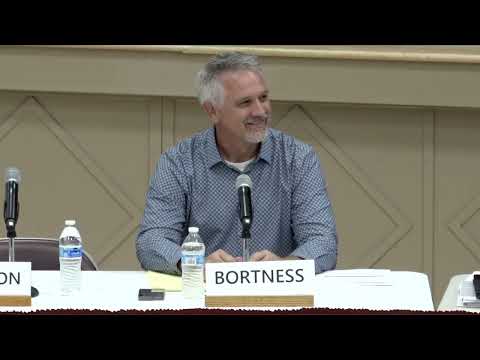
Tom Foster, RCSC board president, opened the meeting and said the purpose was —to give input to the board on the proposed— bylaws developed by a nine‑person working group that met weekly since June. Secretary Preston (Secretary Kais) and working‑group members outlined the group—s process, the attorney review and a timeline for member motions.
Why it matters: the draft rewrites governance language to align the association with the Arizona Nonprofit Corporation Act (ANCA), clarifies what constitutes the —business affairs of the corporation,— and redefines which matters members may directly control versus which are board‑managed. Those lines determine whether a member motion becomes a binding amendment or a nonbinding recommendation to the board.
Key changes described by the working group include: - Legal alignment and definitions: the draft inserts ANCA as the primary statutory authority and standardizes definitions such as —business affairs of the corporation— and separate —medical— and —incident— report categories. The working group said attorney guidance was used to avoid conflicts with the articles of incorporation and state law. - Membership and voting mechanics: the 75‑mile membership rule was removed; membership requires occupying the property and appearing on Maricopa County tax rolls as an owner other than a rental or nonresident. The quorum for membership meetings remains 500. To increase participation, the draft allows electronic voting, absentee ballots, in‑person voting and proxies for annual meetings but retains a stricter approach for special meetings. - Proxies: the working group proposed limiting proxy holders to 10 proxies and requiring proxies to be submitted for each specific motion, with a proxy—s authority expiring after the motion it covers. - Bylaws amendment thresholds and board actions: amendment votes by the membership will require a two‑thirds vote at membership meetings; the board may propose bylaws changes but any board amendment must also pass by two thirds and cannot waive the second reading. - Elections and term limits: election winners will receive term lengths according to vote rank to fill staggered seats; board members are subject to a six‑year term limit. The working group recommended a 10‑month residency requirement for board service. - Committees and process: committee vice chairs replace the —co‑chair— label, committee chairs should not vote at committee meetings, committees can set recruitment procedures but chairs make final appointments, and committees may remove a member by two‑thirds vote of the entire committee. The long‑range planning committee was asked to develop proposals at least five years in advance. - Discipline and hearings: the draft allows a redacted copy of an incident report to be made available to the person named in the report, permits both complainant and respondent to meet with a board hearing commission and present witnesses (the working group said those meetings should be separate), requires parties be informed of outcomes, and calls for deletion of incident records when a commission finds no violation. - Funds and investments: the bylaws draft defines four pots of money (unrestricted operating funds, restricted operating reserve for emergencies, restricted PIF funds for large capital projects and SIF funds for capital project list items) and explains approval authority for each.
Process and schedule: the board will hold a special session on Oct. 29 for a first reading of the bylaws article by article, then a second reading and vote at a Nov. 10 meeting; possible adoption is contingent on attorney review and on bringing related board policies into alignment before the bylaws take effect. Foster said the working group meets again Oct. 2 and that the board will forward draft language to the association—s bylaws attorney for compliance review with the ANCA and the articles of incorporation.
Member concerns raised during public comment included requests to revisit proxy limits, to study an exemption from PIF/SIF transfer fees for surviving spouses, to expand member outreach (including printed materials and visitor‑center services), and to change whether committees should be recorded. The working group repeatedly said it had referred substantive legal questions to the association—s attorney and would consider public comment when finalizing recommendations.
Board response and next steps: the board acknowledged some suggestions would be handled in board policy rather than in bylaws and said it favored an article‑by‑article vote so members and directors could refine problem areas without rejecting the entire package. The board also signaled it may delay putting the new bylaws into effect until corresponding board policies are updated.
The association provided a detailed schedule for member motions: members may submit motions after the prior annual meeting through September; motions will be posted online and sent to the bylaws attorney for review of whether they are —proper member subjects— under ANCA; a posting and feedback period will follow, then tabulation of votes prior to the March annual meeting if amendments advance to that stage.
Ending: the board closed by restating the Oct. 29 and Nov. 10 timetable for readings and votes and invited members to attend the hearings and the upcoming meetings.