Get Full Government Meeting Transcripts, Videos, & Alerts Forever!
Get email alerts on the School Finance topic
No spam. Unsubscribe anytime.
Borger ISD outlines how a 5-cent M&O increase would unlock $1.53 million for classrooms, buildings and staff
Summary
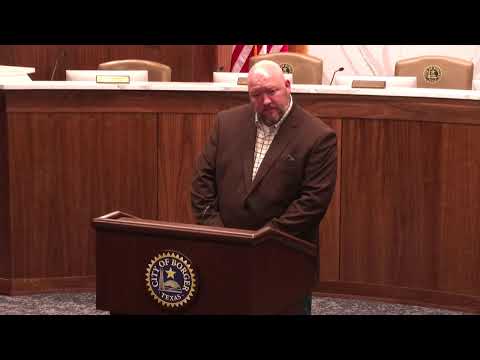
Borger ISD official Daniel Fuller told residents at a public information session that a proposed 5-cent increase to the district's maintenance and operations tax rate would generate an estimated $561,000 in local revenue and prompt roughly $970,000 in additional state aid, yielding about $1,531,000 annually to be allocated to five priority areas if voters approve the measure.
Borger ISD official Daniel Fuller told residents at a public information session that a proposed 5-cent increase to the district's maintenance and operations (M&O) tax rate would generate an estimated $561,000 in local revenue and prompt roughly $970,000 in additional state aid, yielding about $1,531,000 annually to be allocated to five priority areas if voters approve the measure.
Fuller emphasized that the ballot language covers only the M&O portion of school finance and does not show the separate interest and sinking (I&S) portion, which the district says dropped by just over 10 cents. "This ballot language is specific to the M&O side. So it does not discuss the I and S side at all," Fuller said, adding that on net the combined tax rate would be lower than the previous year even though the M&O line item increases.
Why it matters: Fuller said the local contribution is designed to both fund specific district needs and trigger state funding that increases the district's purchasing power year after year. He gave a five-year example, saying $970,000 per year would approach $4.85 million in additional state dollars over five years.
Planned spending categories and amounts Fuller outlined five categories where the combined local and state funds would be spent and provided approximate annual allocations the district has proposed: - Early education/pre-K and daycare: $300,000 to expand pre-K access and support a daycare program that Fuller described as operating at a deficit. Fuller said the district wants open-enrollment pre-K offered at no cost to eligible-age children rather than the current half-day, income-qualified model tied to state funding. - Homestead exemption continuation: $144,000 to preserve an extra homestead exemption the district currently offers above state requirements, which Fuller said cost the district $144,000 in foregone revenue last year. - Safety and security: $75,000 for replacement of antiquated equipment plus $50,000 annually to fund projects recommended by a local safety/security committee made up of emergency officials and district representatives; committee recommendations would go to the superintendent and then the board for approval. - Operations and infrastructure: $529,000 total aimed at technology obsolescence replacement (e.g., Chromebooks), transportation (Fuller identified $148,000 for buses, white-fleet vehicles and upkeep), roofing ($100,000), HVAC ($75,000), and $25,000 for fine arts and auditorium needs. Fuller cited Texana Gym as an example, saying one 30-ton HVAC unit requiring full replacement could cost about $53,000. - Recruitment and retention: $220,000 proposed for teacher stipends (a $500 payment in December and $500 in June, annually) and $80,000 for nonadministrative staff in a similar two-installment model. Fuller said positions paid on the administrative pay scale (principals, counselors, librarians, nurses) would not be eligible for these stipends under the proposal.
Fuller described the pre-K funding mechanics to illustrate the need for local dollars: state funding often covers only half-day equivalents for qualifying students, so in an example of 100 pre-K students with only 50 qualifying for state funding, the district said it effectively receives funding for about 25 full-day equivalents. The district's local allocation is intended to allow full-day, open-enrollment pre-K without income qualification for eligible-age children.
Questions from residents and staff planning Residents asked about lunch applications and whether pre-K students must complete income forms. Fuller said the district participates in the Community Eligibility Provision (CEP) and "as it stands this year, no student is paying for lunches. No student is paying for breakfast." He added that CEP covers meal costs but pre-K programs still may require income information for state pre-K eligibility.
On daycare expansion, Fuller said the district currently would expect nonemployee families to pay rates similar to the existing daycare and that the program needs a higher enrollment (the district estimates breakeven between 50 and 60 children) and year-round facilities to serve more families. The district served the mid-20s last year and about 30 this year.
On capital replacement planning, Fuller said the district has completed or commissioned needs assessments: a master vehicle list (for bus replacements), a district-wide roofing assessment to be presented to the board in November, and an energy-optimization inventory for HVAC needs. Fuller said two of the oldest buses are already targeted for a grant application that opens the next day and described an intention to use grant funds when appropriate alongside locally designated dollars.
Accountability Fuller said the district would allocate every dollar to the stated categories if the proposition passes and produce an annual impact document listing what each dollar purchased and how unspent funds were carried forward and used. "If there's any money not spent, then it'll be reported, and then it'll be intentionally spent as soon as possible," Fuller said.
Uncertainties noted Residents asked how a separate proposal (referred to in the meeting as "Proposition 11") to raise the senior homestead cap from $140,000 to $200,000 would affect district funding. Fuller said the district could not say how that change would be handled and that any modification would be addressed by the state's funding mechanism in place at the time of the vote.
Contact and next steps Fuller encouraged residents with follow-up questions to email daniel.fuller@borgerisd.net or set an appointment to discuss the voter-approval tax-rate election and the district's proposed allocations.