Get Full Government Meeting Transcripts, Videos, & Alerts Forever!
Get email alerts on the Infill Duplexes topic
No spam. Unsubscribe anytime.
Board approves three infill duplexes with ADUs after neighbors raise drainage and infrastructure concerns
Summary
RCJ Designs received approval to build three duplexes each with a rear ADU on long narrow lots; neighbors spoke at length about stormwater, sewer capacity and tree impacts. Board approved special exceptions but noted permitting will assess drainage and utility work.
The Tulsa Board of Adjustment on Oct. 28 granted special exceptions allowing three new duplexes — each with a rear accessory dwelling unit (ADU) — to be built on three adjacent, long narrow lots near East King Place. The board voted to approve the special exceptions after hearing neighbor testimony and design clarifications from the applicant.
The property owner, represented by Jesse Stringer and developer Alejandro Castro, said the parcels have been vacant for decades and his plan uses a compact duplex footprint with shared drive aisles and two on‑lot parking spaces per duplex. The owner said construction per unit would take roughly four months and that the project will include modern drainage and sidewalk improvements. "We're making sure that we're preserving a certain percentage of open space that is required by code," Stringer said, noting impervious area and stormwater detention will be reviewed at permitting.
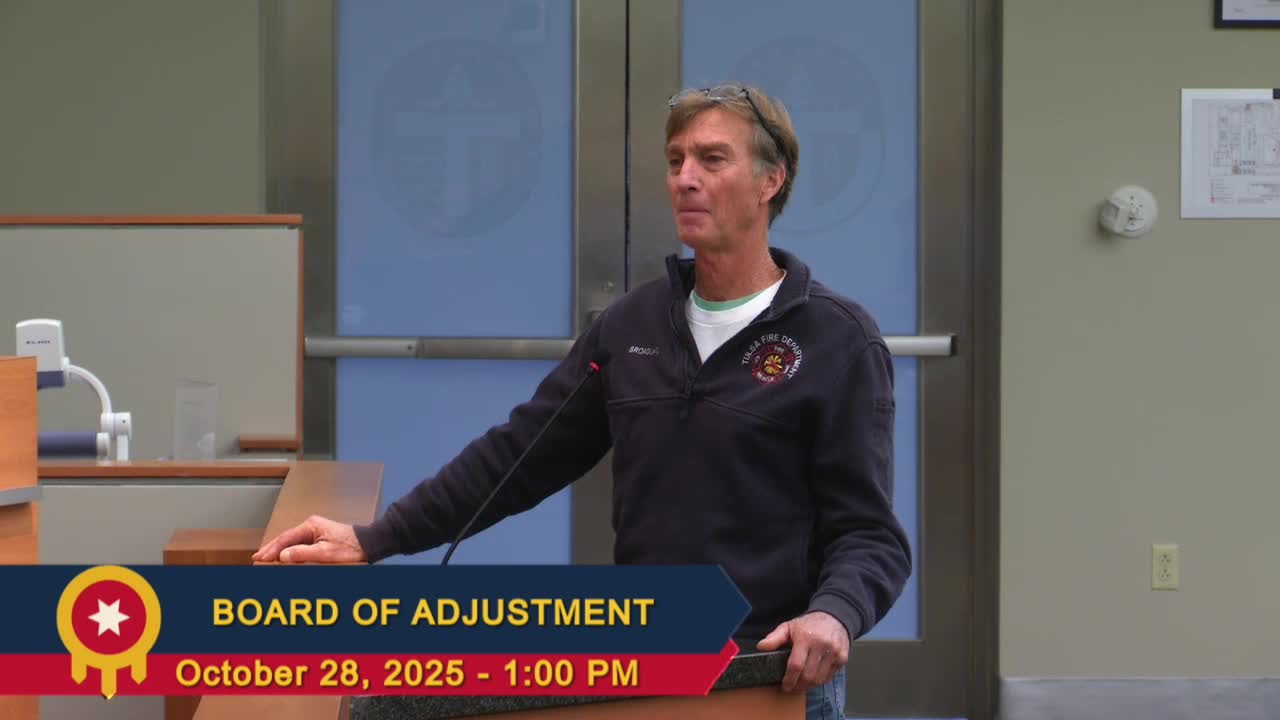
Several nearby residents opposed the proposals in public comment. Sue Ann Hatcher, who said the lots have been empty since the 1950s, told the board her primary worry was additional stress on aging sewer and stormwater infrastructure. "We have regular fixes from the city on our sewers and on our water because the infrastructure is shot," she said. Vicky Enright, who lives adjacent to the property, said the fill recently added to the lots had already altered drainage and said she expects developers will need to extend services into the site.
The applicants and the board said such infrastructure and drainage concerns must be addressed in permitting. City staff confirmed that new construction would require connection to public sanitary sewer (septic would not be allowed) and that permit review will require engineered stormwater plans and detention solutions appropriate to new development.
Board members noted the proposed buildings are designed to match neighborhood scale and stressed the need for well‑executed drainage plans and coordination with city public works. After discussion the board approved the special exceptions for the duplexes and the ADUs; members emphasized that final permitting will govern utility connections, stormwater detention, erosion control and construction sequencing.
Next steps: the developer will submit building and civil permits. Engineering approval for stormwater and connection to sanitary sewer will be required before any site work begins.