Get Full Government Meeting Transcripts, Videos, & Alerts Forever!
Get email alerts on the Public Comment And Community Response topic
No spam. Unsubscribe anytime.
Community splits over True North behavioral‑health campus; supporters cite unmet need, critics warn county cost and regional impacts
Summary
A 33‑speaker public comment period split advocates and opponents of the True North Behavioral Health Campus proposal. Supporters called it a necessary local investment in crisis and inpatient capacity; opponents warned of county fiscal and operational risks.
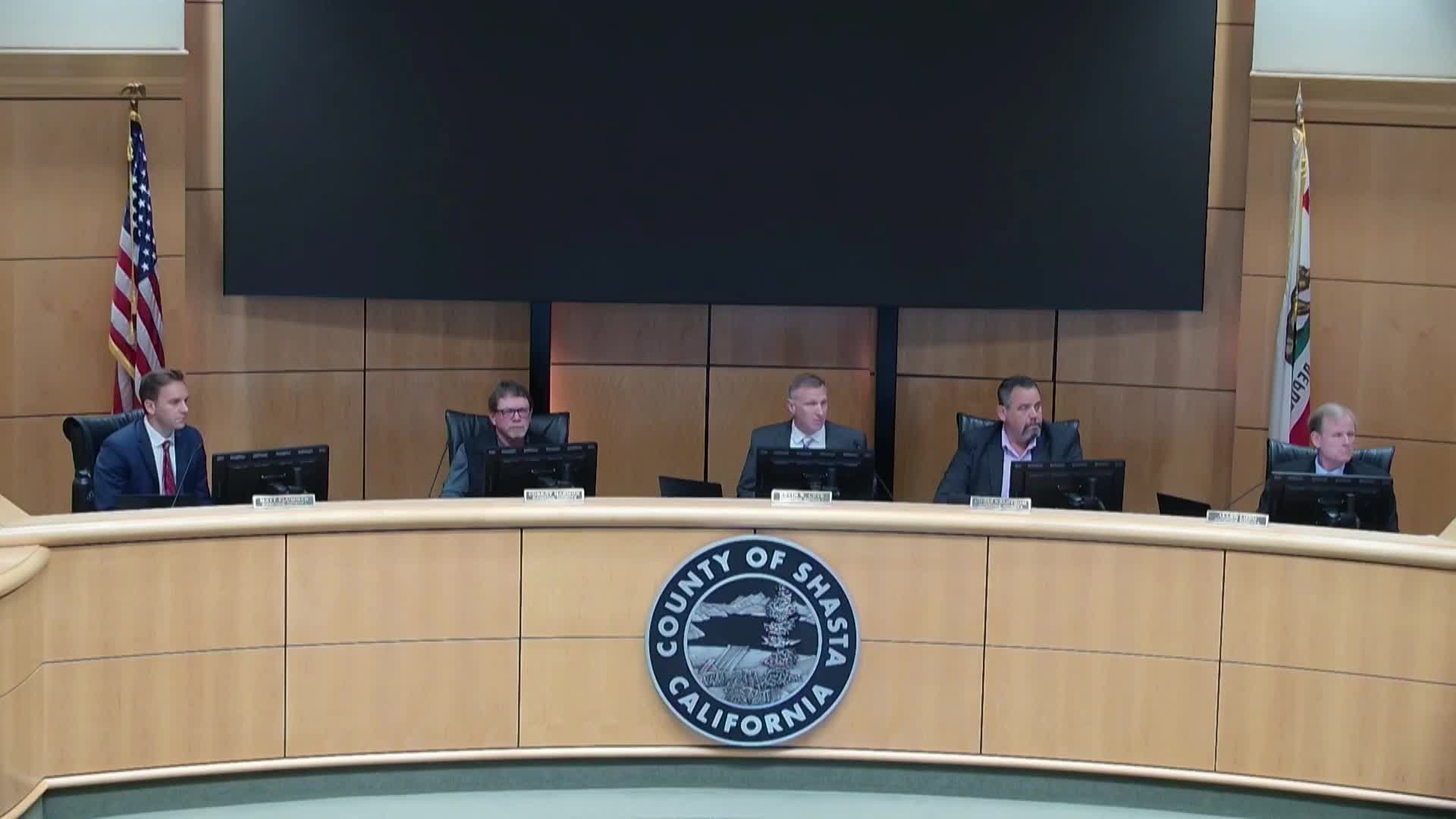
A crowded public‑comment period at the Oct. 24 Shasta County Board of Supervisors special meeting featured 33 speakers sharply divided over the True North Behavioral Health Campus proposal. Supporters said the campus (as proposed by Arch Collaborative with Signature Healthcare as applicant/operator) would fill long‑standing gaps in crisis and inpatient care for children and adults. Opponents warned the county could inherit fiscal risks and operational burdens.
Supporters’ arguments: Health‑care providers, social‑service leaders, school officials and family members described repeated examples of local residents who were stabilized in emergency departments or sent out of county for weeks or months. "There is no in between and no safe place even remotely close to Shasta County where you can get voluntary crisis stabilization services," said Brianne Fulton, a licensed professional clinical counselor and former crisis stabilization supervisor, describing local system gaps. Representatives of Arch Collaborative, Hill Country Community Clinic and other organizations presented a list of institutional letters of support from regional counties, hospitals, law enforcement and nonprofits.
Operator and funding: Alan Eeks of Signature Healthcare said Signature would be the sole applicant and that private and state funds would together build the roughly $200 million campus, with Signature providing about $50 million of private investment. "Being viable on its own without this grant is not possible," Eeks said, arguing the project is not a county‑funded initiative but relies on state BCHIP funds.
Opponents’ arguments: Speakers opposing the project, including some residents and elected officials, argued a regional model risks bringing patients from other counties into Shasta, stretching county staff and creating longer‑term fiscal obligations. Several commenters criticized the timing and process, saying the special meeting was scheduled close to the BCHIP deadline and denied the applicant a full public presentation. Others questioned Signature’s past facility oversight in other counties.
Community turnout and tone: Several speakers accused board leadership of politicizing the process. Proponents said the project reflected months of stakeholder engagement; HHSA said that county behavioral‑health staff were not offered the level of participation needed to vet fiscal details. Multiple speakers described traumatic family experiences of having to travel long distances for care.
Result: Despite the vocal support presented at the hearing — and dozens of institutional letters shown by proponents — the board voted 3–2 to send a letter aligned with HHSA's stated opposition; that letter will be included in the county correspondence as the BHCIP application proceeds to the state.
Provenance (excerpt): Dr. Frederick Buchholz public comment (00:17:48): "First, Shasta isn't an outlier. It's the epicenter of Northern California's behavioral health gaps..." Alan Eeks (00:49:18): "Yes. We're the sole applicant and we're fully responsible for the application and the financial responsibility that comes behind it."