Lifetime Citizen Portal Access — AI Briefings, Alerts & Unlimited Follows
Yamhill planning commission continues hearing on omnibus comprehensive-plan and code amendments
Loading...
Summary
The Yamhill City Planning Commission continued its public hearing on LA 2025-01 — an omnibus package of comprehensive-plan and development-code amendments — to May 27 at 6:30 p.m. after consultants summarized proposed edits and residents raised questions about maps, setbacks, fire safety and utility capacity.
The Yamhill City Planning Commission continued its public hearing on LA 2025-01 — an omnibus package of comprehensive-plan and development-code amendments — to May 27 at 6:30 p.m. following a lengthy consultant presentation and public comment.
Consultants from the Bruxman Group and 3J Consulting summarized changes funded by two grants from the Oregon Department of Land Conservation and Development (DLCD). “The case before you is LA 2025 Dash 01,” consultant Doug Bruxman told commissioners, and Steve Faust of 3J Consulting said the grants supported updates to the Central Business District code and residential regulations plus a buildable‑lands inventory. The packet attached exhibits A through I, which include draft amendments, audit summaries and the inventory memo.
Why it matters: The package responds to recent state requirements and grant deliverables and would update Titles 10, 11 and 13 of the municipal code. It aims to align local code with statewide planning goals, produce clear-and-objective standards for specified housing types, and update planning maps and background information. Advocates say the changes streamline review and create more opportunity for housing and mixed use in and around downtown; some residents warned changes could affect neighborhood character, fire risk and infrastructure capacity.
Key proposals and details
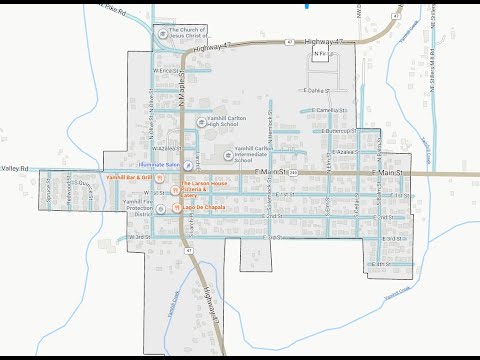
- Maps and background: Consultants updated comprehensive-plan maps (zoning/designations, riparian corridors, wetlands, soils, constraints, utilities) using the latest water, wastewater and transportation plans and flagged a future addition of steep‑slope policies after a state study completes.
- Housing and code changes: Drafts clarify definitions, permit duplexes in residential zones under the same review path as detached single-family homes, and revise accessory dwelling unit (ADU) rules to match state requirements. The ADU draft specifies separate entrances are allowed; unit size may be up to 50 percent of the primary dwelling; owner occupancy would not be required; and no off-street parking can be required for ADUs per state law.
- Single-room occupancy (SRO): The package adds SRO as an allowed housing type with an operational threshold (minimum four rooms) and a parking standard of 0.5 spaces per SRO unit.
- Central Business District (CBD): The comprehensive-plan text adds economic goals and policies for the CBD and the draft development code would prohibit single-family and most industrial uses in the CBD while allowing mixed-use development, ground-floor commercial with upper‑floor residences, and small-scale producers such as wineries, breweries and distilleries under objective standards (retail at least 25% of gross floor area with a 1,000 sq ft minimum; production/storage capped at 10,000 sq ft; outdoor storage limited to under 400 sq ft).
- Building height and parking: The CBD draft raises the typical height cap from 35 to 45 feet to accommodate three-story residential-over-retail projects. The code also clarifies options for off‑street parking, including allowing required parking to be provided within 500 feet of the CBD boundary in some cases.
Public input and questions
During the hearing several residents and commissioners asked for clarifications or raised concerns. Councilor and resident Patty Tieran asked about how ordinance changes are included in the city council packet and whether updated ordinances appear on the city website. Commissioners and members of the public requested more information about how and why maps were updated and asked for the full audit documents referenced in the packet (summaries were included as exhibits F and G).
Safety, infrastructure and process concerns were recurring topics. Multiple commenters asked about reduced side-yard setbacks proposed in some zones (from 7.5 feet to 5 feet in earlier drafts), urging the commission to consider wildfire and fire-spread risk, local fire-district coordination, and state building-code requirements. Consultants said state building and fire codes govern construction standards and that setbacks proposed were consistent with precedents and state rules; commissioners asked staff to coordinate further with the fire district.
Staff recommendation and next steps
With planning staff not present, consultants provided the staff-report summary and listed three options for the commission: (A) adopt staff findings and recommend council adoption; (B) recommend no action; or (C) continue the hearing. After questions and public testimony the commission voted to continue the hearing. A motion to continue the public hearing to May 27 at 6:30 p.m. passed by voice vote; no roll-call vote or roll‑call tally was recorded in the transcript.
Formal action taken
A motion was made and seconded to continue the public hearing on LA 2025-01. The commission approved the continuance (May 27 at 6:30 p.m.) by voice vote with no roll-call tally recorded. No ordinance or legislative amendment was adopted at this meeting.
What remains open
The record remains open for the continued hearing. Commissioners and staff identified several follow-ups: provide full audit documents and the buildable‑lands inventory maps for commissioner and public review; confirm map updates and data sources; coordinate code changes with the local fire district and state reviewers; and clarify notification distances for different review types.
Ending note: The hearing will resume May 27 at 6:30 p.m., when the planning commission expects to receive additional materials and continue deliberations.