State official: Hagerstown must submit local abatement plan by July 1 to unlock $378,528 in opioid settlement funds
Loading...
Summary
A state official told the Hagerstown Mayor and City Council on Nov. 4 that the city must file a local abatement plan by July 1 to receive a second stream of opioid-settlement money or risk those funds reverting to the county.
A state official told the Hagerstown Mayor and City Council on Nov. 4 that the city must file a local abatement plan by July 1 to receive a second stream of opioid-settlement money or risk those funds reverting to the county.
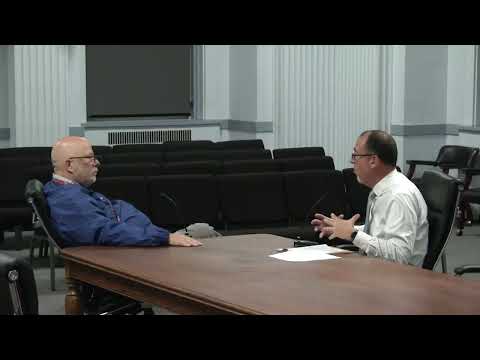
Avery Meyer, opioid restitution fund program director at the Maryland Office of Overdose Response, said Maryland's settlement distributes funds in four streams: a state allocation and a state discretionary abatement fund (each 15 percent), local direct funding (25 percent) that goes straight to subdivisions, and targeted abatement grant (TAG) funds (45 percent) that the state releases after approving local abatement plans.
"Currently, the city of Hagerstown should have received $184,296 in local direct payments as of 07/01/2025. There's an additional $378,528 available as of July 1, but those are targeted abatement grant funds," Meyer said. "Our office cannot release that until the city submits a local abatement plan, and we are able to review and approve that."
Meyer said payments under the settlements will continue through 2038 and that the two local streams together currently total roughly $1,500,000 for Hagerstown under existing settlements, though that number could change as new settlements finalize.
She emphasized that allowable uses for the Opioid Restitution Fund (ORF) are governed by Maryland's state subdivision agreement and Exhibit E of the national settlement, and that funds must be spent on opioid remediation. "All ORF funds have to be spent specifically on opioid remediation purposes," Meyer said. Exhibit E, Meyer said, specifically ties allowable spending on services to people with opioid use disorder or co-occurring substance-use and mental-health disorders.
Meyer walked council through reporting and approval mechanics. Local abatement plans are five-year, proactive plans that unlock TAG dollars; the city must also submit annual expenditure reports and performance metrics. She urged the council to collaborate with Washington County, the local health department, and the county's overdose prevention team (OPT) to align spending and avoid duplication, and to include community providers and people with lived experience when drafting priorities.
Meyer noted the ORF administrator can advise but cannot make final legality calls about whether a planned program fits Exhibit E; she recommended council consult local legal counsel and said the state attorney general's office can enforce unallowable spending.
Mayor William McIntyre and several council members pressed for clarity on county allocations and coordination. County staff confirmed Washington County's total through 2038 is substantially larger (roughly $15 million projected over the settlement period) and that county staff recently submitted a local abatement plan pending minor edits.
Meyer also warned of a municipal-specific deadline: "The one deadline we actually did institute is for municipalities ... to submit a local abatement plan by the end of this fiscal year. So that's July 1. Otherwise, we will revert the TAG funds to the county," she said.
Councilmembers suggested forming a joint city-county committee or using an existing advisory group (for example, the county OPT or a new multi-agency steering committee) to develop an abatement plan that prioritizes interventions where the need is greatest. Meyer said municipal funds can be combined with county planning or managed by a health department or other local partner if the city chooses to do so.
Why it matters: ORF payments are sizable and front-loaded in many settlements. Hagerstown must move quickly to retain discretionary TAG funds and must design plans that fit strict allowable-use language or risk losing funds or facing enforcement.
What's next: Staff and council agreed to open discussions with Washington County and local partners to craft a local abatement plan and requested the state provide templates and contacts for the county OPT and the Office of Harm Reduction.
Ending: Meyer offered to share the ORF primer and the state's FY25 ORF report and said the state will publish a public spending dashboard required by recent legislation.