Get Full Government Meeting Transcripts, Videos, & Alerts Forever!
Get email alerts on the Stormwater Management topic
No spam. Unsubscribe anytime.
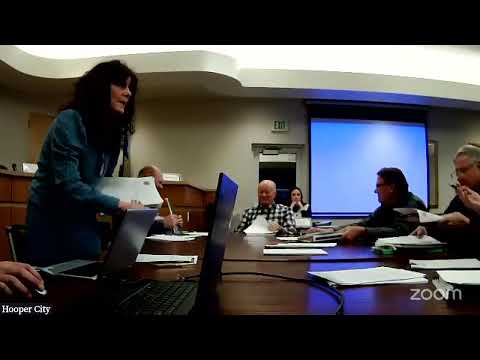
Hooper City hears plan updates to meet new MS4 rules before state audit
Summary
Jeff Morgan, a registered stormwater inspector with JUB Engineers and the stormwater official for Hooper City, told the council the city must update its Stormwater Management Plan to comply with changes adopted by the Utah Legislature in 2024 and to prepare for a Division of Environmental Quality audit scheduled for Feb. 4'6.
Jeff Morgan, a registered stormwater inspector with JUB Engineers and the stormwater official for Hooper City, told the council the city must update its Stormwater Management Plan to comply with changes adopted by the Utah Legislature in 2024 and to prepare for a Division of Environmental Quality audit scheduled for Feb. 4'6.
Morgan said the full plan is lengthy — "about 500 pages" — and staff prepared a shorter summary document to give developers and contractors a clear set of choices and expectations. "This document will do, if it's adopted, and made part of our plan, it basically kind of lays out the rules and engagement between us and the city and developers and contractors that want to do construction within the limits of the city," Morgan said.
Why it matters: the 2024 legislative changes altered how MS4s (municipal separate storm sewer systems) may be administered and how inspections may be performed. Morgan said the law gives developers two options: either perform their own inspections and submit monthly electronic reports (photos and written documentation) or allow the city's stormwater official to conduct on-site inspections. He told the council adopting the updated plan before the scheduled audit would help demonstrate compliance.
Details: Morgan outlined how city inspections would still be triggered even if a contractor elects to self-manage. Triggers include failure to submit the required monthly documentation, formal complaints or reports from city personnel or the public, and observable problems that warrant an on-site visit. On the question of cost, Morgan said he had not found language in the new law that authorizes the city to back-charge contractors for on-site inspection time; "right now, we have a budget set aside each year that covers the stormwater program" and the city would likely continue to use that budget to pay inspection costs unless council decides otherwise.
Council members and staff clarified roles: Taylor Stauffer serves as the city engineer under contract, Jared Hancock is the public works director, and Morgan said he and JUB will work with city staff to prepare for the February audit. Morgan acknowledged the plan could be amended later if councilers request changes and recommended posting the summary document publicly on the city website when the council adopts it.
What the council did: Morgan asked the council to adopt the updates. The transcript records a request for adoption and discussion but does not record a formal motion, second, or vote on the adoption during this meeting. The item therefore appears as a requested adoption with no formal council action recorded in the provided transcript.
Context and next steps: Morgan said the Division of Environmental Quality has scheduled a program audit on Feb. 4'6 and that adopting the updated plan would be an important first step in showing compliance. He and city staff plan to meet internally and with the state to present the city's documentation during the audit.