Lifetime Citizen Portal Access — AI Briefings, Alerts & Unlimited Follows
Residents urge Leavenworth County to reject Riverbend Heights RHID, citing taxes and infrastructure
Loading...
Summary
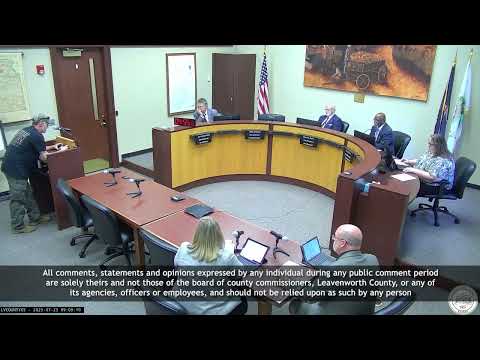
Multiple residents and neighborhood activists urged the Leavenworth County Board of Commissioners to oppose the proposed Riverbend Heights residential housing improvement district (RHID), a 146‑acre development proposed by Ad Astra that commenters said would encompass roughly 406 homes.
Multiple residents and neighborhood activists urged the Leavenworth County Board of Commissioners to oppose the proposed Riverbend Heights residential housing improvement district (RHID), a 146‑acre development proposed by Ad Astra that commenters said would encompass roughly 406 homes.
"These houses won't be affordable to our local police, firefighters, and teachers," said Rebecca Mahan, a Lansing resident, who asked commissioners to "vote down this RHID in Riverbend Heights." Mahan said the development would "deplete our local resources and cause a heavier financial burden to your taxpayers."
April Cromer praised the board's April 23 decision to cap RHIDs at 15 years and said Lansing City Council unanimously denied the Riverbend Heights RHID on May 1. "That should have been the end of the story," Cromer said, accusing the developer and members of the Leavenworth County Development Corporation of pressuring officials and seeking to "rewrite the ending." She characterized the requested taxing district as "deeply unethical" and warned that the county would receive only a small share of captured tax revenue over the life of the RHID.
Paul Cromer told the commission that nearby development can occur without tax abatements and said the county would get only 6.67% of the captured tax revenue under the Riverbend Heights plan. John Bridal, another resident, called the project "not a modest project" and repeated figures included in the project's RHID materials about infrastructure costs and the number of homes proposed. Several speakers said the neighborhood historically consists of larger, 2.5‑acre lots and argued the proposed density (small lots and 406 houses) would change the character of the area.
Other public commenters raised traffic and safety concerns for McIntyre Road and K‑7, questioned school capacity and water infrastructure, and said the RHID package appeared to give outsized financial benefit to an out‑of‑town developer. "Please do not allow us to be used as a cash cow for this developer," Mahan said.
No formal county action on the Riverbend Heights RHID was taken during the meeting. Commissioners did not vote on the RHID at this session; the remarks during public comment were recorded for the public record and for future consideration on the agenda.
Why it matters: Public commenters framed the RHID debate as a choice between short‑term developer incentives and long‑term tax and service obligations for county residents and schools. The county’s previous policy action capping RHIDs at 15 years and the Lansing City Council’s May 1 denial of the district were cited repeatedly by speakers advocating that the county stand with residents rather than the developer.