
We Energies tells Port Washington council proposed tariffs aim to keep data‑center costs off other customers
Get AI-powered insights, summaries, and transcripts
Subscribe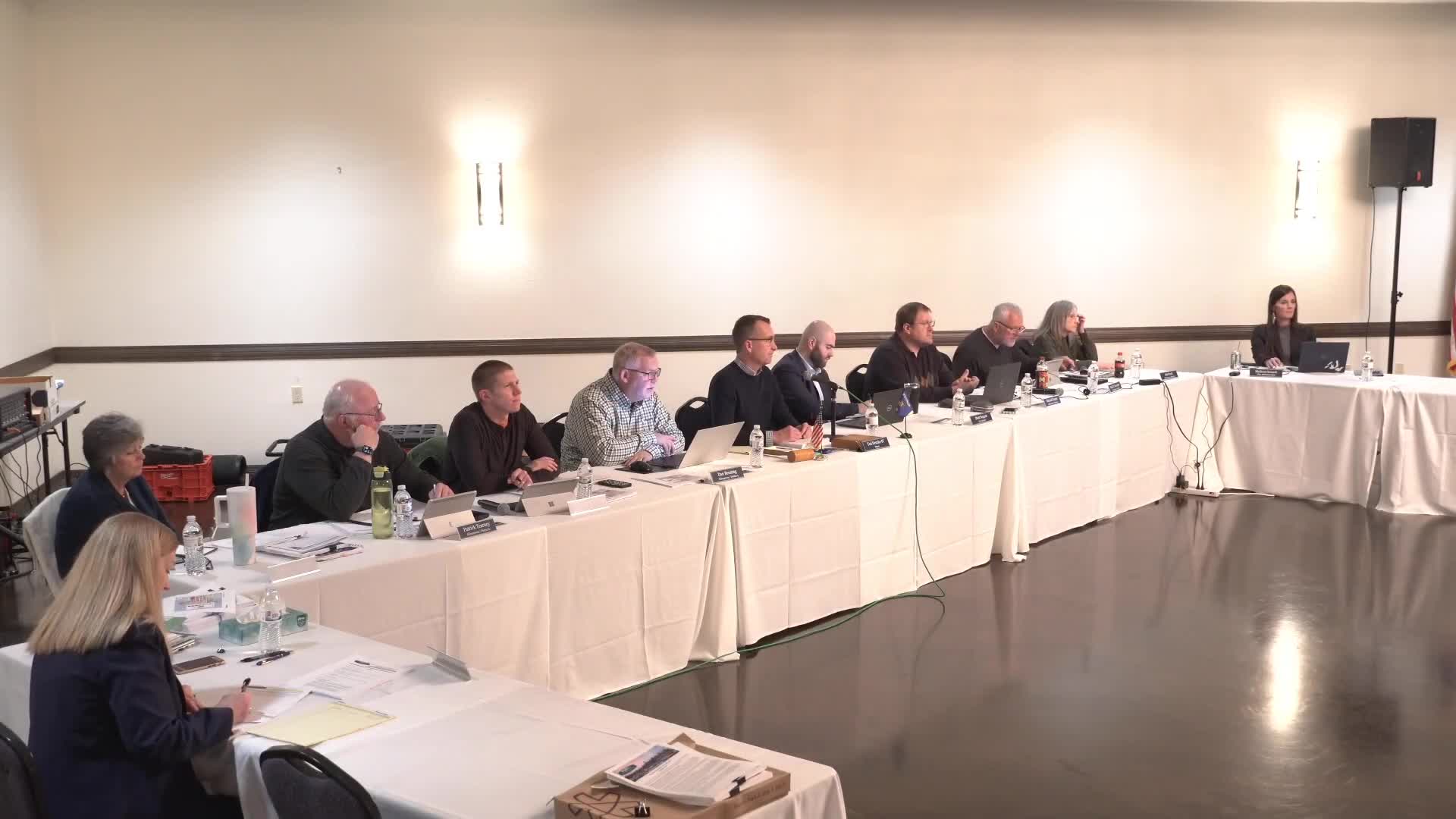
Summary
We Energies told Port Washington’s council on Nov. 4 that its proposed tariffs and commercial agreements are designed to allocate the cost of dedicated generation and transmission for very large data‑center customers to those customers, not to the utility’s other customers.
We Energies executives visited the Port Washington Common Council on Nov. 4 to explain how the utility expects to provide power for large data‑center customers while protecting other utility customers from bearing the cost.
Bert Garvin, executive vice president at WEC Energy Group, and Rich Stasick, vice president of regulatory affairs, described two interlocking tariff proposals and related commercial agreements now under review at the Public Service Commission of Wisconsin. Garvin said the filings are intended to be transparent and to allocate the costs of dedicated generation and transmission required to serve very large customers to those customers rather than to the utility’s general customer base (first reference: 00:01:35).
Key elements of the utility’s approach
• Dedicated tariff eligibility: Staff described a “very large customer” tariff intended for new customers bringing 500 megawatts or more of load; customers must subscribe to specific new generation resources (wind, solar, batteries and dispatchable gas units) in order to be eligible.
• Backstop and early termination: Executives emphasized payment and cancellation agreements and other protections. Stasick said that if a customer left before plants were paid for, the customer would be responsible to reimburse the net book value to the utility to the extent the facilities cannot be repurposed. The company reported signed PCAs guaranteeing about $1.1 billion in generation facilities for the Vantage project in its filing (first reference: 00:01:35).
• Transparency and regulatory review: Garvin and Stasick noted the utility’s filings are publicly available through the PSCW and that citizen groups and regulators can review costs, subscriptions and rate case accounting to ensure separation of data‑center costs from other customers’ rates.
Council Q&A and local implications
Council members asked where customers would see the rates and how the tariffs would appear on consumer invoices; We Energies said approved tariffs and the utility’s tariff book will be publicly available and that future rate proceedings would show separations. Staff and the company also discussed how transmission upgrades can strengthen the system for a wider region and could lower consumer prices in constrained areas by reducing congestion.
What the company said it will and will not do
The utility said it is pursuing an “all‑of‑the‑above” generation strategy: adding renewables and modern gas‑fired peaking units to meet reliability needs while also contracting with large customers for dedicated resources. Executives said nuclear is a long‑term and expensive option and that near‑term planning focuses on renewables and higher‑efficiency gas units.
What remains unresolved
The tariffs and agreements are under PSCW review; any final allocation of cost and the exact form of rate treatment will be decided by regulators. Council members and residents asked for continued transparency; utility staff said the filings and the PSCW proceedings are the venue for those questions.
Ending
We Energies concluded it expects a PSCW decision on its tariff filings in the spring and reiterated that the company’s proposals are intended to prevent costs associated with Vantage’s dedicated resources from being shifted to other residential and small‑business customers.