Get Full Government Meeting Transcripts, Videos, & Alerts Forever!
Margate commission advances Carolina Golf Course redevelopment on first reading amid contamination concerns
Summary
The City of Margate advanced on first reading Nov. 5 a package of ordinances that would permit redevelopment of the Carolina Golf Course into townhomes, neighborhood commercial space and roughly 65 acres of lakes and permanent open space, but left the development agreement for a June 2026 follow‑up after residents raised contamination and traffic concerns.
The City of Margate advanced on first reading Nov. 5 a package of ordinances that would allow the long‑closed Carolina Golf Course to be remade as a mixed‑use project with roughly 540 townhouses, about 30,000 square feet of neighborhood commercial and about 65 acres of permanent lakes and open space.
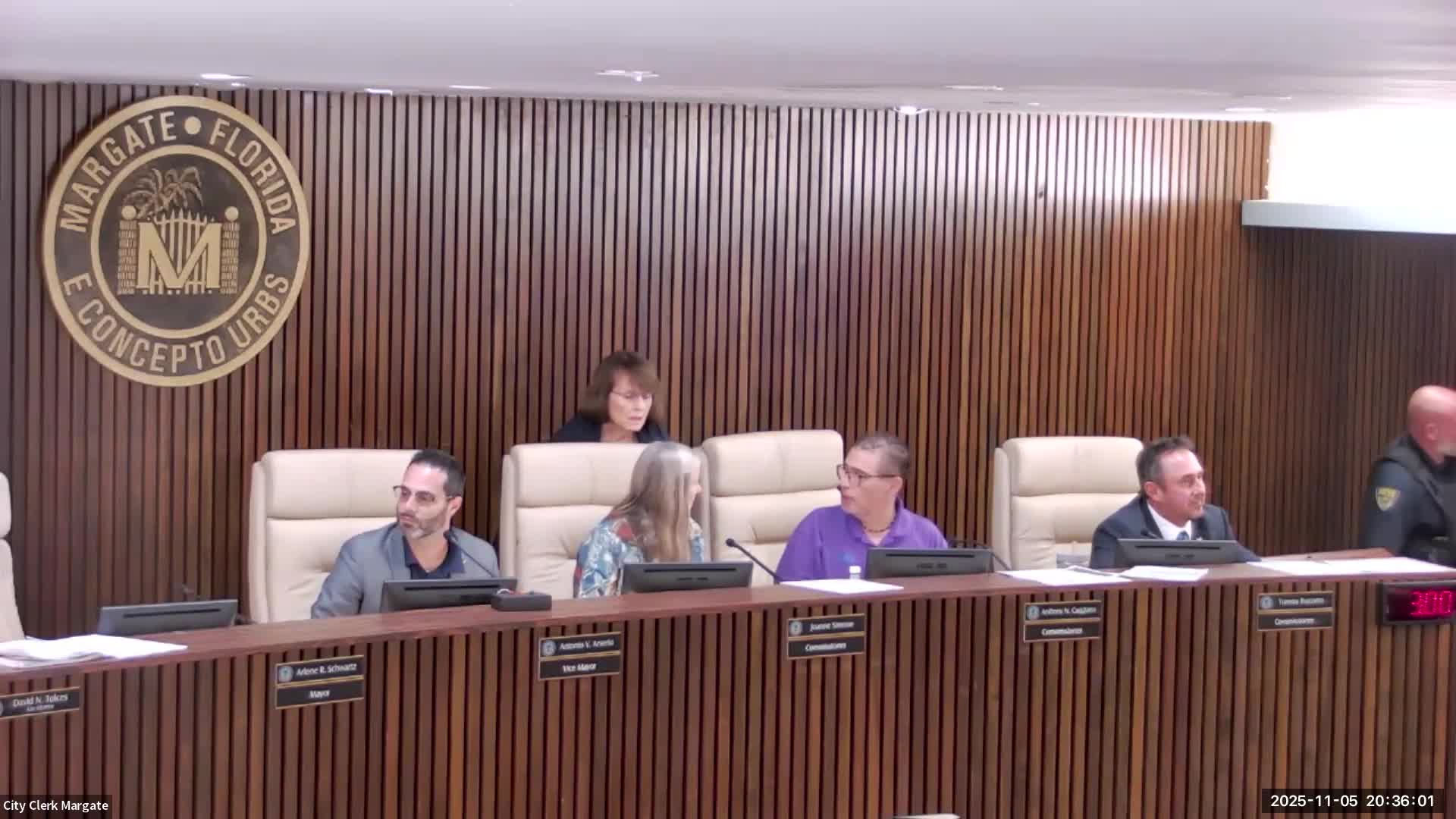
The commission voted 3–2 to approve both the comprehensive‑plan map amendment and the rezoning ordinance after a multi‑hour quasi‑judicial hearing that drew dozens of public speakers. The land‑use ordinance passed with three yes votes and two no votes; the rezoning passed by the same margin. The public hearing on the related development agreement remains open; the commission set a second hearing and final vote for June 17, 2026.
Why it matters: The Carolina property has been closed as a golf course for seven years. The redevelopment plan proposed by Rosemerge Acquisitions LLC (the applicant) would convert most of the site to new lakes, walking trails and active parkland and concentrate new housing and a small retail node on the parcel’s edges. Supporters say the plan replaces a deteriorating site, creates new public open space and will add recurring tax revenue; opponents say the property carries environmental contamination that must be tested and remediated before any ground disturbances, and they pressed for stronger enforceable safeguards and clearer remediation timelines.
What was proposed and what changed: Applicant counsel Matthew Scott said his firm and the developer — who have the property under contract but are not yet the owner — revised the initial plan after repeated neighborhood meetings. The revisions included cutting the commercial square footage, reducing townhouse counts in one pod from roughly 377 to 290 and removing the apartment‑style multi‑family buildings planned in the original concept; the…
Already have an account? Log in
Subscribe to keep reading
Unlock the rest of this article — and every article on Citizen Portal.
- Unlimited articles
- AI-powered breakdowns of topics, speakers, decisions, and budgets
- Instant alerts when your location has a new meeting
- Follow topics and more locations
- 1,000 AI Insights / month, plus AI Chat