Get Full Government Meeting Transcripts, Videos, & Alerts Forever!
Get email alerts on the Infrastructure topic
No spam. Unsubscribe anytime.
Payson staff outline corporate strategic plan, CIP priorities and a struggling pavement preservation budget
Summary
Town staff tied the corporate strategic plan to capital priorities and told the council that current pavement-preservation funding is below consultant recommendations, risking a growing backlog of roads that will require full reconstruction.
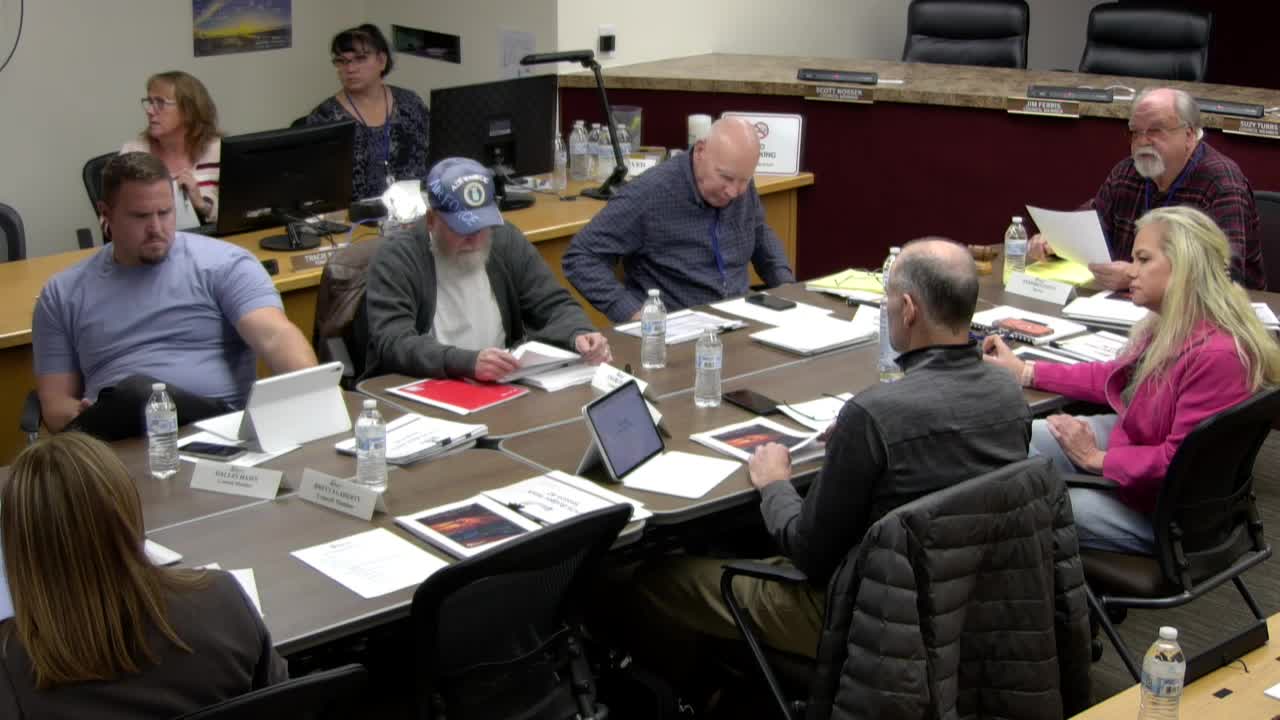
Town staff presented the town's corporate strategic plan (CSP) for 2024'2028 and explained how the plan directs budget prioritization across five goal areas: technology, neighborhoods and livability, public safety, economic development/tourism, and infrastructure. Hannah Lusk, management analyst, said the CSP is a living document used annually during budget development to align staff work programs with council priorities.
In tandem with the strategic plan briefing, staff reviewed capital improvement projects and the pavement preservation program. Engineering staff summarized results from a 2021 pavement condition assessment (PCI) performed by IMS: the overall network PCI was about 61 at the time of the survey, with roughly 11% of the network at PCI 40 or below (the consultant'noted backlog threshold). The consultant recommended a steady-state pavement-preservation budget in the $3.6'$3.8 million range to maintain the current PCI and control backlog; staff said the town currently has significantly less discretionary pavement funding and therefore the backlog is increasing.
Why it matters: pavement backlog drives long-term reconstruction costs; catching roads with preservation treatments before they reach structural failure is far cheaper than full reconstruction. Staff said the previous approach of applying a periodic slurry seal to a fixed fraction of streets produced suboptimal results because treatment type must match pavement condition.
Other CIP highlights discussed at the work-study included: airport AWOS installed and runway surface treatment planned with ADOT funds; water projects including Hillcrest storage tank #2 (bid planned for spring), remote automated metering funded 75% by WIFA (deadline July 2026) and PFAS treatment planning with an ADEQ feasibility study (early estimate ~$20 million to address PFAS based on the feasibility report preview); public safety apparatus backlog (long build queues for ladder trucks and engine chassis; grant applications for fuels crew equipment); and multi-year IT modernization and camera/security rollouts.
Council direction and next steps: council members asked staff to provide a clearer multi-year paving plan (which neighborhoods/segments on what schedule) and for CIP presentations tied to the March budget packet. Council also asked for further fire/fuels mitigation information and a follow-up work session to discuss wildfire mitigation funding and priorities.
Source notes: staff presentations and consultant summaries were given at the Feb. 4 work-study; no formal votes occurred during the session.