Get Full Government Meeting Transcripts, Videos, & Alerts Forever!
Get email alerts on the Cte Admissions topic
No spam. Unsubscribe anytime.
Subcommittee backs referral of middle-school CTE exploration policy; administration favors straight lottery for ninth-grade exploratory
Summary
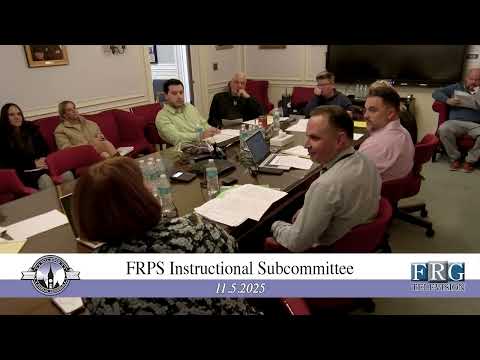
Fall River Citys Instructional Subcommittee discussed two related CTE items on Wednesday: a detailed middle-school CTE exploration policy required by new state law (chapter 74/2025) and the districts approach to CTE admissions.
Fall River Citys Instructional Subcommittee discussed two related CTE items on Wednesday: a detailed middle-school CTE exploration policy required by new state law (chapter 74/2025) and the districts approach to CTE admissions.
Staff explained that the 2025 state change requires districts to provide structured career exploration for grades six through eight and to document career plans through a digital portfolio (MindTap). The administration described multiple elements of the proposed middle-school policy: counselor-led career lessons two to four times per year in grades 6–8, an eighth-grade field trip to Durfee to view CTE programs and other high-school opportunities, summer enrichment camps, and pre-CTE course offerings in some middle schools (examples cited: construction, culinary, criminal justice, Project Lead The Way or PLTW, computer science). The presenter noted a statutory requirement that students be permitted to tour regional vocational schools during the school day without academic penalty and that the receiving CTE schools bear transportation costs for those tours.
On admissions, staff reviewed DESEs two permitted lottery approaches for CTE admission: a straight (one-entry-per-applicant) lottery or a weighted lottery that gives extra entries for up to three state-allowed criteria (attendance below a stated unexcused-absence threshold, absence of certain long-term suspensions, and documented interest such as visits or a personal statement). Administration recommended a straight lottery for admission into the ninth-grade exploratory discovery program to maximize access, arguing the lottery only triggers if demand exceeds capacity; the district would continue to use merit factors (attendance, grades, conduct, teacher recommendation) to place students into specific CTE programs after the exploratory year.
Several committee members supported the straight-lottery approach for equity and to avoid penalizing young adolescents for early absences or disciplinary incidents. Others objected, saying that demonstrated interest (tours, statement of intent, recommendation) or limited weighting should help prioritize applicants who show commitment; one committee member moved to recommend administration develop a weighted lottery, but no second was recorded. Committee members asked staff to provide the legal language and backup materials from DESE when the draft goes to the full committee.
The subcommittee voted to refer the middle-school exploration policy draft to the full committee. During the recorded roll call on that referral, named members recorded affirmative votes in the transcript (examples recorded at the vote included Jeff/Mister Gajes, McBorg and Miss Lauer recorded as "Yes"). Staff said that if capacity is exceeded the district will run a lottery for ninth-grade exploratory admission; if no lottery is needed, all applicants will be admitted to the exploratory sequence.
Whats next: The draft middle-school exploration policy and the proposed CTE admissions approach will be posted to the full committee docket; staff will supply the DESE guidance, a program inventory for the middle schools, and implementation details about how exploratory results and program placements will be tracked.