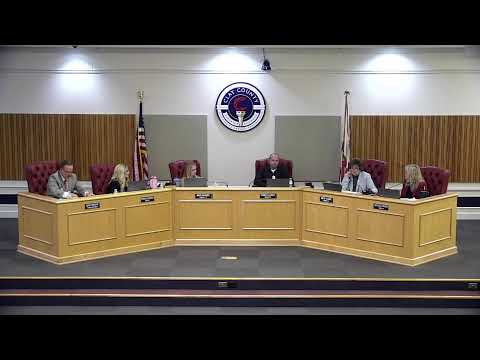
Hundreds of speakers press Clay County School Board on teacher pay as superintendent warns of voucher-driven shortfall
Loading...
Summary
Hundreds of community members and school employees addressed the Clay County School Board on Nov. 6, pressing for higher teacher and support‑staff pay and criticizing recent board and superintendent compensation decisions.
Hundreds of community members and school employees addressed the Clay County School Board on Nov. 6, pressing for higher teacher and support‑staff pay and criticizing recent board and superintendent compensation decisions.
The comments came during the public‑comment portion of the board’s regular meeting after several ceremonial recognitions. Speakers repeatedly said the district’s proposed compensation package left many teachers without an increase and urged the board to use any available funds to boost pay now rather than later.
"The teachers are what give your schools the A grade that everybody likes to boast about," said Nikita Copeland, a parent, during the public comment period. "They come in early. They leave late. They use a lot of their income to fund their classrooms."
Teachers and staff described longer workdays, added responsibilities for student safety and training, and rising living costs. "The district's current offer is not a raise. It is a message," said Molly Gieser, a Clay County teacher of 36 years. "Nearly half of our teachers would receive no raise at all under this proposal."
Multiple speakers called attention to recent board compensation changes. "When no one was looking, the board made sure to provide themselves that 3% raise," said Caitlin Tomazinos, a third‑grade teacher. Several commenters urged board members to decline or return their raise until staff pay is addressed. Others contrasted Clay County’s pay with neighboring districts and cited resignations and recruitment challenges.
Support staff and bus drivers also addressed the board. Diana Bowes, a bus driver and SESPA vice president, told the board the district will be 16 drivers short by Christmas if pay and recruitment issues are not addressed, saying, "We are not short staffed because people don't want to work here. We are short staffed because people can't afford to work here."
Nurses and school‑clinic staff described increased caseloads after enrollment growth at specific campuses, and school counselors and paraprofessionals described expanded duties tied to student safety and behavior management.
Superintendent Broski responded with a budget overview, describing structural funding shortfalls he attributed to state budget decisions and to private‑school vouchers. "Florida ranks fiftieth in funding for teacher pay," Broski said, and he told the board and public that the state provided a 0.78% funding increase this cycle while inflation exceeded that amount. Broski stated the district has seen roughly a $30,000,000 impact tied to private‑school vouchers since the policy expanded and outlined local steps the district has taken, including position reallocations, 20% reductions to discretionary budgets, contract cancellations and return‑on‑investment reviews.
Board members and the superintendent emphasized limits on local authority to increase revenue and called for constituents to contact state legislators. In his remarks, the superintendent noted the board has made recurrent investments in employee compensation in prior years but acknowledged that many speakers said the district’s current proposals are insufficient.
The board did not take a salary vote at the meeting; bargaining between the district and employee representatives remains ongoing and has reached an impasse, speakers said. Commenters repeatedly asked the board to revisit its decision to accept the statutory board member pay increase and to prioritize teacher and support‑staff compensation in district budgeting.
Community members also linked the compensation debate to other district issues: student discipline, class‑size concerns and the perceived effects of voucher funding on the district’s operating budget.
Ending note: The board heard more than two hours of public comment on compensation and staffing. Superintendent Broski said the district will continue to pursue internal savings and will press legislators for funding, and speakers said they will continue to press the board and follow bargaining outcomes.