Louisiana task force weighs feed bans, testing and enforcement as CWD spreads
Loading...
Summary
At a task force meeting Oct. 25, members reviewed evidence and field reports on chronic wasting disease, heard that feed sales have fallen sharply in some areas, discussed enforcement challenges around 'adulterated' feed, and agreed to invite national groups and other states for presentations before drafting recommendations.
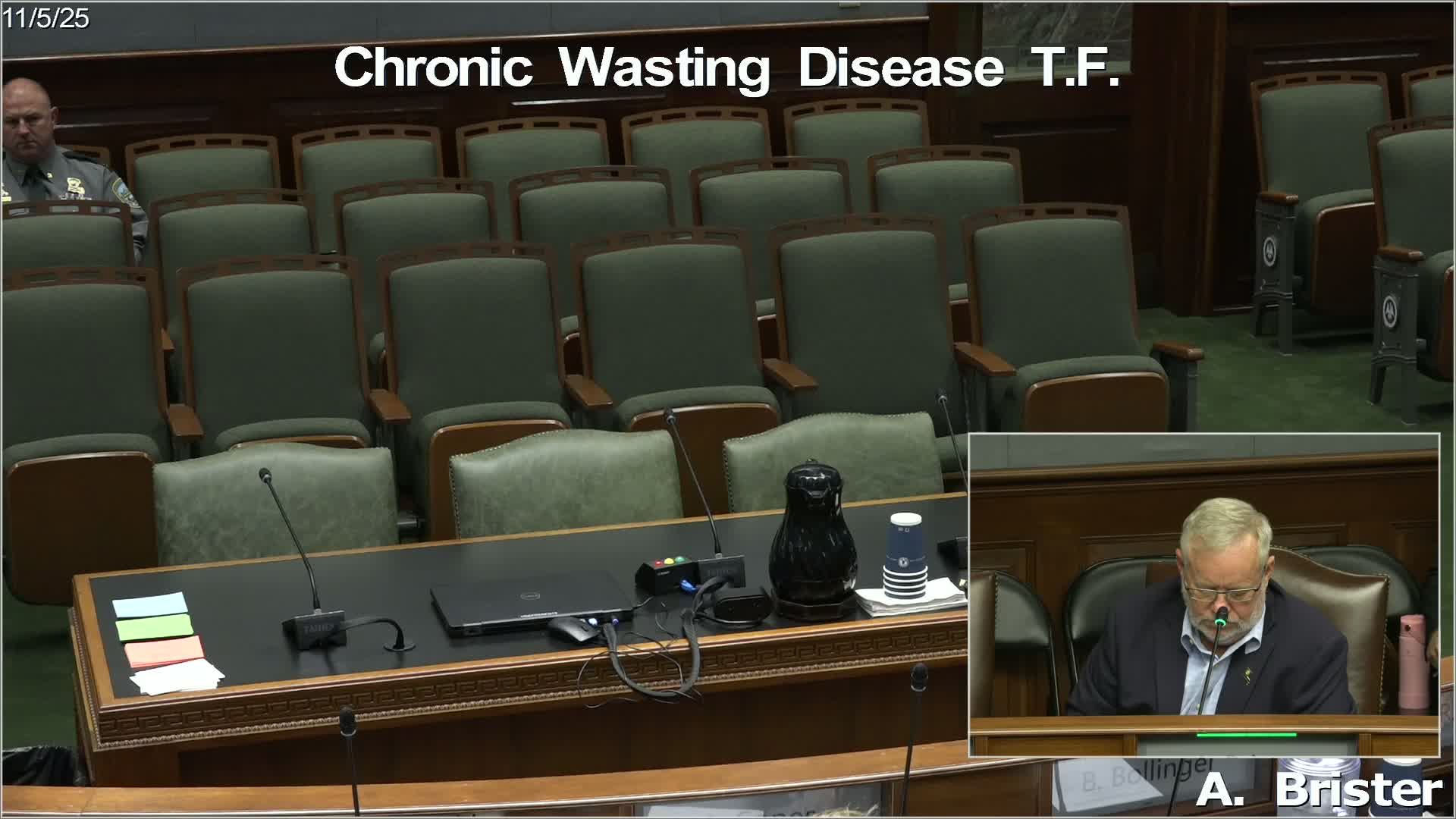
Members of the CWD Task Force met Oct. 25 to review responses to chronic wasting disease and agree next steps, including outreach to other states and national organizations and further data collection.
The task force, chaired by Mr. Segura, opened the meeting with routine business and adopted a revised agenda and the minutes from Oct. 9 without objection. Members then discussed planning presentations and evidence‑gathering from other states, citing Texas, Arkansas, Mississippi and Missouri as potential models to study.
“Let’s see what the other states are doing,” Senator Glenn Womack said, urging the panel to invite outside experts and review multiyear studies. Cole Garrett, staff attorney, confirmed staff would try to schedule speakers including Mike Chamberlain and Dr. Mark Reuter and would follow up on invitations to the National Deer Association and Hunters for the Hungry.
An attendee identified in the meeting as Andy reported steep declines in feed sales at one store: “Last year in October ... on corn I sold about 1,423 bags; this year, October 25, on corn, I’ve sold about 460 bags,” he said. He reported rice‑bran sales fell from roughly 540 bags last October to about 127 this year and that pallet sales fell from 13 pallets to about three at that location.
Dr. Roberts, who the panel identified as an expert contributor, addressed human‑health concerns and the state of the science. “There’s a pretty robust species barrier, especially with humans, for contracting CWD,” Dr. Roberts said, adding that there are no known human cases to date but that “low is not 0” because prion diseases can change over time.
Members raised enforcement and regulatory problems tied to the current rules. Several speakers described hunters attempting to comply with the letter of the rule by adding small quantities of blood meal to corn, invoking an exception for “adulterated” corn. Regional agents reported field challenges and noted the difficulty of drafting regulations that close every potential loophole.
“We would have to spend pages in Title 76 trying to come up with every loophole scenario,” an agent said, reporting that Region 3 had written three enforcement reports so far and that Monroe Region 2 has been dealing with CWD longer.
Task force members summarized five broad response approaches that should be evaluated: do nothing, feed bans, testing, herd management and carcass removal. Mr. Brister urged the panel to organize its work around those four actionable areas and then draft recommendations once outside presentations and data reviews are complete.
The group asked staff to gather comparative state policies and enforcement data (the staff noted 38 states have relevant materials) and to circulate proposed presenters and agendas for the next meetings. Garrett said the first couple of future meetings will be presentation‑focused, after which the committee will shift to evaluation and writing its report.
Votes at a glance: The committee adopted its revised agenda and approved minutes from the Oct. 9 meeting on motions made at the start of the session; Senator Womack moved to adopt the minutes. Senator Womack also moved to adjourn at the meeting’s close; the motion carried by unanimous consent.
Members listed invitations they want staff to pursue for upcoming meetings, including the National Deer Association, Hunters for the Hungry and representatives from Arkansas and other Southeastern states. The meeting ended with staff directed to organize those presentations and to begin pulling comparative data that the task force will use when it moves from information‑gathering to policy deliberation.