Get Full Government Meeting Transcripts, Videos, & Alerts Forever!
Get email alerts on the Nim Infrastructure Bond topic
No spam. Unsubscribe anytime.
Greenville City highlights neighborhood infrastructure bond: parks, sidewalks and a Nicholtown resiliency hub
Summary
City staff told the council the Neighborhood Infrastructure (NIM) bond funded parks, sidewalks and roadwork across dozens of projects: 26 completed of 37 projects, roughly $6 million in new NIM-related funding, expanded bike lanes, and a Nicholtown Community Center that will serve as a day-to-day facility and an emergency "resiliency hub."
City staff on Tuesday gave Greenville City Council a progress report on the Neighborhood Infrastructure (NIM) bond, detailing dozens of completed projects in parks, sidewalks and roadways and previewing the Nicholtown Community Center’s role as a neighborhood resiliency hub.
Jeff Waters, the city’s capital projects director, told the council the bond helped deliver multiple park upgrades. "This project had $970,000 in mid funding and was also leveraged with $500,000 LWCF," Waters said of Gower Park, which the city completed in April 2024 with two full basketball courts, three tennis courts, ten dedicated pickleball courts, three shade structures and new court lighting. Waters also reported McPherson Park’s court replacement used about $272,000 of NIM funds; Cleveland Park improvements were listed at about $1.5 million; and Holmes Park received roughly $170,000 for parking work and $340,000 for courts and shelter work, with the shelter expected to be finished around December or January.
Waters described the Nicholtown Community Center renovation as a community center that can "spool up" during emergencies. He said the city’s net contribution to the project is about $1.8 million and that the effort leveraged other sources, including a $3 million state contribution and a $100,000 grant from the Municipal Association of South Carolina. "Day to day it is our community center; when there's an emergency event, it can spool up to provide neighborhood resources," Waters said, citing charging capability and heating/cooling spaces.
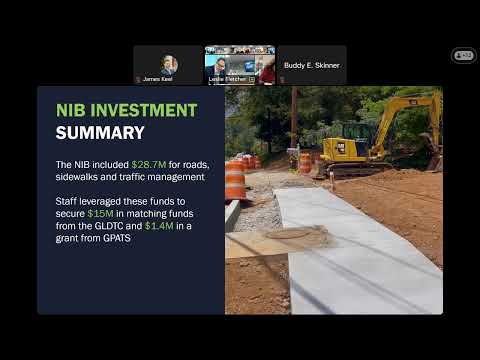
Engineering staff told the council the NIM program produced 37 projects in roughly three years and that 26 are finished. Nick, an engineering team lead, said the program leveraged matching funds — roughly $16.4 million from regional partners and additional CDBG support — which allowed the city to extend the reach of the bond dollars. He told council members the program paved about 25 miles of roads in the last three years (compared with the usual one to two miles a year), added about 21 miles of enhanced bike lanes and delivered roughly 7 miles of new sidewalk.
Council members praised the results and asked whether the Nicholtown resiliency hub model could be rolled out to other centers. Staff said the city will implement the Nicholtown hub as a pilot and consider expanding the model if it proves successful; they also said resiliency elements will be included in the city's comprehensive plan update. No formal votes were taken during the presentation.
Next steps include finishing remaining shelter work at Holmes Park, securing final matching dollars for some resurfacing projects, completing a series of sidewalk bids and starting several projects scheduled to begin construction in 2026, including zoo shelter and playground work. The council then moved to questions about traffic systems and the pedestrian safety action plan, which staff presented next.