
Board hears data showing higher dropout and remediation rates for OKCPS than state averages
Get AI-powered insights, summaries, and transcripts
Subscribe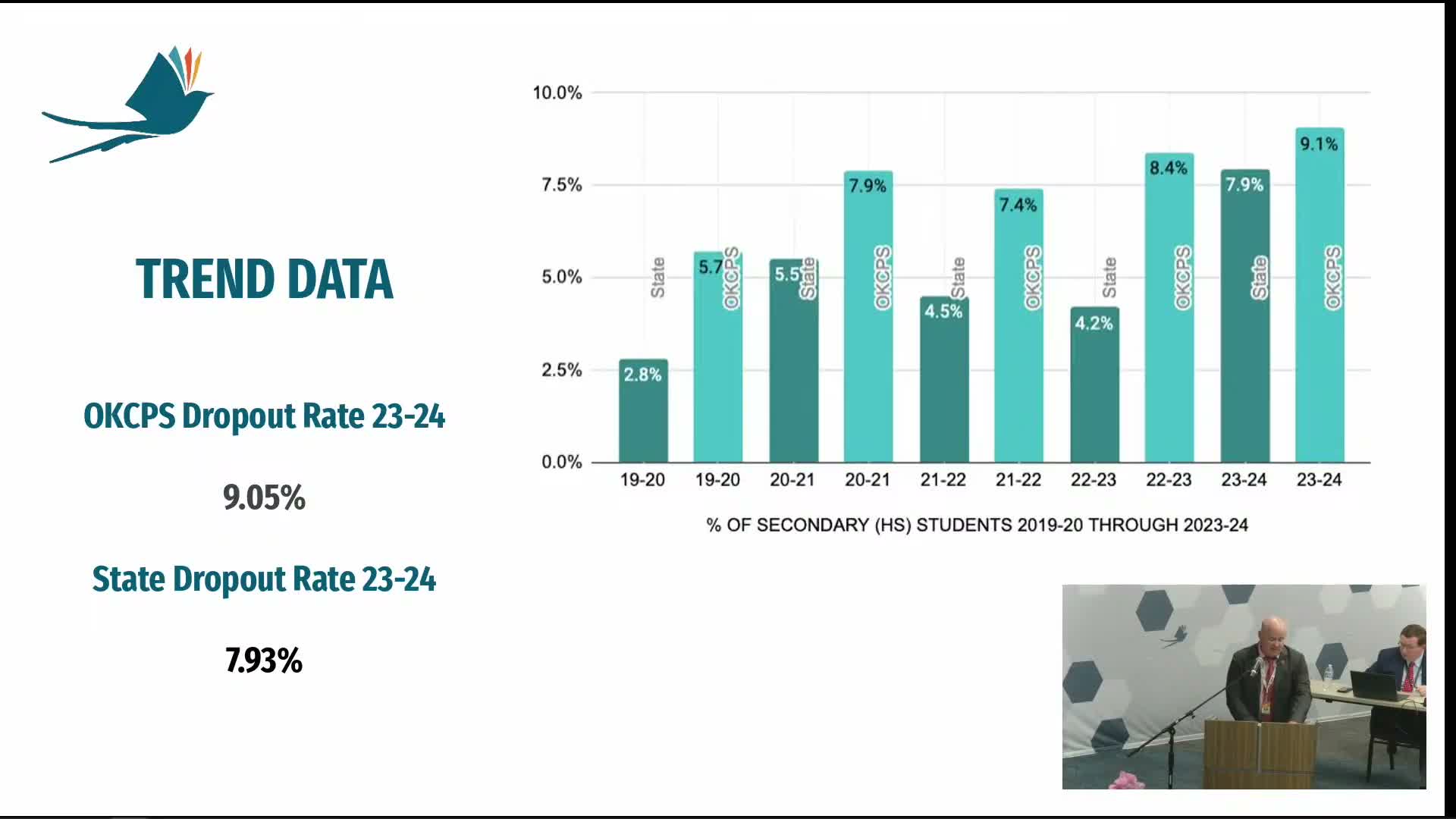
Summary
District officials reported OKCPS' 2023–24 dropout rate at 9.1% versus the state 7.9% and the national 5.3%. College remediation for district students who enroll in state colleges is 19.2%. Presenters tied absenteeism, mobility and economic disadvantage to higher dropout risk.
District staff presented 2023–24 data that show Oklahoma City Public Schools’ dropout and college-remediation metrics above state and national averages.
Dr. Sean Ross, overseeing support and accountability, reported the district’s dropout rate at 9.1% for 2023–24 compared with a state rate of 7.9% and a national rate of 5.3%. He highlighted risk factors including high mobility (about one in three students), nearly 40% of students classified as English learners, and roughly 90% of students qualifying as economically disadvantaged. Ross explained the data lag resulting from state processing and noted that some groups (GED recipients, open-admission college admits) are excluded from the remediation counts.
On college remediation, Ross said OKCPS’s remediation rate was 19.2% — the share of district students enrolling in Oklahoma public colleges who require remedial coursework. He and Verna Martin framed attendance and early identification as priority levers and described district interventions, such as attendance advocates and multiple credit-recovery pathways.
Board members sought clarification on how the numbers were calculated and requested deeper reviews scheduled for January (fourth-grade literacy) and a planned off-cycle monitoring session focused on postsecondary measures. Officials said local dashboards and graduation-readiness checks will be used to track students and reduce dropout risk.
Next steps: January deep dives are planned for postsecondary and fourth-grade literacy monitoring, and the district will continue refining submission and verification processes with the State Department of Education.