Walker plans housing-focused 'Book 5' and a 1,500-unit planning target through 2040
Loading...
Summary
City staff and McKenna consultants presented a housing needs assessment recommending Walker plan for roughly 1,500 new housing units by 2040, based on local building permit and entitlement data that suggest faster growth than recent Census counts indicate. The team presented five scenarios and will return in January to refine a preferred path.
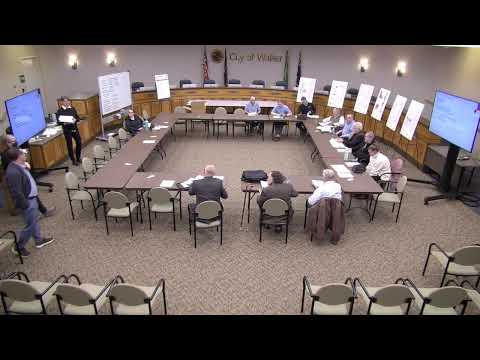
City of Walker planning staff and consultants from McKenna presented a housing needs assessment and five development scenarios at a joint working-group roundtable, concluding the city should plan for about 1,500 new housing units by 2040.
Paula Privy, Walker’s planning director, opened the meeting by describing the effort to create “Book 5” of the city’s master plan focused on housing and to align local zoning, incentives and infrastructure with projected demand. Privy said the effort responds both to a recent state law requiring housing elements in municipal plans and to local boards’ desire for Walker-specific data rather than broader regional analyses.
Chris Corey of McKenna described the study’s methods and key findings. Using a cohort-component population model adjusted for local migration and headship rates, McKenna estimated Walker could exceed 31,000 people by 2040. Corey said the firm’s review of building permits, entitled projects and units under construction produced higher unit counts than the U.S. Census and the American Community Survey currently report for Walker. “We do need this on this scale of about 1,500 housing units over the next 15 years,” Corey said, noting the model produced roughly 1,200 units but the team rounded up to provide a planning cushion.
McKenna showed that Walker had about 10,408 housing units in 2020 and that demand could rise to about 12,143 units by 2030 under current trends. The consultants excluded stalled projects (English Hills and River Ridge) from their near-term counts but included recently approved large projects such as Vista 45 and Lewis Farms when estimating 2026 growth toward nearly 28,000 residents if built as entitled.
The team explained how they convert population forecasts into housing demand using age-specific headship rates and statewide homeownership preference assumptions. That approach produced estimates of owner-occupied versus rental demand by cohort and informed the recommended unit target.
Staff and consultants presented five scenarios for meeting the housing target: a passive, market-driven approach; concentrating development on large undeveloped lots; expanding mixed-use overlay districts around existing commercial nodes; pursuing gentle density through small infill; and a targeted South Walker infrastructure-investment strategy. Projected yields varied by scenario; for example, McKenna estimated development of the highest-likelihood parcels under the passive scenario could create roughly 650 units.
Commissioners and attendees discussed housing types and trade-offs. Privy and participants noted Walker’s existing housing mix is dominated by detached single-family homes with scattered duplexes and apartment complexes, and they raised "missing middle" housing types as a recurring policy topic. One participant, identified as Mark, said many residents prefer additional single-family product but acknowledged affordability pressures and that some higher-density development may be needed in walkable nodes.
Staff also reviewed the modeling approach used to score parcels for development likelihood — factors included proximity to utilities, lot size, corridor type, future land-use designation, transit proximity, slopes and flood hazards — and said the full GIS results and scenario maps are included in the draft binder provided to meeting attendees.
Privy said each attendee would receive a binder containing the draft housing needs assessment, scenario maps and a cover letter with questions to guide feedback. She outlined next steps: refine goals and a preferred scenario at a follow-up meeting planned for January, then run the chosen scenario through the standard state master-plan approvals process (including a 63‑day public response period) before any final adoption or ordinance changes.
The meeting produced no formal motions or votes; staff identified follow-up actions including distributing binders, soliciting written feedback, and scheduling the next working-group meeting. The consultants and staff emphasized they used local building permit and entitlement data to inform the recommended target and invited participants to review the draft materials and return comments ahead of the January session.