
Bureau Veritas summarizes countywide school facility needs; district to import asset data into maintenance system
Get AI-powered insights, summaries, and transcripts
Subscribe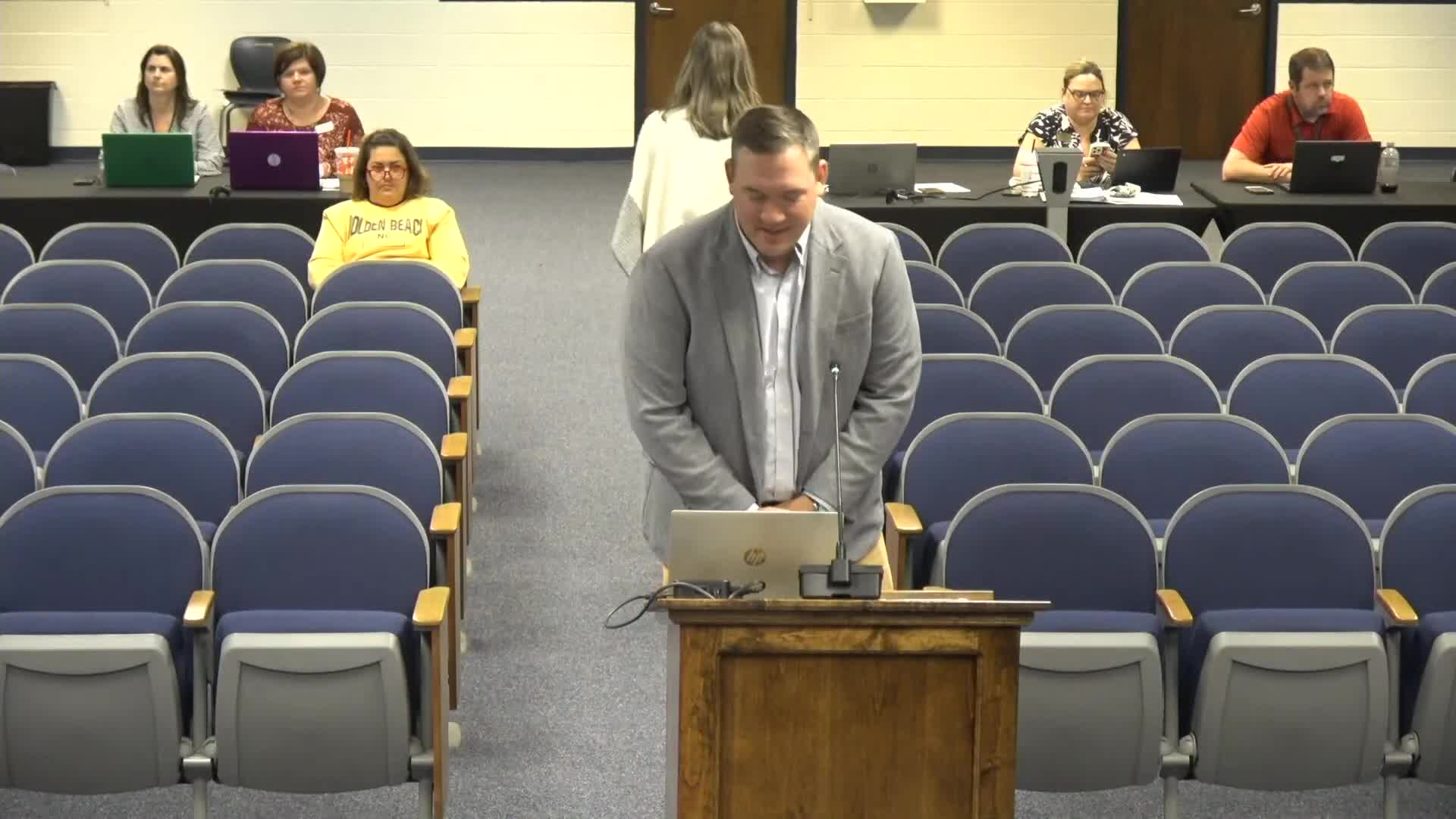
Summary
Bureau Veritas presented a countywide facilities condition assessment for Lee County Schools, identifying immediate needs, longer-term replacement costs using RSMeans, and recommendations for further study; the district plans to import asset data to a maintenance/work-order system by Jan. 1 to track repairs and preventive maintenance.
Travis White of Bureau Veritas told the Lee County Board of Education that his team cataloged site, exterior, interior, mechanical, electrical and life-safety systems across the district and ranked each asset from "excellent" to "failed." He said the firm used RSMeans industry averages to estimate replacement costs and expected lifespans and that the roll-up report groups items into immediate needs, short-term priorities and a 20-year reserve forecast.
The assessment flagged a mix of small, immediately addressable issues — uneven sidewalks, loose railings and displaced pavement — and larger items needing further study, such as accessibility barrier removal and structural cracks. "We cataloged those issues and recommended further study where the root cause is unknown," White said. He added that immediate on-site items were often already addressed by maintenance staff and that the assessment is intended as a planning tool rather than a one-time audit.
Superintendent Dawsonbach said the district will import the Bureau Veritas asset data into the county—s work-order system and a maintenance platform (Operations Hero) with a target import date of Jan. 1. The district maintenance director, Chris McNeal, was cited in the presentation as an active partner in the site visits and follow-up work. Board members requested school-by-school lists of immediate needs so parents and staff can see whether flagged items are safety-related; White said less than half of 1% of findings were safety-related and that many "immediate" items are minor maintenance tasks.
White described the methodology: on-site walkthroughs, pre-survey questionnaires about system history, photos and cataloging of discrete assets. For some items the team recommended targeted follow-up — for example, a structural assessment where cracking is observed. The resulting facility condition index compares building replacement value to the 10-year replacement value of assets, which White said helps prioritize capital work across the portfolio.
Board members pressed for transparency and tracking. Chair asked for school-level immediate-need lists and for the district to show which items had already been addressed; White and district staff agreed to provide that follow-up. The presentation and the import to maintenance software aim to standardize preventive maintenance scheduling, escalate reported problems more quickly and inform the district—s capital improvement requests to the county.