Get Full Government Meeting Transcripts, Videos, & Alerts Forever!
Get email alerts on the Land Development Code topic
No spam. Unsubscribe anytime.
Planning board recommends city council adopt updates to senior housing definitions and parking standards
Summary
The Planning & Zoning Board voted to recommend city council approve land development code amendments that modernize senior and special-needs housing definitions and reduce off-street parking ratios for those uses.
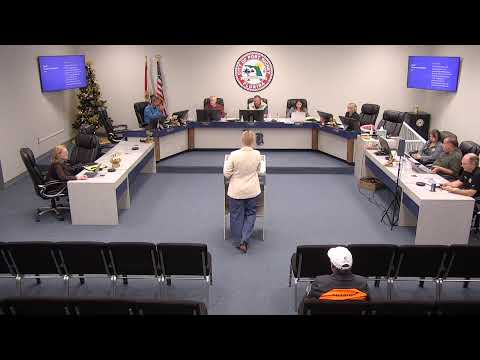
The Port Richey Planning & Zoning Board on Oct. 14 recommended that city council approve amendments to the city's land development code that would update definitions for senior and special-needs housing types and reduce off-street parking requirements for those uses.
City planner Tammy Vrana presented the city-initiated amendment after staff received a variance request from Best Care Senior Living. Vrana said the city's existing standard (essentially 1 parking space per bed) proved excessive compared with standards in peer communities and current practice, and that the amendment modernizes definitions for assisted living, congregate care, independent senior living and skilled nursing facilities while calibrating parking expectations.
Vrana summarized the proposed parking ratios: assisted living would be set at one parking space per two units or one space per three beds, plus one space per staff member on the largest shift and one space for a facility vehicle; community residential homes (formerly "group homes") would be one space per four residents and one per two nonresident staff; independent senior living would be 0.6 spaces per unit plus one per staff on peak shift; and skilled nursing facilities would be one space per four beds, one per staff on the largest shift and one per facility vehicle. The amendment allows hybrid continuing care retirement communities to use a distribution-based approach or a parking-demand study subject to approval by the city manager.
Patricia Ortiz of Ortiz Planning Solutions, representing Best Care Senior Living, told the board that visitation patterns and modern service models reduce parking demand, and that the facility's proposal (originally about 0.2 spaces per resident) aligns with the planner's recommended reductions. Board members asked operational questions about delivery vehicles, compact spaces and site-plan implications; staff and the applicant said those details would be addressed at site review.
Vrana told the board staff found the amendment consistent with Florida statute and the city's comprehensive plan and said the change should reduce impervious surface areas and simplify administrative interpretation of the code. The board moved, seconded and voted to recommend the amendment to city council; the staff presentation indicated council consideration is scheduled for Nov. 25 with a possible second reading on Dec. 9 if advanced.
The board's recommendation is advisory; final adoption requires city council action and subsequent implementation steps including permitting and site review. The amendment, if adopted, would change how the city assesses parking for assisted-living and related uses and could affect applicants now seeking variances or redevelopment.