Oregon City Planning Commission approves variance for McKnight property after LUBA remand
Loading...
Summary
The Oregon City Planning Commission voted to deny an appeal and approve variance VR 99-07 for James McKnight, allowing a reduction in lot depth to permit subdivision of 161 Barkley Avenue.
The Oregon City Planning Commission voted to deny Appeal No. 00-03 and approve variance VR 99-07 for James McKnight, allowing a reduction in lot depth to permit subdivision of 161 Barkley Avenue.
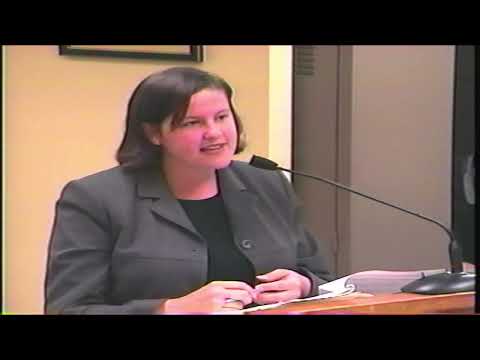
Jill Long, attorney for applicants Jim and Diane McKnight, told the commission that LUBA's remand narrowed the hearing to two questions: whether the hardship was more than merely monetary (criterion C, prong 2) and whether the variance conforms to the comprehensive plan (criterion F). Long said the applicant relied in good faith on pre-application advice in August 1998 and therefore suffered a loss of a property right rather than a mere financial inconvenience. "These circumstances provide evidence that prong 2 of criterion C has been met," Long said, and she cited comprehensive-plan growth and housing policies to support the finding on criterion F.
Neighbors and interveners presented rival evidence. Mark Reagan, an adjacent property owner, questioned whether the record supported the applicant's account of pre-application notices and noted a letter from a neighbor (Charles Leeson) offering to buy the lot back as an alternative to granting a variance. Petitioner Linda Lord, representing neighborhood interests and an intervener in Reagan v. Oregon City, urged the commission to address equal-protection and procedural concerns and introduced a written account she said Tamara deRidder (long-range planning manager, City of Vancouver) had reviewed and initialed.
A former commissioner (Mr. Hall) called much of the opponents' evidence "balderdash," arguing the rear parcels remain largely undeveloped and criticizing what he described as broad, scattershot objections. Applicant counsel replied that substantial uncontested evidence in the record supported the August 1998 conversation and emphasized that the lot is 10,020 square feet by area and only substandard by one dimension (depth), which, counsel said, still complies with the neighborhood's character and the planned-unit-development guidance in chapter 17.64.
During deliberations commissioners weighed legal precedent and practical facts. Several members noted LUBA had affirmed most variance criteria and remanded limited, specific findings; multiple commissioners said the combination of the applicant's reliance, the lot's area, and the comprehensive-plan objectives for infill supported affirmative findings on both remanded points. Commissioner Maine moved to deny the appeal and approve variance VR 99-07; Commissioner Orson seconded. The motion directed the applicant's attorney to draft written findings, to be reviewed by the city attorney and returned to the commission on a date certain. The commission voted by roll call in favor of the motion (Commissioner Bailey: Aye; Chairperson Carter: Aye; Commissioner Maine: Aye; Commissioner Mengelberg: Aye; Commissioner Orson: Aye; Commissioner Surratt: Aye).
The commission did not adopt final written findings at the meeting; it directed that findings be prepared, coordinated between the applicant's counsel and the city attorney, and returned for review on September 24. That date was set to allow inclusion of the draft minutes and sufficient review time between counsel and staff.
What happens next: the planning commission will review the written findings on the date certain and, if acceptable, those findings will be adopted into the official record. Opponents still have procedural and legal options outside the local hearing process if they choose to pursue them.