Get Full Government Meeting Transcripts, Videos, & Alerts Forever!
Get email alerts on the Scenic Corridor topic
No spam. Unsubscribe anytime.
Moraga council moves to introduce scenic-corridor amendments aimed at easing housing constraints
Summary
The Town of Moraga on Nov. 12 introduced for first reading an ordinance to revise scenic-corridor rules tied to the town’s 2023 housing element, including a reduction in corridor depth and a narrower setback in the Moraga Center area.
The Town of Moraga on Nov. 12 introduced for first reading an ordinance amending the town’s scenic-corridor regulations as an implementing action of the 2023–2031 housing element, following a multi-hour presentation and debate.
Planning staff recommended several changes they said were intended to reduce regulatory constraints on eight housing-opportunity sites in the Moraga Center specific plan (MCSP): shrinking the scenic-corridor buffer from 500 feet to 200 feet measured from the right-of-way; reducing the MCSP frontage setback from 40 feet to 25 feet; and eliminating an 8-foot upper-story stepback requirement for floors above the first story. Staff told the council these changes would align standards with the Rheem Center area and reduce costs and grading impacts on smaller sites.
"We looked at court and municipal scenic-corridor ordinances elsewhere, and most jurisdictions regulate frontage rather than a 500-foot buffer," planning staff said, recommending the 200-foot right-of-way approach as more consistent with typical setback measurements and less likely to capture parcels that are not visible from the scenic roadway.
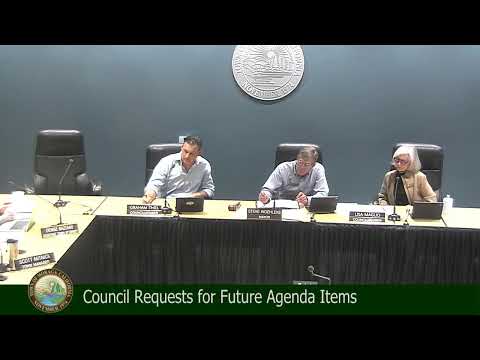
The proposal prompted sustained council discussion and public comment at the dais. Mayor Wallachie voiced concern about preserving long-standing scenic protections and said he prefers planning commission and council oversight for decisions that affect the corridor’s character, particularly in sensitive locations adjacent to the Commons. Several councilmembers said they supported parity between Moraga Center and Rheem Center standards and emphasized design solutions — materiality and facade articulation — to avoid a "walled" street effect.
Councilmembers pressed staff on the analysis underlying the change. Staff said the review was site-specific for the eight housing-opportunity parcels, that a reduced setback would not necessarily prevent the number of units assumed in the housing element but could affect project design and cost on at least three sites, and that two sites already have pending design work. Staff also confirmed that two larger upcoming proposals (Areas 15 and 17, referred to collectively in staff remarks) are advancing through application review and that developers in those areas are not proposing inclusionary affordable units as part of those submittals.
A central procedural point was delegation of review authority: under the draft ordinance, many smaller projects in the corridor could be screened at the staff level rather than automatically going to the planning commission. The mayor and other councilmembers defended the planning commission’s role, while others argued staff-level review for minor projects reduces cost and delay for residents and businesses. As a compromise, the council added language requiring the planning director to notify the town council and planning commissioners of administrative design-review decisions in scenic corridors (and the substance of the decision), while keeping new buildings and larger projects subject to planning commission review.
After the debate the council moved to waive the first reading and introduce the ordinance with that administrative-notification amendment; the motion was seconded and carried by the affirmative votes of the members present. Staff said the item will return for a second reading and final adoption at a future regular meeting when the full five-member council can participate.
What happens next: the ordinance will be revised to incorporate the notification language, return for a second reading, and (if adopted) become effective 30 days after adoption. Staff said additional design-guideline updates related to the MCSP will follow in 2026.
Votes and procedural note: The council introduced the ordinance and added the notification amendment; the motion passed with the required affirmative votes among members present. Two council members (Carrie Hillis and Brian Dolan) were excused from the meeting.
Provenance: Staff presentation and ordinance text introduced during the public hearing (start of discussion and presentation by planning staff; see transcript).