Cathedral City council opens extended discussion on possible charter amendments, delays rush to 2026 ballot
Loading...
Summary
Council members debated term limits, council pay and the idea of an at‑large mayor; staff outlined legal steps, deadlines (two public hearings, 21‑day wait, filing deadline Aug. 2026 for Nov. 2026 ballot) and recommended robust public outreach. Council directed staff to pursue a 'charter cleanup' process instead of rushing measures for 2026.
Cathedral City councilmembers spent a major portion of their Nov. 12 study session discussing potential amendments to the city's charter — including term limits, council compensation and whether to replace the rotating mayor with an at‑large mayor or nonvoting mayoral position.
A staff presentation summarized differences between a charter city and a general‑law city under the California Constitution and listed three topics that have surfaced in council conversations: term limits, council pay and changing from five district councilmembers to four with an at‑large mayor. The staff report referenced Cathedral City Charter sections and Cathedral City Municipal Code and noted state legal constraints that apply to charter and general‑law cities.
On compensation, staff said current council pay is $1,453.41 per month (about $17,440.89 annually) and is governed by charter sections that tie annual adjustments to a consumer‑price index with a 3% maximum increase and an absolute cap of $2,500 per month. "The base index in which this is based was the index for December 2015," staff noted.
Staff also summarized the required process for a council‑initiated charter amendment: at least two public hearings (the second at least 30 days after the first, with each hearing noticed at least 20 days before), a minimum 21‑day wait after the second hearing before a council vote, and the requirement that charter amendments be placed only on a general election (not a special election). To appear on the Nov. 2026 ballot, staff said the latest submission window to Riverside County would be August 2026 and recommended aiming for June or July to allow time for public outreach and legal review.
Councilmembers debated merits and timing. Councilmember Gutierrez said he supports discussing compensation changes so the office is accessible to people who cannot afford to serve without adequate pay; "The only way we're able to do it is because we're either okay financially, we're retired, or we're self‑employed," he said. Other council members said the issue requires public education and broad community input before placing measures on a ballot.
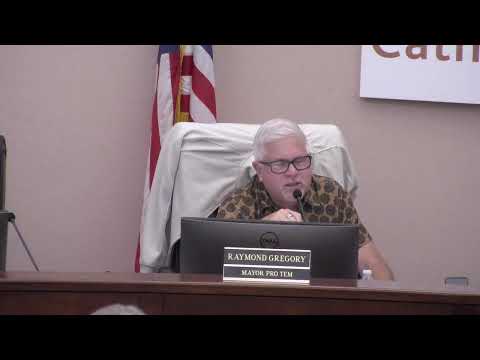
Several councilmembers said they favored a measured approach rather than trying to finalize amendments for the 2026 ballot. Mayor Pro Tem Gregory urged a longer community engagement process and recommended a "charter cleanup" approach: staff would study language, surface technical fixes and convene public hearings, with an eye to possible ballot placement in a later general election (staff suggested planning for 2027–2028 rather than rushing into 2026).
The council gave staff direction to proceed with that charter cleanup process and to develop a public‑engagement plan and legal analysis rather than immediately moving forward with a candidacy or compensation measure for Nov. 2026.
Next steps: staff will draft a public outreach and study plan for charter cleanup, coordinate with the city attorney on legal questions (including Voting Rights Act exposure if district maps change) and report back on timeline and costs for consultant work if needed.