Lifetime Citizen Portal Access — AI Briefings, Alerts & Unlimited Follows
Council moves Solera preliminary plat forward after debate over water pressure and infrastructure
Loading...
Summary
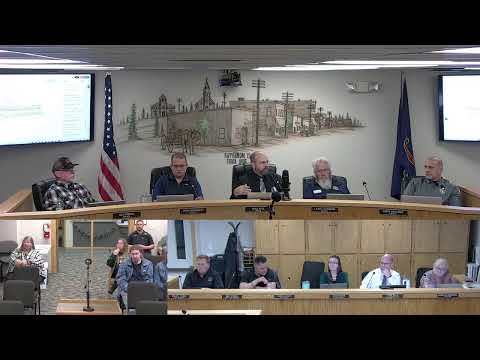
Rathdrum — The City Council voted to consider the Solera preliminary plat, a multi-phase development proposed by Hayden Homes, after an extended discussion about whether the city’s water system can reliably serve the proposed 436 homes and adjacent industrial lots.
Rathdrum — The City Council voted to consider the Solera preliminary plat, a multi-phase development proposed by Hayden Homes on land owned by the Ragnar Aristad Living Trust, after an extended discussion about whether the city’s water system can reliably serve the proposed 436 homes and adjacent industrial lots.
City planning staff described the plat and the development agreement, which requires roughly one-third of lots in each of three size categories; staff presented documentation that the draft plat meets those lot-mix requirements. But much of the council’s debate focused on water pressure, not supply: council members raised recent complaints of low pressure in the Brookshire neighborhood and asked whether adding the Solera development would make those conditions worse.
“We did dip below 40 PSI for a small amount of time,” Kevin, the city engineer, told council when asked whether pressure shortfalls had been observed, acknowledging spot checks that showed brief dips under the 40-PSI threshold the city uses as its level-of-service benchmark. He said the system has production wells and that the city has water rights and the supply to serve the development, but that distribution and storage deficiencies are being evaluated in a water master plan update expected in late summer 2026.
Cole Henderson, a licensed engineer with JV Engineers representing the applicant, told council the project will include transmission infrastructure the city had already planned: “We are adding a 24 inch transmission line on the east side of this property,” he said, and a 12-inch line through the property’s middle, which he said would help distribute pressure from nearby wells.
City staff pointed to short-term mitigation steps already underway — securing easements and designing a Lancaster–Meyer water-main extension, and the possibility of pressure-reduction or pressure-regulating valves and additional storage — but they warned some solutions could be expensive and would require budgeting or developer contributions.
Legal counsel said it would be appropriate to allow the applicant’s engineer to address new issues raised in the council’s deliberations so the record remains complete. After that presentation and additional Q&A, a councilmember moved to consider the preliminary plat (a procedural step that keeps the application active and allows further review and conditions rather than granting final plat approval). The motion was seconded and passed on a roll-call vote.
The council also noted that capital-impact fees and developer contributions would help offset some infrastructure costs linked to the intersection and utility work needed to service the development. City staff emphasized that the water master plan update — which will model hydraulic behavior, storage needs and distribution loops — remains the key deliverable for determining long-term fixes and funding priorities.
What's next: The council’s vote advanced the application in the land-use process; final plat approval, infrastructure agreements and permit issuance remain subject to further engineering, condition-setting and formal approvals. The council’s deliberations were entered into the public record, and staff said they will continue to post project exhibits and links to hearing recordings for public review.