Get Full Government Meeting Transcripts, Videos, & Alerts Forever!
Get email alerts on the Water Sewer Rates topic
No spam. Unsubscribe anytime.
West Sacramento staff recommend a 'mid' water-and-sewer funding scenario, warn of multi-year bill increases
Summary
City finance and public-works staff told the Environment Utilities Commission that water and sewer master-plan projects require significant capital and presented three funding scenarios; staff recommended the mid scenario to balance infrastructure need and rate impacts.
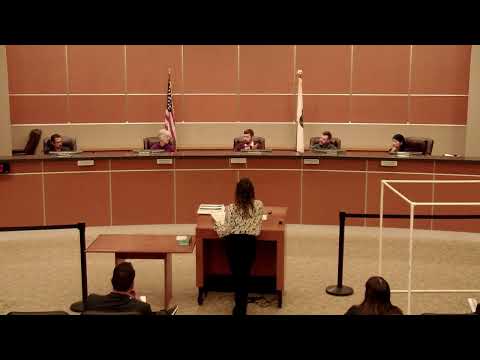
West Sacramento finance and utility staff presented an extended workshop on updated water and sewer cost-of-service studies and three funding scenarios that would alter utility bills over the next five years.
Roberta Raper, the city's finance director, opened the workshop saying the studies focus on water and sewer enterprise funds (refuse is excluded pending a separate contract). She told the commission the last rate adjustment was implemented July 1, 2021, and that inflation, pension and wage increases together have driven substantial cost pressure: "Just the CPI ... has increased about 19%," she said, noting master-plan recommended annual infrastructure investment rises of roughly 183% for water and 450% for sewer compared to the prior study.
Consultant Rick Simonson of HF&H explained the cost-of-service approach and customer classes. He noted the city's sewer collection portion is roughly 20% of the total sewer bill because Sacramento Area Sewer District's treatment charge is about $44 per month, and said current city sewer revenues are roughly $5 million per year.
Facing an infrastructure backlog, staff presented three scenarios for capital funding:
- Full ask: advance all master-plan projects now (front-loaded; higher near-term revenues required), modeled with a mix of rates, reserves and debt; HF&H estimated full sewer capital needs at about $8.8 million per year and the city-wide water full ask near $18.6 million per year in the five-year window.
- Mid (staff recommendation): phase some projects while funding critical items; lowers year-one bite while still increasing annual infrastructure investment.
- Low: defer more capital, reduce immediate rate pressure but increase long-term risk and likely higher costs if projects are delayed.
HF&H modeled combined average residential bill impacts for year one roughly between $8 and $26 monthly depending on scenario; across five years cumulative increases range substantially (mid and low scenarios were designed to be more palatable up front but still show multi-year increases). "If we were to raise 36%, that's just less than $4 per month," HF&H said when reconciling percent increases with dollar impacts for the city's sewer collection portion.
Staff highlighted specific high-priority projects: a high-service manifold vault and effluent meter (design complete; estimated $7.2 million), the South Sewer Lift Station upgrade (estimated $6.0 million), and neighborhood rehab projects such as Washington District and Westmore Oaks. Amber Wallace, senior civil engineer, said delaying certain projects increases mobilization and bypass costs and raises failure risk.
Commissioners focused discussion on equity and outreach. Several members urged retaining the meter-replacement program and prioritized the Bridal Lift Station, arguing those investments reduce future emergency costs and improve revenue accuracy. Raper and consultants noted tools to soften impacts: use of reserves, issuing debt (modeled at 5% interest over 30 years), and expanding low-income rate assistance (the city currently offers a program tied to PG&E CARE enrollment and Measure K funding). Raper said staff will expand outreach, include a bill-calculator with Proposition 218 notices and consider targeted subsidies; she also outlined the schedule for council workshops, Proposition 218 notices early January and a protest hearing in March with rates effective April 1 if adopted.
Commissioners recommended bringing a slightly stronger proposal to the council (mid plus preserving meter replacement and select lift-station work) and urged clear public messaging on why investment is needed and what support exists for vulnerable households. The commission adjourned after staff offered to circulate the report and accept further feedback before the council workshop.