Lifetime Citizen Portal Access — AI Briefings, Alerts & Unlimited Follows
Rental Housing Committee Upholds Hearing Officer: $2,500 "Lawful Rent" Confirmed; Pest‑related Reductions and Refunds Ordered
Loading...
Summary
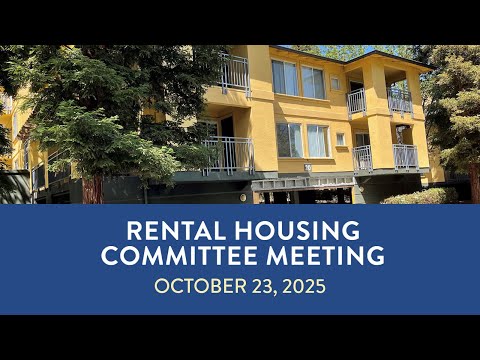
The Mountain View Rental Housing Committee on Oct. 23 upheld a hearing officer’s findings in two petitions (C242536 and C242537), reaffirming that the landlord failed to register the property in 2022 and that the resulting rent increases were unlawful.
The Mountain View Rental Housing Committee on Oct. 23 upheld a hearing officer’s findings in two petitions (C242536 and C242537), reaffirming that the landlord failed to register the property in 2022 and that the resulting rent increases were unlawful. The committee affirmed ordered rent reductions tied to rat and cockroach infestations and confirmed the unit’s lawful rent at $2,500.
The hearing officer had found the landlord or its predecessor did not register the property in 2022 and imposed a rent increase during the unregistered period; that initial unlawful increase triggered subsequent unlawful increases that must be rolled back. The tentative appeal decision, which the committee adopted, reaffirmed the hearing officer’s allocation of responsibility for the pest conditions and the resulting financial remedies.
The hearing officer’s orders upheld by the committee include a 20 percent rent reduction tied to a rat infestation for the period April 20, 2023, through Sept. 30, 2024; a 4.2 percent reduction for a cockroach infestation from April 15, 2023 through the date of the hearing plus an ongoing $105 per month rent reduction until the condition is corrected; and an order that excess rents collected above the lawful rent ($2,500) be refunded. The hearing officer had found the tenant’s conduct contributed approximately 70 percent to the cockroach condition and the landlord 30 percent; the committee found substantial evidence supported that apportionment. The hearing officer had declined to find a defective refrigerator condition.
Appellant landlord representatives, speaking for the Satya Barku Family Trust, acknowledged they had been unaware of the registration requirement and said they had registered within about a year of purchasing the property and accept responsibility for unlawful rent increases. Appellant Ayush Sathywarpu said the owners engaged Clark Pest Control and had documentation that the pest control vendor attributed some infestation persistence to the state of the apartment; he added the owners had replaced the stove and submitted proof that pest control work had mitigated the issue. "We did not know at all about the registration requirements," Ayush Sathywarpu told the committee, and the owners "are fully prepared to pay back all the unlawful rent that we collected from the tenants." The owners told the committee they spent roughly $50,000–$70,000 on unit improvements, and asked the RHC to consider that investment.
The tenant, Gustavo Garcia Perez, denied the unit was kept in an unsanitary condition and said the pest problems began March 25, 2024. "What was shared is a complete lie. We do not keep our apartment dirty," Perez said during his remarks, adding that construction and ongoing repairs had disrupted the household and that he had been anxious about interactions with the owner.
Committee members repeatedly framed their review as limited to whether the hearing officer’s factual determinations were supported by substantial evidence and whether legal reasoning was reasonable. Committee Member Balch said, "The CSFRA is a charter amendment, which means that neither the city council nor the rental housing committee has the ability to modify any of the critical terms or essence of how it operates." Members noted the CSFRA provides no statute of limitations for rollbacks, that capital improvements generally do not negate unlawful rollbacks absent a separate fair‑rate petition, and that the committee’s role on appeal is to decide whether the hearing officer abused discretion.
Vice Chair Cox moved to uphold the tentative appeal decision in its entirety; Member Brown seconded. The motion passed unanimously. The committee and staff noted the possibility of further litigation and associated fiscal impacts, but also said the appeal record provided sufficient evidence for the committee to defer to the hearing officer’s findings.
The committee directed staff to implement the decision consistent with the hearing officer’s findings and to process the refunds and ongoing abatements identified in the order. The committee also noted that parties can request a compliance hearing if there is a dispute about whether the ordered corrections have been completed, and that subsequent rent notices must follow state law once compliance and refunds are resolved.
Documents and clarifications in the record include the petitions’ identifiers (C242536 and C242537), the name of the pest vendor referenced by the appellant (Clark Pest Control), the owners’ representation (Satya Barku Family Trust), and the parties’ testimony about timing, remediation actions and repair costs. The RHC’s vote upholding the hearing officer preserves the hearing officer’s apportionment (70 percent tenant / 30 percent landlord for the cockroach issue) and the specific monetary adjustments described above.
Next steps: staff will implement the order, provide guidance about requesting compliance hearings if either party disputes whether conditions have been corrected, and process any required rent refunds. The decision may be subject to further appeal or court action by either party.