Get Full Government Meeting Transcripts, Videos, & Alerts Forever!
Get email alerts on the Transportation Fares topic
No spam. Unsubscribe anytime.
Public Works proposes 30% ferry fare increase for 2026 and conversion option for COVID punch cards
Summary
Skagit County Public Works proposed a 30% fare increase for 2026 to move toward a 65% fare‑box recovery target by Dec. 31, 2028, and a resolution to convert non‑expiring COVID era punch cards to electronic trips. The proposal is scheduled for possible adoption Nov. 10, 2025; public comment was taken at a hearing Oct. 27.
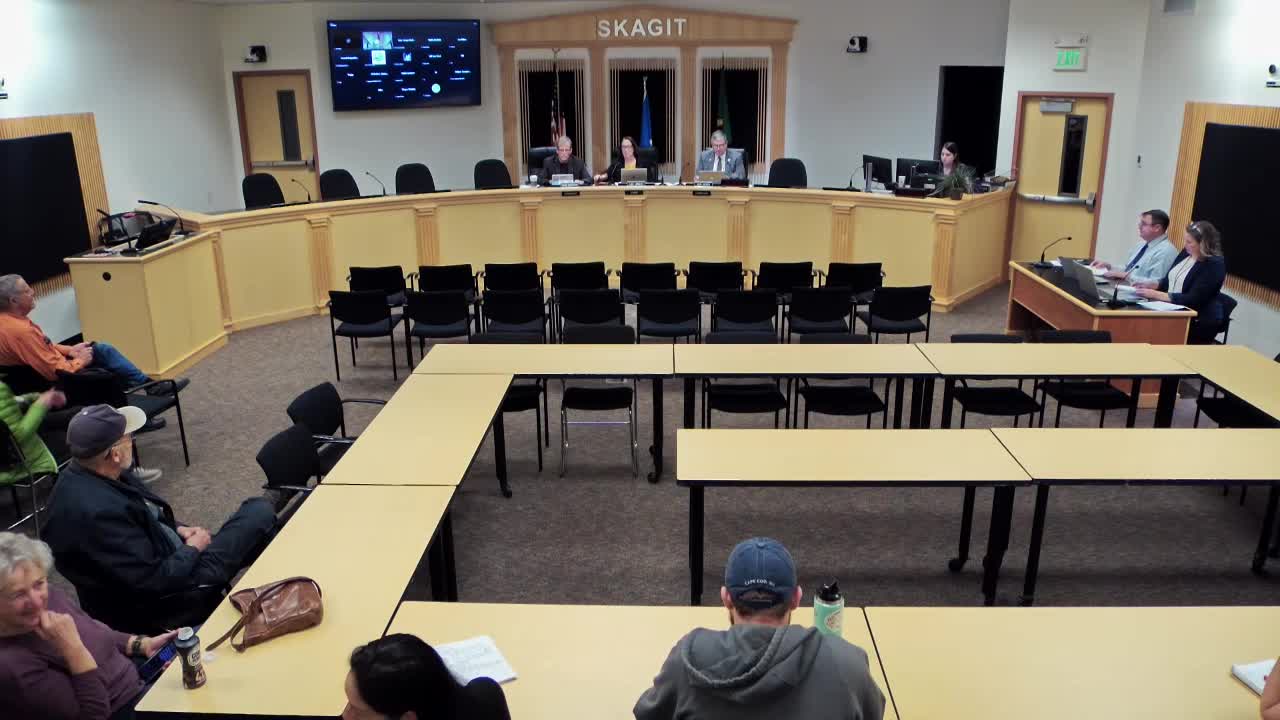
Skagit County Public Works held a public hearing Oct. 27 to solicit comments on a proposed 2026 ferry fare schedule and a companion resolution to allow holders of non‑expiring COVID era punch cards to convert remaining trips to an equivalent number of electronic trips.
Mike See, Skagit County Public Works director, reminded the board that Resolution 2023‑0152 (signed July 27, 2023) directed the ferry division to work toward a 65% fare‑box recovery target by Dec. 31, 2028. See said that between 2015 and 2023 fares remained largely flat while operating costs and deferred maintenance rose sharply; construction of a new vessel was postponed in 2023 due to rising costs, which led to substantial repower and structural costs in 2025.
Rachel Rowe, ferry operations division manager, summarized prior fare actions and the current proposal. Rowe said the county enacted a 14% fare increase in August 2023 and a 30% increase in February 2025. The 2026 proposal would add a further 30% increase for 2026, targeting 55% fare‑box recovery in the near term as a step toward the 65% target by the end of 2028. Rowe noted that staffing needs are tied to service levels and that deep service cuts would be required to materially reduce operating cost, which would also reduce revenue.
Staff described capital and maintenance costs that have driven the proposal: repower and structural upgrades in 2025 totaling more than $1,000,000 and routine dry‑dock maintenance in 2025 of about $1,400,000. Rowe also presented comparator fares: Pierce County adult nonpeak passenger ticket ($7.75) and Whatcom County ($10.00) compared with Skagit’s proposed nonpeak and peak adult fares of $6.75 and $8.50 respectively; a vehicle/driver fare comparison was also given (Skagit proposed $21.50 nonpeak, $26 peak).
Public Works is also proposing a methodological amendment for revenue targets (using a five‑year average of O&M based on the past two actual years and the current adopted budget as of June 30, plus two years projected with CPI escalation) and that miscellaneous fare categories will reflect the calculated cost per run.
The proposed COVID punch‑card conversion would allow card holders to convert remaining trips to an equivalent number of electronic trips by appointment at the Anacortes ticket office; conversion would begin only after board approval and additional administrative details would be provided post‑adoption. The staff presentation noted that electronic ticketing currently represents under 2% of the operating budget and that the vessel replacement surcharge funds are restricted and do not count toward the 65% fare‑box target.
The public engagement process began Aug. 15; the draft revenue target report and supporting materials were posted online and multiple outreach messages and meetings were held. The public comment period remained open through the end of the hearing. Staff said neither proposal was scheduled for adoption that day; both resolutions are scheduled for the November 10 board meeting at 1:00 p.m., when the board may modify, approve or reject them.
Speakers who wished to testify were given a three‑minute limit; commissioners and staff did not respond during the hearing. Staff encouraged the public to sign up for the ferry listserv for updates.