
Fairbanks advisory commission opens work on weight and permit limits after ‘fat truck’ complaints
Get AI-powered insights, summaries, and transcripts
Sign Up Free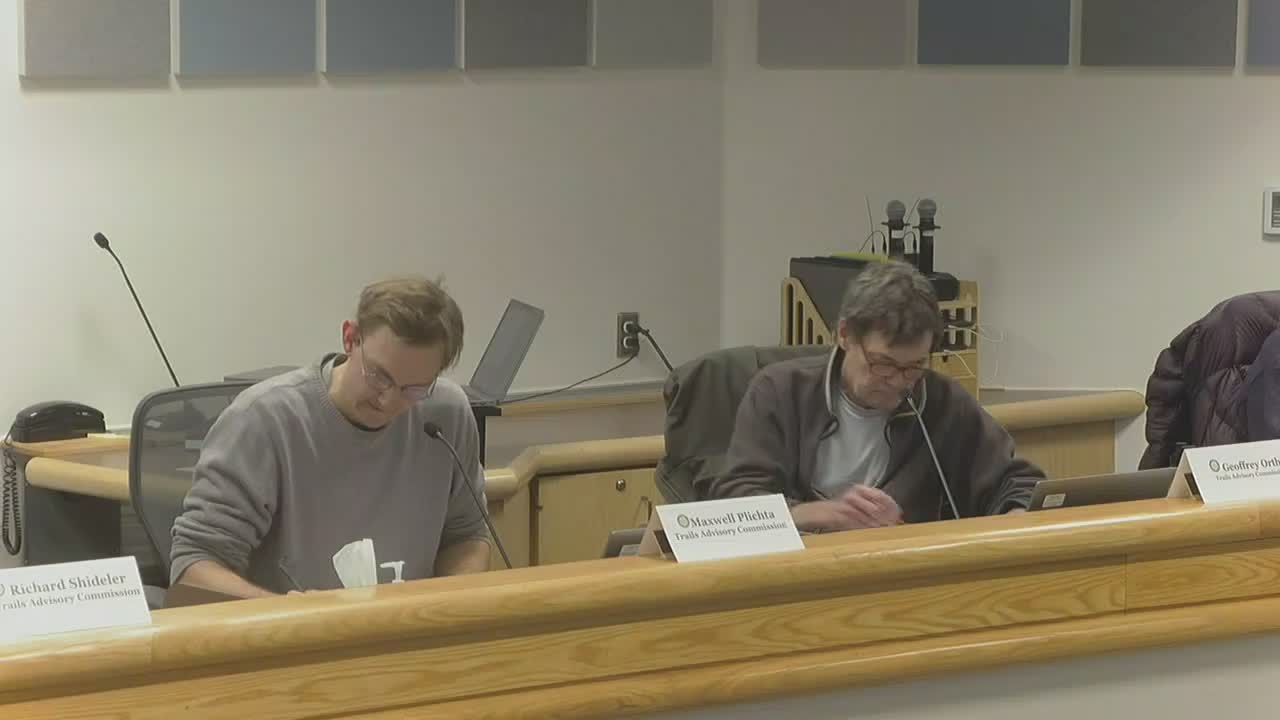
Summary
After public testimony about large off‑trail vehicles damaging tread and threatening safety, the Fairbanks North Star Borough Trails Advisory Commission agreed to form a publicly noticed subcommittee to study weight, width and commercial permitting options for borough trails.
The Fairbanks North Star Borough Trails Advisory Commission on Oct. 27 opened a formal conversation about whether the borough should limit the weight, width or commercial use of vehicles on borough trails after residents described heavy “fat truck” operations that they say damage tread and threaten users.
"With these newer machines, they just keep getting bigger and bigger, and we need to safeguard our trails for future generations," Amanda Henderson, a 2 Rivers resident who testified during the public‑comment period, said of vehicles she estimated at about 8,000–9,900 pounds and roughly 8½ feet wide. Henderson urged the commission to consider weight and width limits and to keep very large machines off shared trails.
Commissioner Mark Boyce, who requested the item be added to the agenda, said the commission should treat the issue borough‑wide, not only in 2 Rivers, and described a model vehicle (the FT‑3) with a combined shipping weight and payload near 9,900 pounds and a width near 100 inches. "If the commission is curious about the level of public interest in this issue, DNR received 150 comments against this issue," Boyce said, citing public input relayed by residents.
Andrea Jacobs, Parks and Recreation staff, told commissioners she has discussed legal constraints with the borough attorney and was asked to form a working group to consider regulatory options. Jacobs said some trails are on state land or private easements and would not be subject to borough trail regulation, which limits the effect of any borough rule in those locations.
The commission discussed two distinct approaches: (1) technical limits to protect trail tread — for example, maximum vehicle weight, tire footprint or tire pressure (PSI) thresholds — and (2) a borough commercial‑permit program that would regulate commercial operators using borough lands. Commissioners noted that a permit program could regulate commercial operators but would not stop private owners from driving oversized machines on motorized trails unless vehicle limits were also adopted.
Commissioners agreed to pursue a publicly noticed subcommittee or work session to draft options, consult existing Alaska agency models and clarify legal authority before bringing recommendations back to the full commission. Jacobs said staff will follow up with the clerk’s office to schedule and publicly notice the subcommittee meeting.
Next steps: the commission asked staff to coordinate a publicly noticed working session to develop draft language and to report back with legal constraints and model regulatory language. No ordinance, permit or rule was adopted at the meeting.