Lifetime Citizen Portal Access — AI Briefings, Alerts & Unlimited Follows
Local birder touts raptors as a natural alternative to rodenticides at Woodside session
Loading...
Summary
Photographer and birder Rick Morris presented photos and local observations to the Woodside Environment & Open Space Committee, arguing that native raptors — owls, hawks and eagles — can help reduce rodent populations and reduce reliance on poisons. He described nesting, fledging timing and where residents commonly see local raptors.
Rick Morris, a Menlo Park photographer and birder, told a Woodside Environment & Open Space Committee audience that raptors can be an effective, natural component of rodent control.
Morris opened his presentation by describing his birding tours and a pandemic-era switch back to photography. "These are raptors, birds of prey," Morris said, listing eagles, owls, hawks, northern harriers, falcons, kites and osprey and explaining their feeding traits. He emphasized that most local raptors take rodents as prey and described anatomical features that aid hunting, including hooked beaks, sharp talons and, in owls, asymmetrical ears.
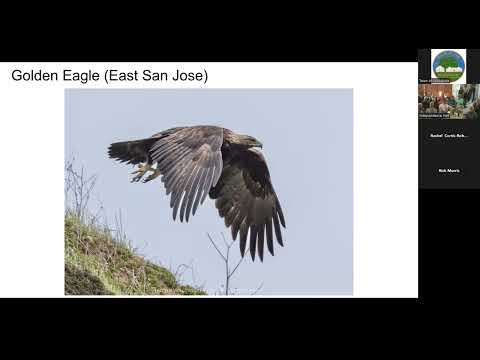
The presentation paired narrative with images from regional sites. Morris pointed to repeated bald-eagle sightings at local lakes and identified a frequently cited nest near Curtner Elementary. He showed a sequence of photos documenting a great horned owl nesting cycle, noting typical timing: mating in January–February, eggs in April and juveniles leaving the nest roughly 30–40 days after hatching. "They're fluffy ... they're starting to get the little plumicorns," he said while showing juvenile plumage and fledging behavior.
Morris also reviewed other raptor species common to the Peninsula — barn owls (noting they consume large numbers of rodents), peregrine falcons that use nest boxes such as at Hoover Tower, and several hawks (red-tailed, Cooper’s, northern harrier, kestrel) with location examples at Wavecrest Open Space and Stanford. He said many of these species take 50% or more of their diet as mammals and argued those predation patterns make raptors a useful, nonchemical part of a landscape’s rodent-control mix.
Audience members asked logistical questions about Morris’s tours and how close observers should get; he recommended small groups at dusk and offered materials via a QR code for those wanting more information. The session concluded with a short Q&A and an invitation for attendees to speak with the presenters after the meeting.
The Environment & Open Space Committee hosted the event; no formal policy actions or votes occurred. Morris’s talk was framed as education and local natural-history observation, not as municipal policy.
Morris’s comments and images illustrated seasonal timing and visible signs homeowners might watch for, such as nests in tall trees and juvenile behavior in May, and stressed photography and viewing etiquette to avoid disturbing nesting birds.
The committee said San Mateo County Vector Control staff would remain after the presentation to answer questions about inspections and household rodent management.