Lifetime Citizen Portal Access — AI Briefings, Alerts & Unlimited Follows
Councilor presses for dedicated pest‑control office as city details rodent plan and rare leptospirosis risk
Loading...
Summary
At a March 16 Boston City Council hearing, officials described the Boston Rodent Action Plan’s data‑driven pilots, multilingual outreach and staffing; Councilor Ed Flynn urged more weekend inspectors and creation of a standalone pest‑control office while public‑health officials said leptospirosis cases in Boston remain rare.
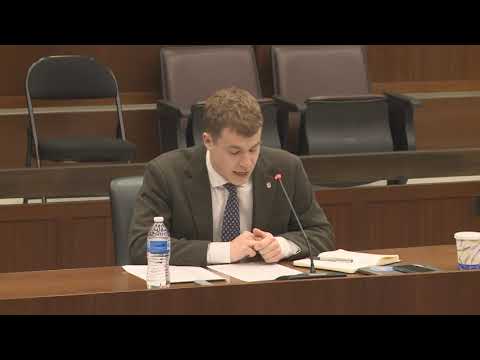
Boston City Councilor Ed Flynn, chair of the Council’s Committee on City Services, pressed city officials on March 16 to expand pest‑control capacity and consider a dedicated pest‑control office as staff described the Boston Rodent Action Plan and the public‑health response to leptospirosis.
The council hearing (docket 0281) brought city staff from Inspectional Services and the Boston Public Health Commission to outline mitigation efforts, pilots and outreach. "I do think we do need a stand alone, pest control office in the city of Boston," Flynn said, urging increased staffing and budgetary support to address weekend spikes in rodent activity and protect quality of life in neighborhoods including Chinatown, the South End and South Boston.
City officials described BRAP’s four pillars—data and new technology, improved trash and sanitation, public education, and cross‑agency coordination—and highlighted recent pilots that pair mitigation with analytics. "Under the Boston Rodent Action Plan we’ve begun piloting new tools that allow us to gather more precise information about rodent activity and measure effectiveness," said the operations department representative, Luke, who described sewer and surface trap pilots in the North End, Back Bay, Chinatown and at certain Boston Housing Authority sites.
John Ulrich, assistant commissioner at the Inspectional Services Division (ISD), said ISD leads the day‑to‑day mitigation work and maintains a licensed pest‑control team. Ulrich provided activity figures, saying the team and related ISD staff have conducted several thousand site cleanliness and dumpster inspections, performed more than 1,100 proactive baitings and responded to about 6,200 rodent complaints in the past year. He also described staffing and shift patterns: 14 licensed pest‑control inspectors specifically assigned to rodent work, additional ISD inspectors who handle related issues, crews that start as early as 4 a.m., and on‑call coverage nights and weekends.
"We no longer rely on generation anticoagulant rodenticides as our primary tool," Ulrich said, describing an integrated pest‑management approach that emphasizes prevention, sanitation, trapping and newer methods such as carbon‑monoxide and carbon‑dioxide treatment machines.
Public‑health officials said leptospirosis—an infection spread through urine‑contaminated soil or water—remains very uncommon in Boston. "Contracting leptospirosis in Boston is extremely rare," said Dr. Catherine Himelstein, medical director of the Infectious Disease Bureau at the Boston Public Health Commission, noting the most recent reported Boston case was in 2021 and earlier cases in 2018. She outlined transmission routes, typical symptoms and higher‑risk groups (people experiencing homelessness, sewer workers, veterinarians, and others with frequent animal or soil contact), and said the commission issues clinical advisories and investigates suspected cases.
Councilor Flynn repeatedly asked about weekend coverage and protective equipment for city workers who handle soil and waste; Ulrich and BRAP staff said code‑enforcement teams and parks staff provide additional weekend coverage and that certain automated traps operate continuously. Officials also said BRAP has produced pamphlets translated into simplified Chinese and that outreach partners are used for Chinatown walkthroughs and flyer drops. Flynn requested that the city provide his office with the public‑awareness materials, data on the roughly 100 emails BRAP received since launching its dedicated email, and neighborhood breakdowns of 311 complaints for his district.
There were no formal votes or motions at the hearing. Flynn said he would continue to advocate for expanded inspectors and funding during the budget process and requested follow‑ups, including a community walkthrough with inspectors in Chinatown in April. The hearing was adjourned with Flynn saying he would revisit related issues in about three months.
Provenance: The coverage is based on the March 16 docket 0281 hearing testimony provided by Councilor Ed Flynn and city staff from ISD and the Boston Public Health Commission.