Get Full Government Meeting Transcripts, Videos, & Alerts Forever!
Get email alerts on the Public Health Kratom topic
No spam. Unsubscribe anytime.
Council sends proposed ban on synthetic kratom to Health & Human Services committee after expert testimony
Summary
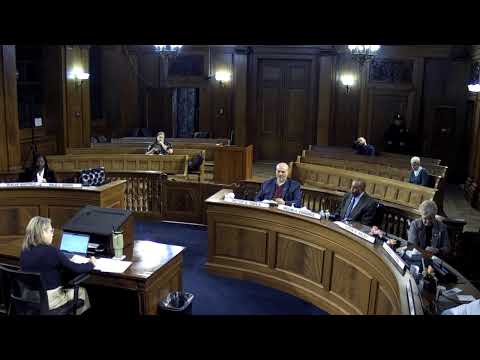
Councilor Curran moved and the council voted Nov. 17 to continue consideration of a proposed ban on synthetic kratom to the Health & Human Services committee after hearing from an expert who described synthetic compounds that mimic opioid effects.
The Springfield City Council voted Nov. 17 to continue work on a proposed ordinance to ban synthetic kratom products and to send the matter to the Health & Human Services committee for additional drafting and review.
Councilor Curran summarized a subcommittee hearing that included testimony from Dr. Charles White (described as an expert on drug harms) who warned about synthetic kratom compounds — identified in the hearing by terms such as "7OH" or "70H" — that resemble the effects of morphine and heroin. Curran said the synthetic product could act as a gateway to opioid use and called it "gas station heroin," and urged the law department to draft an ordinance focused on the synthetic products rather than leaf forms that some users responsibly use.
Councilors thanked Curran and the legal team and expressed concern about youth exposure. Councilor Santanello cited local overdose statistics and supported rapid action. The council voted to continue the item to a Health & Human Services committee hearing and asked the law department to prepare draft language before the next meeting; the continuation was scheduled for Dec. 1.
Curran noted some responsible adult uses of leaf kratom but emphasized the proposed ordinance targets synthetic formulations that are unregulated and potentially dangerous. Several councilors encouraged public education and committee hearings to work through the legal language before returning to the full council.