Get Full Government Meeting Transcripts, Videos, & Alerts Forever!
Get email alerts on the Design Review Ordinance topic
No spam. Unsubscribe anytime.
Orange council narrows design-review powers to historic districts, approves first reading 5–2
Summary
The City Council voted 5–2 on Oct. 28 to introduce an ordinance that limits the Design Review Committee’s authority to projects involving recognized historic resources, while directing staff to clarify inventories and public-notice procedures and return with final language.
Orange — The City Council voted 5–2 on Oct. 28 to introduce an ordinance amending Titles 12, 16 and 17 of the Orange Municipal Code that would limit the Design Review Committee’s (DRC) purview to projects involving historic resources. Mayor Slater moved the measure, seconded by Mayor Pro Tem Bilodeau; Councilmembers Tavares, Dimitrio, Gyllenhammer and the mayor voted yes; Councilmembers Gutierrez and Barrios voted no.
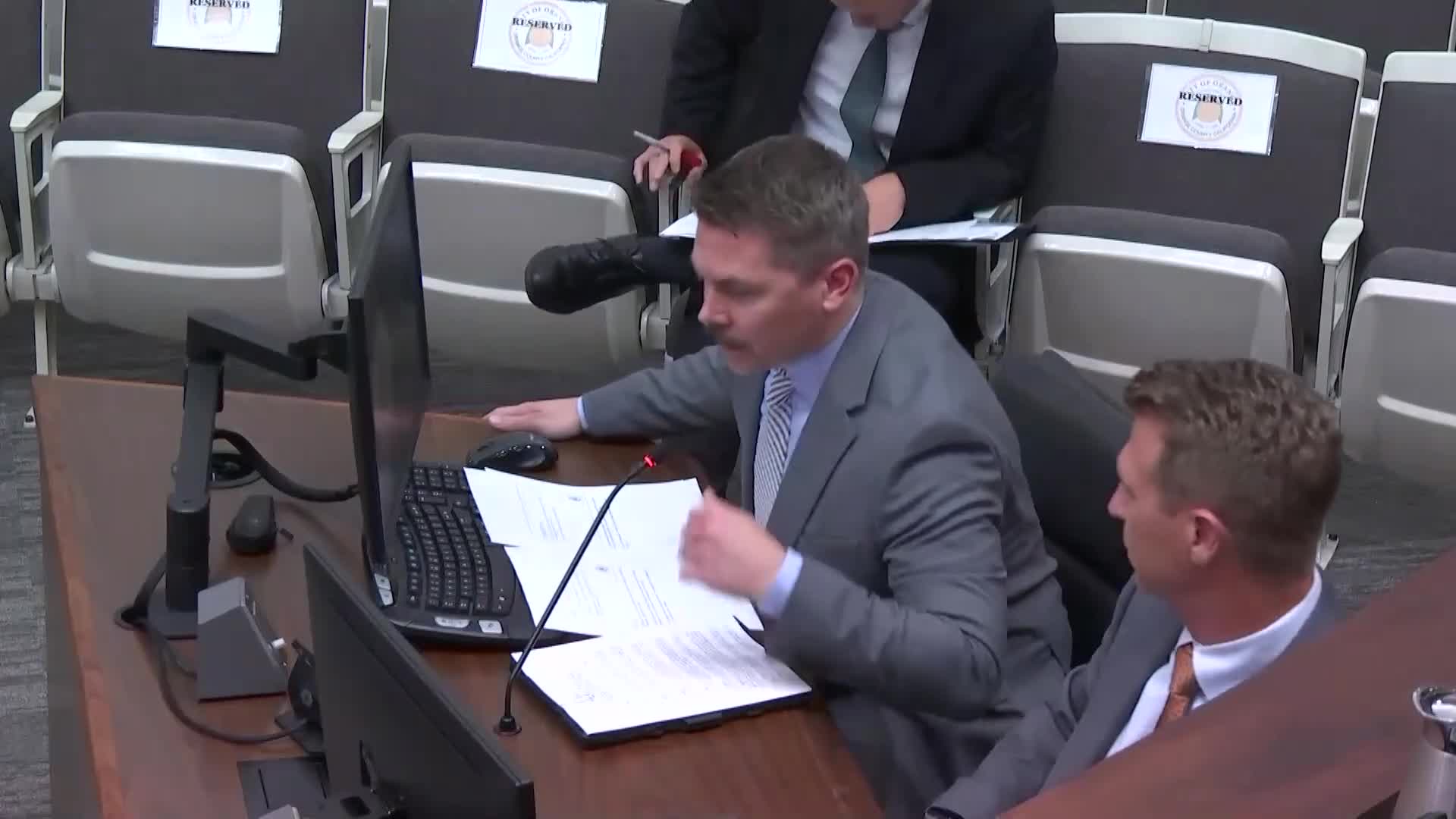
The ordinance, presented by Planning Manager Hayden Beckman, defines historic properties as those within established historic districts (including Old Town and the Eichler districts), properties listed in the city’s historic resource inventory, or buildings at least 50 years old that the community development director determines to have historic, architectural or cultural significance. Staff told the council the Planning Commission recommended approval 5–1 and tentatively targeted December 2025 for implementation.
Opponents at the public hearing urged the council not to adopt the DRC revisions alone, arguing that removing routine projects from DRC review could reduce public participation and raise California Environmental Quality Act (CEQA) issues. Several speakers representing preservation groups, including the Old Town Preservation Association (OTPA), said a standalone change risked undermining commitments in the city’s general plan and existing mitigation measures. Speakers urged simultaneous adoption of a separate historic preservation ordinance crafted by volunteers under an MOU.
Supporters argued the change would speed administrative review for non-historic projects and prevent the DRC from slowing routine work. Council debate focused on three operational questions: (1) how staff will determine whether a property meets the historic threshold; (2) which historic inventories are covered; and (3) public notice and appeal procedures for administrative reviews. City staff said they use a three-pronged test (historic district; inventory listing; or 50-year catchall) and that the city uses an on-call historic preservation consultant to assist determinations.
The council directed staff to clarify the ordinance language to explicitly include the 2005 Eichler inventory, remove phrasing asserting absolute ‘‘certainty’’ in CEQA-related language, and confirm notification and appeal mechanics (including an existing option to join a mailed-notice list). Councilmember Barrios unsuccessfully proposed a sunset clause (06/30/2026); that substitute motion failed 4–3. The council also asked that the city continue robust public workshops and consultant-assisted drafting of the related historic preservation ordinance.
Next steps: staff will return with a second-reading draft that incorporates clarified inventory language and specified procedural safeguards. If substantive changes are made, the council may reopen introduction for further readings. The planning commission’s earlier recommendation, public comments, and staff reports were the primary evidentiary basis for the council’s action.