District reports broad gains in beginning‑of‑year reading and math benchmarks
Summary
Administrators presented abbreviated K–12 beginning‑of‑year benchmark data showing gains across grades, including notable math improvements in early grades and strong middle‑school cohort growth; administrators emphasized instructional coaching and cohort progress as drivers.
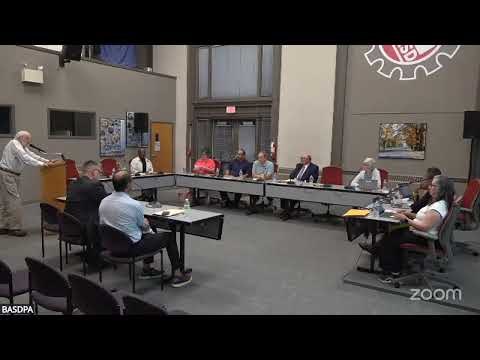
Bethlehem Area School District presented districtwide beginning‑of‑year benchmark results for literacy and math at a curriculum meeting Oct. 6, highlighting several year‑over‑year gains and cohort improvements.
Mrs. Harper reviewed K–5 literacy "starting point" data, noting pockets of strong performance: Freemansburg and Thomas Jefferson kindergarten results were substantially higher than in past years, and Thomas Jefferson first grade entered the year at 73% meeting the benchmark. Mrs. Harper emphasized these are baseline measures to be revisited at midyear.
In math, Mr. Amato summarized multi‑year trends and gains. He reported grade‑level improvements such as first grade moving from roughly 50% (in 2022–23) to about 83% in the current data, grade 3 rising from 35% to 60%, grade 4 from 26% to 49% and grade 5 from 18% to 49%. At the middle‑school cohort level he cited notable shifts: grade 6 up from 11% to 41% and grade 7 from 18% to 50% compared with earlier baseline years. Presenters attributed gains to sustained curriculum, instructional coaching and targeted small‑group interventions.
Board members asked whether the results represented the full student population. Presenters said most students are included; a very small number of students with specific IEP accommodations or Level‑1 ESOL designation may not be assessed in the same way. Presenters also highlighted Donegan's multi‑year improvement—moving from single‑digit percentages to double digits in recent cohorts—as evidence of progress tied to instructional consistency and coaching.
Several board members urged the administration to keep reporting cohort‑level detail and evidence of coaching impact, particularly to demonstrate how investments in instructional coaching translate into student gains. Administration said it will continue to produce both the abbreviated district summaries and the fuller data set for deeper review.
AI generated
The text on this page is AI generated. Summaries, highlights, analysis, and video transcripts are all produced from the original source material.
AI can make mistakes, so if you spot one, and we will fix it for everyone.
Note: the source content is unaltered by us. Any content source we link to, be it a video, an audio recording, or a document, is presented exactly as its publisher released it. That publisher is usually a government body, sometimes an individual official or another organisation.