Lifetime Citizen Portal Access — AI Briefings, Alerts & Unlimited Follows
Montana hearing hears divided testimony on bill to ban intoxicating hemp products
Loading...
Summary
A House Judiciary hearing on Senate Bill 375 drew public‑health advocates urging a ban on intoxicating hemp products aimed at youth and hemp industry representatives warning that drafting errors could harm legitimate hemp businesses; sponsors say amendments can protect farmers and food uses.
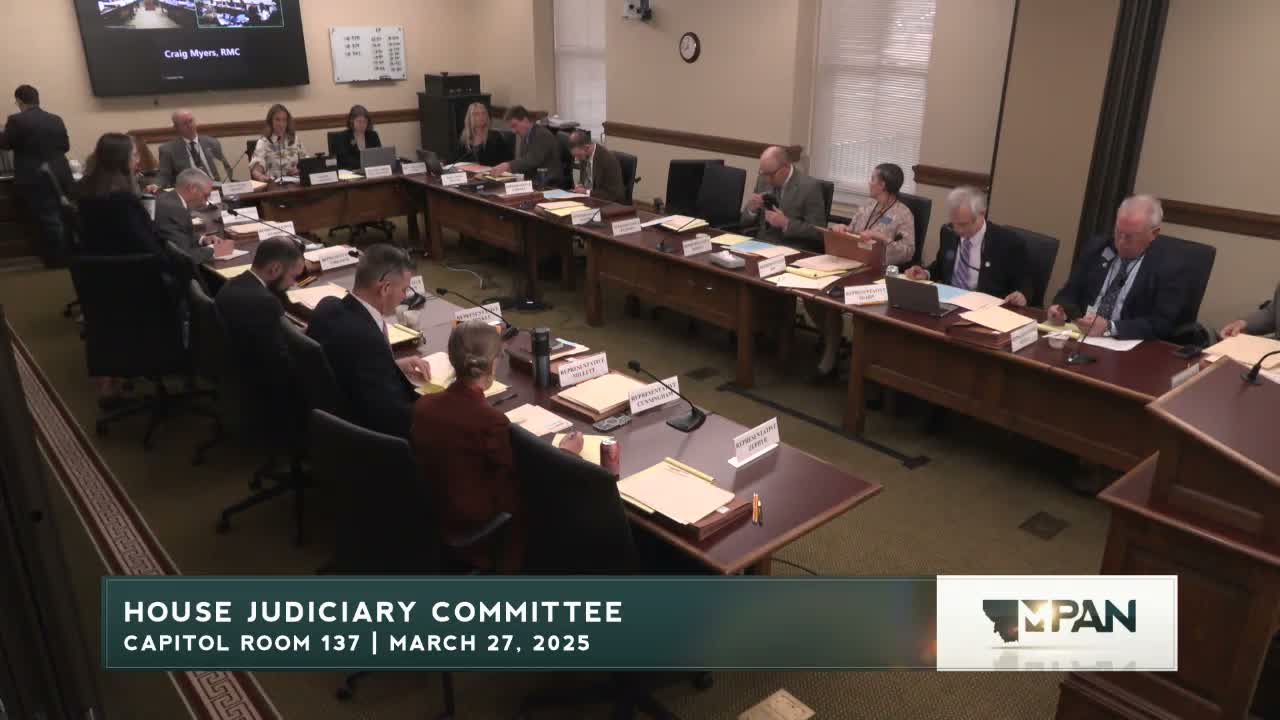
Senator Mark Noland opened a hearing on Senate Bill 375 on the proliferation of intoxicating hemp products and urged the House Judiciary Committee to block products that, he said, pose a public‑health threat to young people. "Intoxicating hemp products have expanded significantly," Noland said, citing the federal Agriculture Improvement Act of 2018 and national concern about unregulated products in candy‑like forms.
The bill would prohibit sale in Montana of hemp products containing intoxicating Delta‑9 THC intended for consumption, smoking, or vaping while preserving food‑grade hemp products, Noland said. "This bill only prohibits the sale of hemp products that contain intoxicating Delta‑9 THC. All other hemp products will not be impacted by this bill," he said.
Supporters told the panel that unregulated intoxicating hemp is widely available and attractive to children. Leanna Troesh, an addictions counselor representing SAFE Montana, said community clinicians and school resource officers have reported children needing emergency care after consuming potent products. "These products are incredibly intoxicating," Troesh said, and she provided committee members with handouts and a resource book to illustrate product packaging and labeling concerns.
Industry and agricultural witnesses cautioned the committee that language in the current draft could have unintended consequences for legitimate hemp growers and processors. Pat Farrell, co‑founder of Big Sky Scientific, said his firm supports the bill's aim to protect kids but urged an amendment to avoid banning lawful nonintoxicating CBD products. "Putting a zero‑percent threshold would eliminate CBD products for Montanans," Farrell told the committee, urging a clarified consumer‑transaction carve‑out.
Catherine Rosendale, Big Sky Scientific's lab director, explained testing and the legal limits in effect now. She said current Montana practice recognizes 0.5 milligrams of Delta‑9 THC per serving and 2 milligrams per package as regulatory thresholds; a zero‑THC standard, she testified, would remove many non‑intoxicating products from the market. "If we have a limit of none, that does eliminate all CBD products from the market," Rosendale warned.
Kristen Barber, administrator of the Cannabis Control Division, said the division regulates licensed marijuana products but not intoxicating hemp and pointed to a companion measure (House Bill 49) that includes dosing limits. She described the situation as a regulatory gap and said state agencies participated in drafting to avoid unintended consequences.
Committee members pressed witnesses on technical issues — per‑serving versus per‑package limits, decarboxylation, the difference between hemp biomass and consumer retail products, and whether the bill would unintentionally curtail agribusiness. Sponsor Noland said he is open to working on clarifying amendments and emphasized that the intent is to target intoxicating products, not to shut down legitimate agriculture.
The committee recessed after a lengthy exchange of technical Q&A. No formal committee vote on SB 375 was recorded in this hearing; staff and stakeholders were left to continue negotiations on precise language and possible amendments.
What happens next: The sponsor said he is willing to accept clarifying amendments drafted with the Departments of Agriculture and Revenue and the cannabis control division to protect nonintoxicating food and agricultural markets while restricting intoxicating products to licensed channels.