Get Full Government Meeting Transcripts, Videos, & Alerts Forever!
Get email alerts on the Tax Policy topic
No spam. Unsubscribe anytime.
Committee weighs redirecting lodging-tax growth to property tax relief; amendment clears committee but bill later tabled
Summary
Representative Jane Gillette proposed using surplus lodging-tax growth to reduce residential property taxes while preserving the Department of Commerce's baseline funding; tourism industry groups and Commerce warned the bill risks cutting grants and pilot programs. Committee adopted the sponsor's amendment but later tabled the bill in executive action.
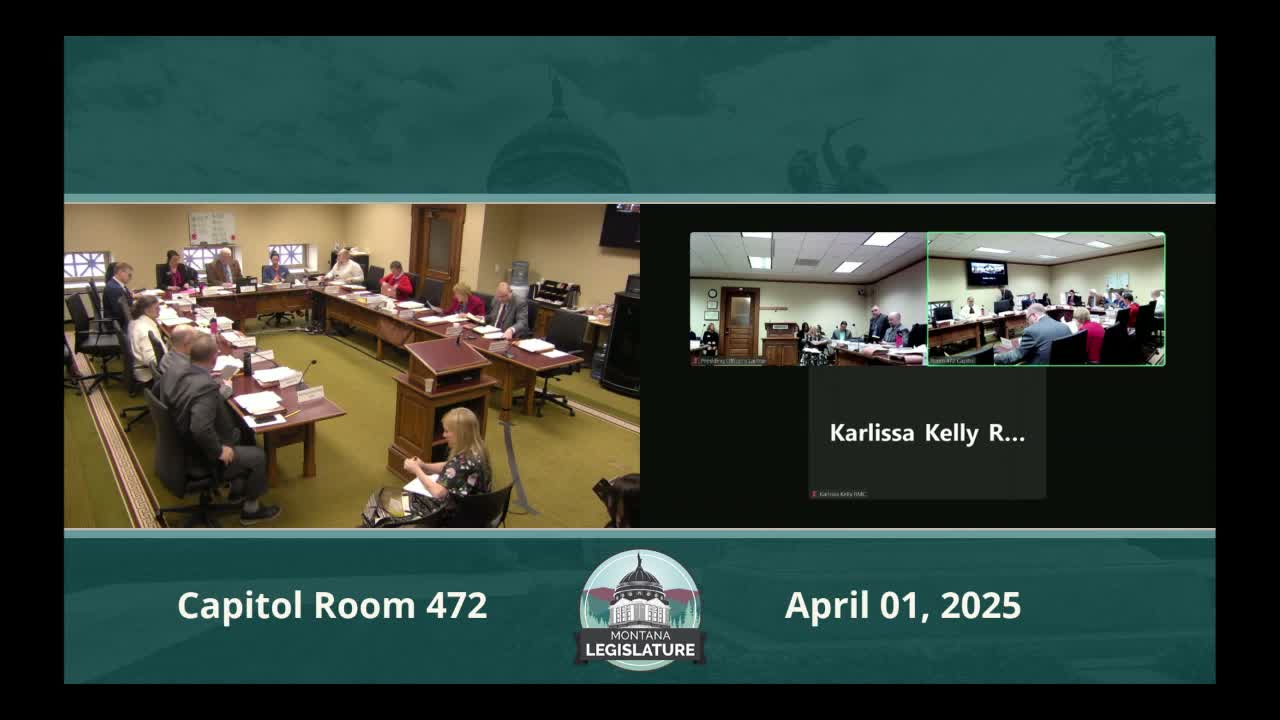
Representative Jane Gillette (sponsor) opened the hearing on House Bill 887, saying the bill would treat part of growth in Montana’s lodging facility taxes as a source for residential property tax relief while keeping the Department of Commerce’s base funding intact. “We don’t remove anything from their budget,” Gillette said, describing a formula that preserves Commerce’s baseline (an average of three years’ inflation plus a 0.5 percentage-point adjustment) and diverts revenue above that level to a state special revenue account earmarked for property tax reduction. She circulated an amendment that would place 75% of that surplus into a state account for property tax relief and distribute the remaining 25% to counties based on the state gas-tax formula to support roads and local infrastructure.
Opponents including Montana Department of Commerce officials and lodging- and travel-industry groups told the committee the change would jeopardize grants and programs that return lodging-tax dollars to rural communities. Mandy Rambo, acting director at the Department of Commerce, warned that while the biennium starting July 1 is not immediately reduced by the bill, Commerce “may be unable to keep up with rising costs” for promotion and rural tourism grants if revenue growth is constrained. Shelly Mann of the Montana Lodging and Hospitality Association testified HB887 “would cut, at a minimum, $2,000,000 annually from the Department of Commerce,” and urged members to vote no.
Committee members pressed both the sponsor and Commerce staff for specifics about how the two separate lodging taxes are used and how the amendment would interact with Senate Bill 90 (a separate property-tax-relief proposal the sponsor referenced). Commerce officials explained there are two commonly referenced levies—the lodging facility use tax and the lodging facility sales tax—and that current distributions fund statewide marketing, pilot community grants (about $2.75 million in the ’29 biennium cited by testimony), heritage grants and other programs that flow back to local communities.
In executive action the committee approved the sponsor’s amendment without recorded objection on the floor vote (committee staff reported the amendment passed by voice and a subsequent tally was recorded as 16–1 for the amendment). Later in final action the committee did not advance the bill: a motion to pass the amended bill failed on a roll-call, and the chair announced the bill was tabled for the day. The record shows the amendment’s passage in committee but the panel ultimately tabled HB887 during executive action.
What happens next: Tabling does not preclude the sponsor from reintroducing a revised version or bringing the bill back for reconsideration later in the session. The central divisions in the hearing were over whether redirecting lodging-tax growth would materially harm Commerce-administered grants and rural tourism programs or whether it is an appropriate source of relief for rising residential property taxes.