Get Full Government Meeting Transcripts, Videos, & Alerts Forever!
Get email alerts on the Affordable Housing topic
No spam. Unsubscribe anytime.
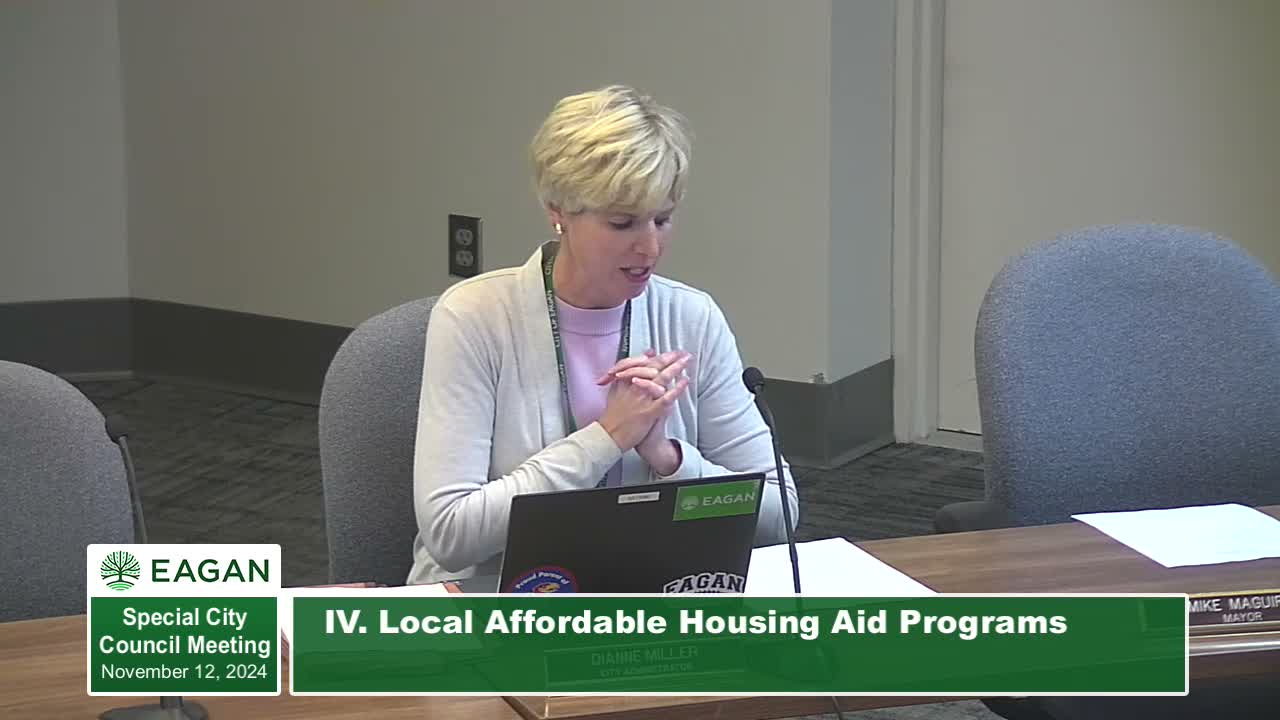
Eagan council backs moving forward with LAHA-backed home-repair, radon mitigation proposals
Summary
City staff and the Dakota County CDA described plans to use state LAHA funds to expand no-interest home-improvement loans and add bundled radon testing/mitigation; council generally supported staff returning with a resolution and joint-powers agreement to formalize the program.
City staff and representatives of the Community Development Agency (CDA) outlined a proposal to use Local Affordable Housing Aid (LAHA) funds enacted by the 2023 legislature to expand Eagan’s home-improvement loan program and offer bundled radon testing and mitigation.
Jill Hutmacher, Community Development Director, told the council the program would mirror the federal CDBG home-improvement structure: loans are typically no-interest with no monthly payments and principal repaid at sale; average loan size cited was about $32,000 and staff noted the proposed loan cap near $35,000. Hutmacher said the CDA estimates radon mitigation costs generally run about $2,000–$2,500 and the proposal would offer radon testing and mitigation as part of loan packages.
Staff described proposed program mechanics: the CDA would hold and track funds under a joint powers agreement, retain and recirculate loan repayments for future loans, and provide quarterly reporting the city must submit to the MHFA as required by statute. Several council members asked about administrative costs (the enabling statute does not currently authorize them); staff said the county has authorized CDA levy funds to help cover those expenses in the near term, and cities may be asked to contribute if the statute is later amended to allow admin costs.
Council members also pressed staff on protections for low- and moderate-income owner-occupants and on HOA situations. Hutmacher said reserve studies and third-party financial reviews would be required for HOA-related projects, building inspections would ensure code violations are addressed as part of any project, and LAHA funds would be prioritized to households at or below 80% AMI per statute.
Council members expressed general support for staff to bring a resolution and a joint powers agreement to a future meeting (likely Dec. 3) so the CDA can begin recruitment and program planning under a three-year funding commitment window. Staff emphasized timing constraints: funds must be committed within three years and spent within four.
Next steps: staff will draft a resolution and joint powers agreement language and return to council for formal action; program details and administrative-cost arrangements will be clarified in future materials.