Get Full Government Meeting Transcripts, Videos, & Alerts Forever!
Get email alerts on the Land Use Udo topic
No spam. Unsubscribe anytime.
Easley council opens first reading of UDO amid sharp debate over ADUs, density and access
Summary
At a Sept. 8 meeting the Easley City Council opened first reading of a Unified Development Ordinance to replace the city's zoning and land-development codes. Members debated accessory dwelling units, a 51-lot second-entrance trigger, riparian buffers, parking study thresholds and a proposed 10% density reduction, but did not adopt final changes.
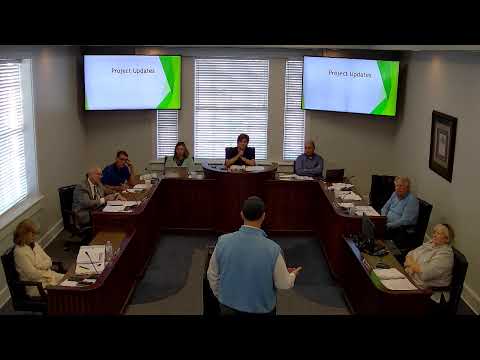
The Easley City Council on Sept. 8 began first reading of a Unified Development Ordinance (UDO) that would repeal the city's zoning ordinance and land development regulations and replace them with a single document. Council members spent more than an hour questioning specific provisions and whether several items should be pulled out for separate consideration.
The UDO's first review introduced six focal questions for council, including whether accessory dwelling units (ADUs) should remain in the UDO or be addressed in a separate ordinance. A staff presentation described ADUs as typically garage apartments or in-law suites (roughly 1,200 square feet as a planning example) and recommended drafting a standalone ADU ordinance so council could review owner-occupancy and deed-restriction options. Councilmember comments were split: some favored removing ADUs from the UDO to refine enforcement and owner-occupancy rules; others said the UDO should be a single working document that can be amended later.
Traffic and access drew sustained attention. Council expressed concern about a permanent median near a contested rezoning site and about the UDO's second-entrance requirement. The current draft uses a 51-lot trigger for a required second entrance but staff said a traffic study could be used instead to determine whether a second access point is necessary. "A traffic study will show if a second entrance is needed," staff said, while council members noted other jurisdictions use different numeric triggers.
Riparian protections were debated as well. Staff described the buffer as either a formula (four times the stream width, with a 25-foot minimum) or an option to adopt a fixed width such as 25 or 50 feet. Council members requested clearer drafting on whether buffers apply to one or both sides of a stream in typical property-line situations.
Members also discussed whether the code should require a traffic-impact study for large parking generators. The draft currently says a development with more than 100 parking spaces "may" be required to submit a traffic study; some members urged changing "may" to "shall" to make studies mandatory for large projects.
A council member proposed a roughly 10% reduction in permitted density as an amendment intended to slow growth; the suggestion prompted a debate on consequences for housing affordability and whether a modest percentage change would meaningfully affect large-scale development. One member warned that reducing density could raise land and housing costs, while another said the change would move multiple zones one step tighter and would modestly reduce allowable units per acre.
Several members raised procedural concerns about the timing. The packet was distributed late in the week and the council discussed whether to table the item for additional review, hold a special meeting, or proceed and use amendments before the second reading. Staff noted the moratorium on new development ordinances expires in November; they said the UDO can be amended between first and second readings and that the proposed changes discussed would be incorporated into a revised draft for the next reading.
The meeting did not record a final vote on the UDO; council agreed to continue discussion and indicated staff would prepare an amended second-reading draft that documents the changes under consideration.