Get Full Government Meeting Transcripts, Videos, & Alerts Forever!
Get email alerts on the Compact topic
No spam. Unsubscribe anytime.
Board hears compact presentation but votes to oppose multistate cosmetology licensure bill
Summary
After a detailed presentation and extended Q&A on the proposed multistate cosmetology licensure compact (AB371), the Nevada State Board of Cosmetology voted to oppose the bill citing concerns about enforcement, fraudulent credentials and costs.
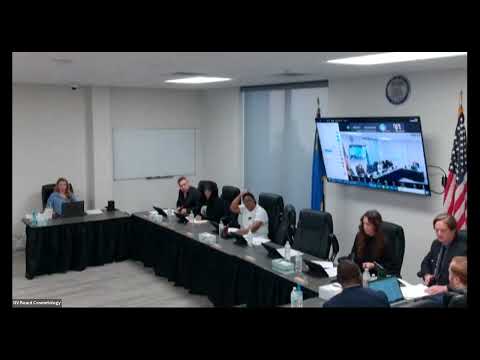
The Nevada State Board of Cosmetology received a presentation March 24 from Leslie Roste of the Future of the Beauty Industry Coalition on a proposed multistate cosmetology licensure compact (Assembly Bill 371, 2025) and, after extensive questioning, the board voted to oppose the bill.
Roste framed the compact as a mobility tool for licensees — "much like your driver's license," she said — that would allow a licensee who holds a multistate privilege to work temporarily in other member states without obtaining a new single-state license in each jurisdiction. She said the compact would create a multistate database to share adverse actions, facilitate joint investigations and alert member states when licensees have enforcement flags. Roste said the compact has been promoted in part to assist military spouses, victims of disasters and others who need to move quickly to retain employment.
Board members and staff pressed presenters on several operational and policy issues: who will fund the commission and database; whether and how multistate licensees would be required to report work locations; how member states would guard against fraudulent school diplomas; how temporary practice and home-state rules would be enforced; and the likely impact on Nevada’s workload and fees. Board staff noted Nevada’s current reciprocity timelines and said the state already processes many applications quickly; members expressed concern that the compact would add a persistent layer of regulatory responsibility without clear funding authority.
Roste acknowledged some questions will be addressed in commission bylaws and database rules, which the compact’s initial commissioners will draft. She said the compact commission would be self-funded through a small multistate-license fee and a commission budget; she estimated initial fiscal notes would likely be modest though some states may need IT integration attention.
After extended discussion, members raised specific enforcement and public-safety concerns, including risks from fraudulent licenses issued by diploma mills and the difficulty of locating compact licensees who practice temporarily at multiple sites. The board then carried a motion to oppose Assembly Bill 371.
The board recorded the motion as "motion carried"; staff said if the legislature enacted the compact the board would implement it per statute but noted multiple operational uncertainties that shaped the opposition vote.