Get Full Government Meeting Transcripts, Videos, & Alerts Forever!
Get email alerts on the Public Safety topic
No spam. Unsubscribe anytime.
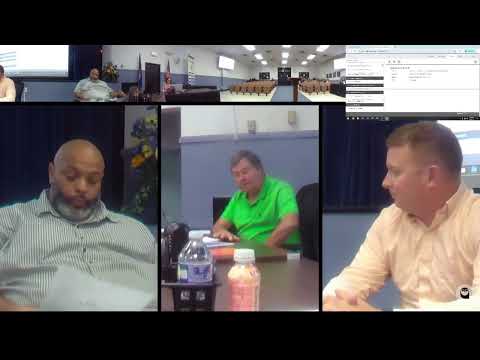
Sheriff warns Fluvanna faces SRO shortfall as staffing limits court and patrol coverage
Summary
Sheriff Hess told the Fluvanna County School Board on Sept. 10 that the sheriff’s office is operating below authorized strength and currently assigns two school resource officers (SROs), with a goal of five when staffing permits; board members pressed on grant compliance and possible short‑term exceptions from DCJS.
Sheriff Thomas Hess told the Fluvanna County School Board on Sept. 10 that the sheriff’s office is understaffed and that shortfalls are the primary constraint on expanding school resource officer coverage. "At this current time … that's out of the 46, we're at 39, which puts us in the hole of 9," Hess said, describing full‑time staffing and academy training now underway.
Hess outlined operational demands that limit patrol availability for SROs, noting court security and mandated court assignments often require multiple deputies. He said the department currently assigns two SROs to schools and hopes to restore a five‑SRO complement once new hires complete training: "When we get somebody, we assess where that person is needed the most," he said.
The exchange moved to grant compliance after board members raised DCJS school resource officer grant requirements that designate funds to a position assigned to a specific school. A board member said they had pulled the guidelines and asked whether Fluvanna’s current practice—where deputies sometimes assist at multiple schools—might run afoul of the grant. Staff responded that the grant pays for the position, not a specific school, but that application rules specify each SRO should be designated to one school and that limited assistance elsewhere requires a special condition request.
Board member questions focused on short‑term options. Members asked whether retired or part‑time deputies could be rehired, whether other agencies (such as Department of Wildlife Resources or state police) could be used under a memorandum of understanding, and whether overtime could fill gaps. Hess said state rules limit rehiring retirees and cap part‑time hours; he also cautioned that overtime is already heavy and not a long‑term fix.
Hess described workforce solutions the department is pursuing, including recruiting locally, requesting legislative changes to allow retirees to return in some cases, and adding civilian positions in next year’s budget to relieve sworn deputies of non‑law‑enforcement tasks. He also committed to follow up with DCJS on any needed reporting or special conditions: "We have not filed our quarterly report, and if we do, they would let us know if we were doing something they consider not permitted," he said.
The board and sheriff agreed to continue exploring options—ranging from special‑condition requests to transparent quarterly reporting—before altering SRO assignments. The board requested staff to ask DCJS about the period a short‑term assignment could be approved and to document any requested changes in the quarterly report due Oct. 15.
The board did not take a formal vote on staffing changes during the meeting; members instead discussed next procedural steps and potential budgetary support or requests to the Board of Supervisors.